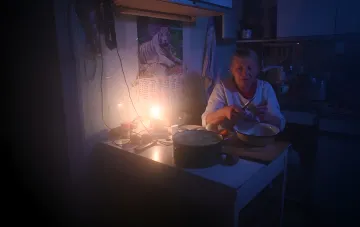
Moldova is rethinking its approach to national security amid recurring blackouts, power supply disruptions, and military tensions near its borders. According to assessments, this combination of factors formed the basis of a new public campaign to prepare the population for emergencies. Its core idea is formulated simply and concisely—the "72-hour rule": every citizen should be able to survive the first three days without outside help until support from authorities and emergency services arrives.
What is the "72-Hour Rule" and Why This Particular Timeframe
The "72-hour rule" is a well-established logic in civil defense: the first three days after a major crisis begins are a period when state structures, rescuers, and logistics cannot yet provide for everyone, and survival depends on people's own preparedness. Moldova is bringing this logic into everyday preparation: instead of abstract calls for vigilance, the authorities offer a specific benchmark—to be ready to provide for oneself, family, and communication for 72 hours. This shifts the topic of security from a "state matter" to personal and family skills.
From an "Emergency Bug-Out Bag" to a Family Shelter
According to the article, the campaign is structured as a progression from simple to complex—from an "emergency bag" (a compact kit for sudden communication disruptions and the need to quickly leave home) to the broader concept of a "family shelter." Thus, preparation is viewed not as a one-time action, but as a set of practices at various levels: what to take in the first hours, how to organize a supply of water, food, and communication means for several days, and where and how to take shelter if the situation drags on. The emphasis is placed on ensuring that readiness is practical and applicable in daily life, rather than formal.
Communication When Electricity and Internet Are Cut Off
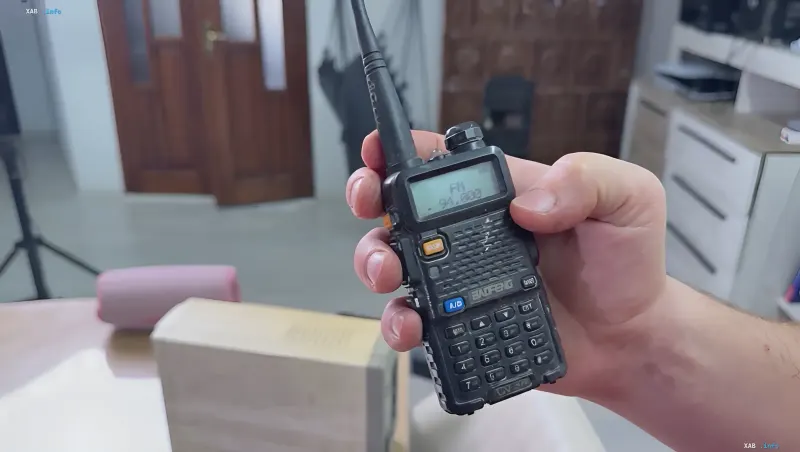
A special place in the preparation is given to communication and obtaining information during a blackout, when electricity and consequently mobile networks and the internet go down. In this context, the article shows a portable FM radio transceiver (walkie-talkie)—a typical tool that continues to run on batteries and does not depend on the power grid. The logic is simple: when primary communication channels are de-energized, radio waves remain one of the few ways to find out what is happening and receive instructions. This turns "knowing how to receive information" from an abstract skill into a concrete element of a family plan for the first 72 hours.
Why This Matters Right Now
Moldova's revision of its security approach is no accident: the country faces real energy supply failures and is located in close proximity to an armed conflict zone, making blackout scenarios and communication restrictions not hypothetical, but probable. Launching the public preparedness campaign is an acknowledgment that under such conditions, the state cannot guarantee instant help to everyone, and part of the responsibility for the first critical days shifts to the citizens. Bottom line: the "72-hour rule" in Moldova is becoming not a slogan, but a practical standard of readiness—from an evacuation bag to a family shelter and working radio communication.