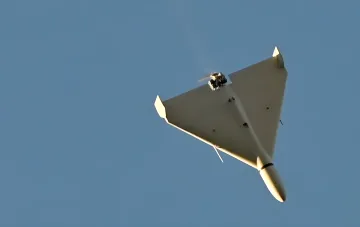
The Kyiv Regional Military Administration has decided to tighten the blackout regime throughout the region. This was announced by the head of the Kyiv Regional Military Administration, Timur Tkachenko, following a meeting of the Regional Defense Council, as reported by RBC-Ukraine. According to him, the measures are intended to "somewhat complicate the operations of enemy aerial attack assets, especially during the period of long winter twilights and nights." The decision, according to Tkachenko, was dictated by a direct request from the military and is aimed at supporting Ukrainian defenders.
Instructions at the District and Community Level
The specific task set during the Defense Council meeting is for districts and communities to work with the business sector, as well as municipal and housing authorities, to strengthen light camouflage measures. This means that responsibility for compliance with the regime will be distributed between local authorities and specific entities — from shopping centers and office buildings to residential houses and infrastructure facilities. Such an approach avoids centralized administration and delegates some functions to those who directly manage sources of artificial light.
Energy Discipline as a Side Effect
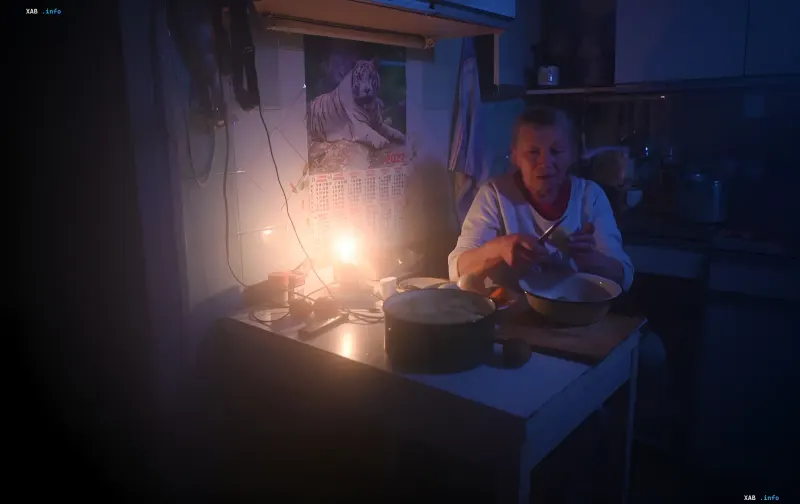
Timur Tkachenko also emphasized that the blackout measures will create the foundation for a "more responsible attitude toward the use of electricity." In conditions where the region's energy system is regularly under attack, saving and rational consumption of electricity become not just a recommendation, but an element of survival. Limiting night lighting for non-residential and non-production purposes reduces the load on grids and decreases the number of points that can be detected from the air.
Context: Strikes on Kyiv Region in November 2026
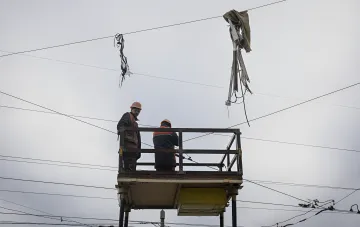
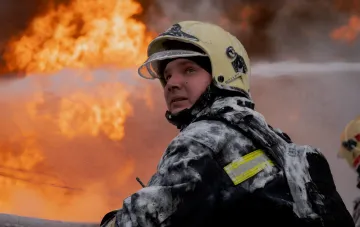
The decision to tighten the blackout regime comes against the backdrop of a series of attacks by Russian forces on the territory of the Kyiv region. On the night of November 10, the Russian Federation struck Pereiaslav. The attack hit a municipal property building housing people in need of special social support and care. Earlier, on the night of November 6, the Russian military attacked energy infrastructure facilities in the Kyiv region; three people were wounded as a result of the shelling. These incidents demonstrate that the region remains in a zone of active aerial attack, which necessitates the urgency of additional camouflage measures.
The Winter Factor: Why Now
Tkachenko specifically highlighted the "period of long winter twilights and nights" as a time when blackout becomes of particular importance. From November to February, the dark period in Ukraine lasts more than 14 hours, which multiplies the window during which artificial light sources — windows, signs, street lighting, industrial sites — can be detected by reconnaissance and guidance systems. Tightening the regime during this period logically complements other air defense measures and creates an additional layer of difficulty for planning aerial strikes.