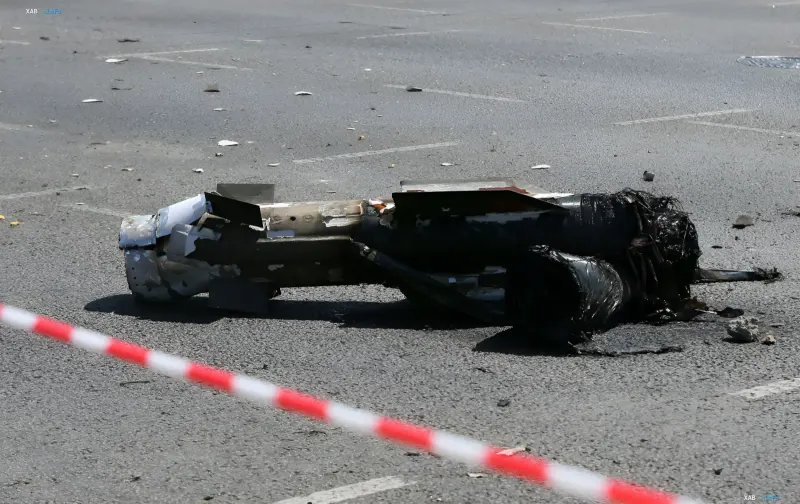
On the morning of October 3, 2026, during a massive Russian missile and drone attack against targets in Ukraine, the airspace of neighboring Moldova experienced severe new security incidents. According to official data from the Ministry of Defense of the Republic of Moldova, the fall and detonation of five aerial targets were recorded within the country. Detailed technical and radar analysis by the National Army made it possible to identify these objects as three cruise or guided missiles, as well as two strike unmanned aerial vehicles that crossed the sovereign border.
Chronology of the Incident and Flight Trajectories
The Air Operations Service of the National Army of Moldova published a minute-by-minute chronology of the morning events. In addition to the five confirmed detonations on the ground, radar systems recorded another unauthorized transit flight. Specifically, at 08:04 local time, an unknown aerial object entered the country's airspace from the direction of the Ukrainian town of Udodne in the Odesa region, after which it headed toward the village of Palanca. By 08:05, this object left Moldovan airspace, heading back toward Biliaivka in the Odesa region. The total time the object spent over Moldovan territory was about one minute.
Consequences of Debris Falls Across Regions
Law enforcement agencies and rescue services in Moldova recorded the fall of debris and parts of the downed flying vehicles in four different regions of the country throughout the morning of October 3. In total, the police counted five separate locations where debris falls and the consequences of the blast wave were registered. In one of the recorded episodes, window glass in a residential or utility building was shattered as a result of the explosion, while in another case, the fall of a drone triggered a fire in dry grass in an open area, which was promptly extinguished by arriving firefighting crews.
Contradictory Data
While official reports from the Moldovan Ministry of Defense and relevant agencies focus on recording specific coordinates of the falls of three missiles and two drones, as well as one transit flight, the information space and statements by regional leaders shift focus to a general political assessment of security. Official Chisinau emphasizes the technical nature of recording airspace violations, whereas international and Ukrainian media sources point to the scale of the threat to overall European security, demanding a tough reaction to regular incidents involving foreign military objects falling on the territory of sovereign states.
Expert Assessments and Authorities' Reactions
Such incidents cause deep concern among the leadership of the Republic of Moldova. The country's top leadership, including President Maia Sandu, has repeatedly stated the unacceptability of airspace violations and called on the international community to increase pressure to stop large-scale attacks that pose a direct threat to the safety of civilians in neighboring states. Military experts note that such cases demonstrate the vulnerability of regional air defense systems in the face of massive missile strikes and emphasize the urgent need to modernize radar control facilities.