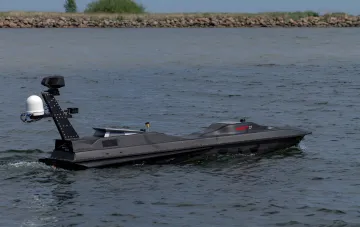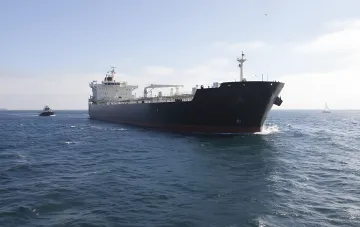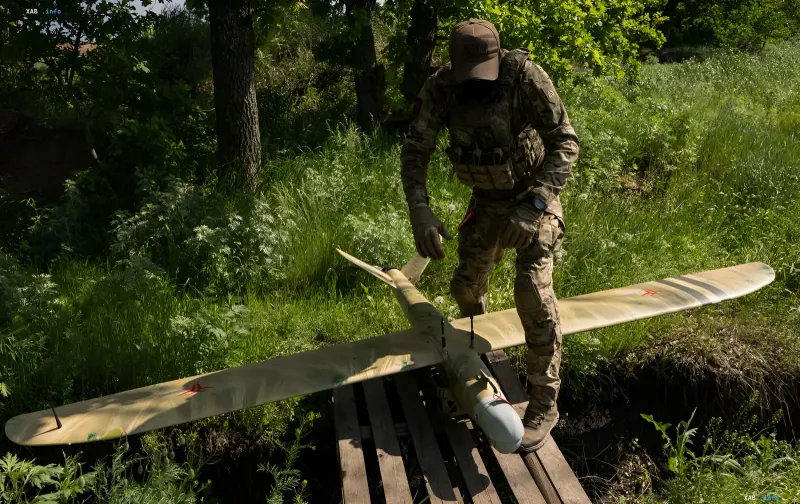
Ukrainian Unmanned Systems Forces (USF) continue to expand the geography and scale of their strikes. As reported by RBC-Ukraine citing USF Commander Robert «Madyar» Brovdi, drones have delivered a series of precise strikes on enemy strategic targets. The list of hit targets includes a Russian boat base, tankers in the Black and Azov Seas, as well as five elements of the air defense system (ADS).
Synchronized strikes on the fleet and air defense
The operation was conducted in close coordination between various units. The strikes were carried out by fighters of the 9th «Kairos» Battalion (part of the 414th Separate USF Brigade «Madyar's Birds») and servicemen of the 412nd Separate USF Brigade Nemesis. The «Phoenix» unit of the State Border Guard Service of Ukraine also joined the operation.
USF Commander Robert Brovdi emphasized the high intensity of work by Ukrainian operators. According to him, in July alone, drones successfully targeted 30 elements of Russian air defense. This indicates a systematic approach to suppressing the enemy's air defense, which is critical for the safety of their own operations.
Operation «MoLoChKA»: strike on the economy
Parallel to combat tasks, a large-scale campaign to strike the enemy's logistics chains continues — Operation «MoLoChKA». Since the start of this operation, Ukrainian forces have struck 205 Russian tankers. Of these, 130 were destroyed in the waters of the Azov Sea and 75 in the Black Sea.
These actions have a direct impact on Russia's economic situation. The publication Financial Times notes that Ukraine's long-range strike campaign has become one of the key reasons for the deep fuel crisis in the aggressor country, which has not been seen in decades.
Destroying oil refining capacity
The consequences of strikes on infrastructure are becoming increasingly tangible. According to Western sources, as a result of attacks on Russian oil refineries (ORs), more than 30% of actual oil refining capacity has been put out of commission. If nominal capacity is considered, this figure exceeds 45%. The destruction of such infrastructure inflicts long-term damage on the enemy's economy and limits its ability to export energy carriers.