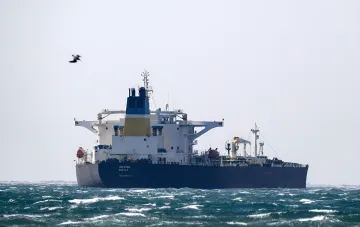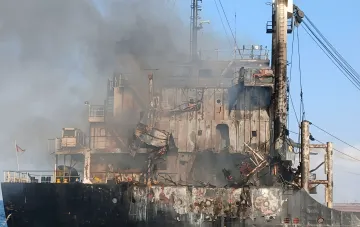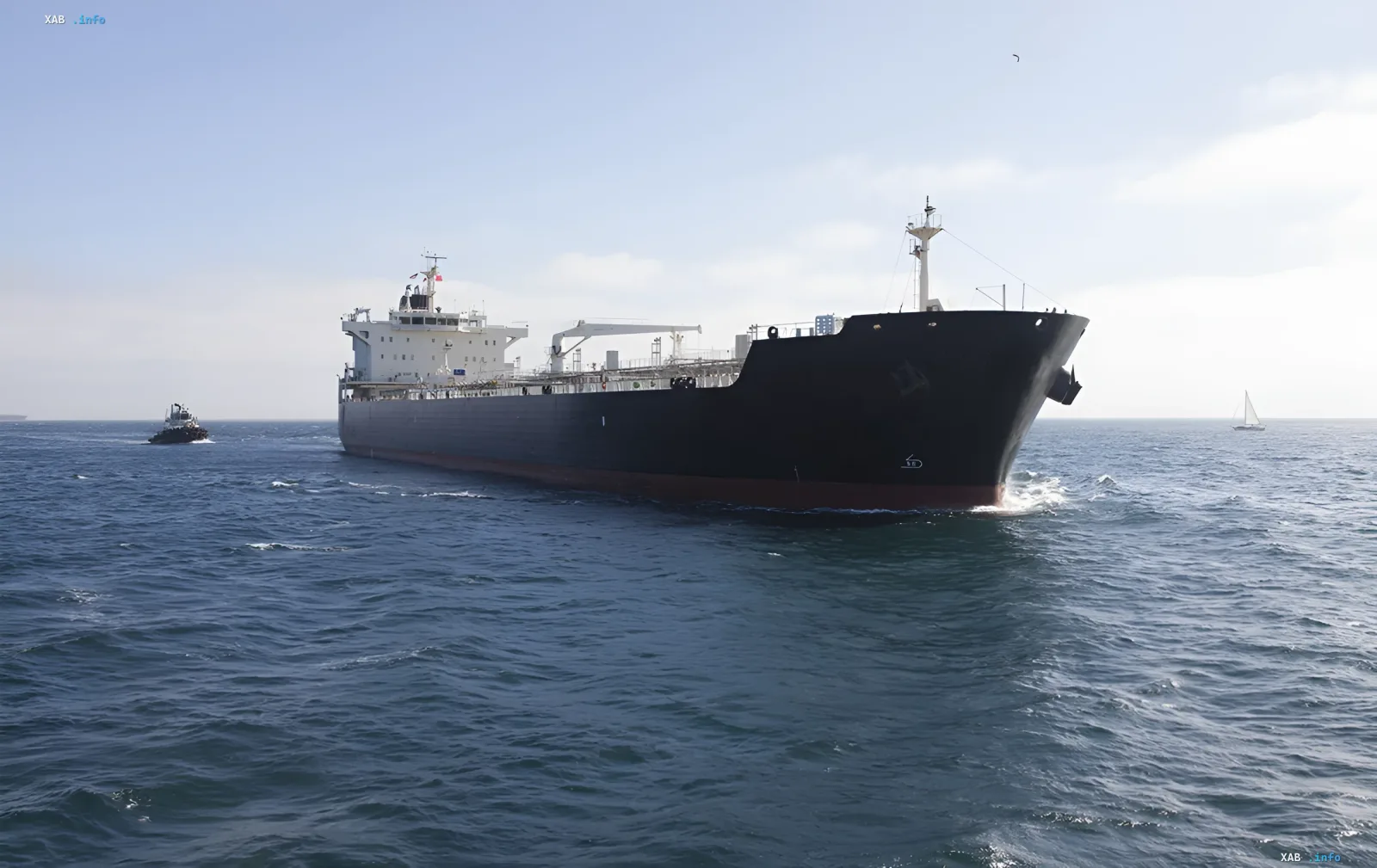
The Russian oil fleet operating in the Black and Azov Seas is undergoing radical changes in its appearance and survival tactics. Amid the escalation of attacks by Ukrainian unmanned aerial vehicles (UAVs), Russian shipowners have begun applying protective measures previously characteristic exclusively of land-based armored vehicles. Tankers, which once looked like standard cargo ships, now resemble post-apocalyptic machines from the movie «Mad Max», being wrapped in nets and reinforced with metal cages.
Fleet Transformation: From Caruzo to Rizvel
Visual confirmation of this new defensive tactic emerged in August 2026. Shipping analyst Yuruk Isik published footage showing the 28-year-old tanker Caruzo leaving the Black Sea through the Bosphorus. The vessel had been completely retrofitted: superstructures were covered with dense nets, and the bridge roof was protected by massive metal structures. Experts note that similar protective measures were observed on another tanker — the Rizvel.
The essence of these innovations lies in creating a physical barrier between the ship's hull and potential threats. Nets and cages are designed to increase the distance between a kamikaze drone and the vulnerable parts of the tanker. If a drone hits the protective structure, the warhead should detonate before contacting fuel tanks or superstructures, thereby minimizing damage.
«Aquariums» on Board and Survival Tactics
In addition to nets, Russian tankers have begun equipping themselves with side-mounted water tanks. This solution was a direct borrowing from the experience of protecting Russian armored vehicles, where water tanks were used to dampen cumulative jets and shockwaves. However, according to experts, such measures come at a price.
Co-founder of Tankertrackers.com, Samir Madani, noted in his analysis that the crews of such vessels have effectively «locked themselves» inside protective structures. Freedom of movement on deck is restricted, and working conditions have become significantly more difficult. Nevertheless, in the face of constant threats, this is viewed as a necessary measure to preserve life and cargo.
Economic Consequences: Rising Rates and Insurance
The increase in threats in the Black Sea is directly affecting logistics and the cost of Russian oil supplies. Over the last two months, Ukraine has intensified strikes against ships, aiming to disrupt export flows. According to the analytical agency Argus, freight rates for transport in the region have risen noticeably.
The risk of collision with UAVs has led some shipowners to prefer waiting, refusing voyages to «hot spots». Insurance for transport has also become more expensive, and many insurers have introduced additional restrictions or refuse to cover risks in the Black Sea. This creates a shortage of vessels willing to work on Russian routes.
Contradictory Data
Although visual evidence of tanker retrofitting exists, the effectiveness of such measures remains a subject of debate. On one hand, Russian sources and observers claim that nets and cages reduce the vulnerability of ships. On the other hand, military experts point out that modern drones can carry sufficiently powerful warheads to penetrate protective structures or inflict critical damage to the hull even upon hitting the net.
Furthermore, there are discrepancies in estimates regarding the scale of the retrofitting. While some sources report mass implementation of such measures, others indicate that these are currently isolated cases characteristic of specific shipowners attempting to reduce risks to their assets.
Geopolitical Context and Prospects
The Black Sea remains a critically important route for Russian oil supplies, and Moscow is doing everything possible to maintain this channel. In the Novorossiysk area, the defense of port infrastructure is being strengthened, with additional barriers and nets being installed.
At the same time, Ukraine, through intermediaries, has offered Russia to cease strikes on civilian objects in the Black Sea; however, as of August 13, 2026, Moscow has not responded to this initiative. While diplomatic channels remain silent, an arms race continues at sea, where tankers are turning into floating fortresses.