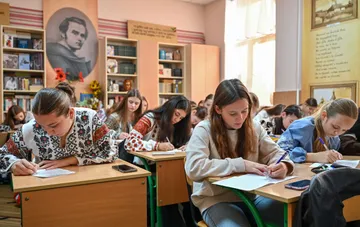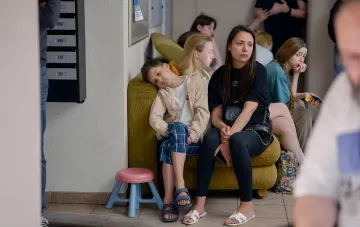
The Ministry of Education and Science of Ukraine has prepared detailed methodological recommendations on organizing the educational process in general secondary education institutions under martial law. As reported by RBC-Ukraine, citing the Ministry's press service, the document is intended to help schools structure their educational process taking into account all likely security scenarios. The Ministry emphasizes that the conditions in which schools operate today vary significantly from region to region and from institution to institution, so "there cannot be a single model that works equally well for all schools."
Why there is no single format
The core idea of the recommendations is to move away from a rigid "one-size-fits-all" instruction. Each educational institution must independently determine the format of learning based on its own capabilities and the local situation. At the same time, the school is required to approve possible scenarios in advance and a clear algorithm for transitioning between them depending on changes in the security situation. According to the Ministry, this approach allows schools to "not make decisions every time new risks arise, but to have a clear algorithm for transitioning between learning formats and pre-defined actions for each scenario."
From reactive response to advance planning
The methodological recommendations, as intended by their authors, shift schools from improvisation to systematic planning. Their goal, as clarified by the Ministry, is not to preserve the schedule under all circumstances, but to create a clear system in which safety and the quality of education are balanced. The head of the Ministry, Andrii Butenko, noted that the document emerged "specifically at the request of teachers and takes into account the experience and suggestions of people who organize learning in wartime conditions every day," and that the safety of students and teachers "remains the top priority."
A safe environment and a budget for shelters
A safe educational environment has been named one of the state's key priorities. The Ministry clarified that between 2023 and 2026, nearly 20 billion hryvnias has been allocated from the state budget to local authorities for equipping shelters in educational institutions. Butenko stated that it is important to give schools "not one rigid instruction for all cases, but clear tools so that they can find the best solution for their conditions," while maintaining balance: "safety always comes first, but we are doing everything to preserve the quality of education."
How a school assesses its own capabilities
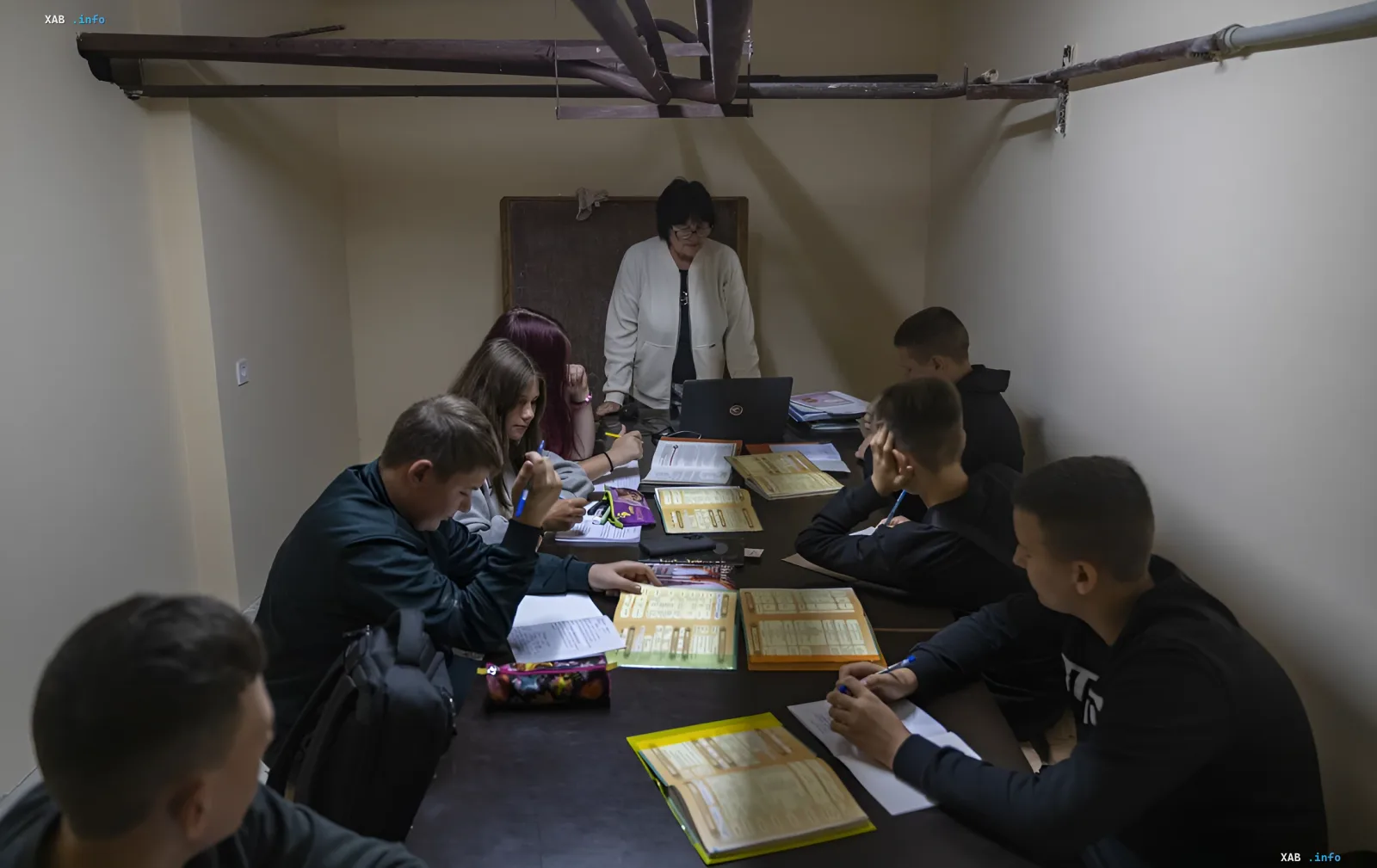
To choose a model, a school must first determine whether it can provide safe and continuous in-person learning. The Ministry stressed the main limitation: "the total number of people in the school at the same time cannot exceed the shelter's capacity." If the shelter is used not only for staying during air raids but also as a space for learning, the school must take into account the actual number of equipped study places. Based on this assessment, the institution determines the basic learning model and alternative scenarios between which it can switch depending on the situation.
An air raid does not mean an automatic halt to classes
The Ministry separately explained how to work with different subjects: not all educational activities can be as easily moved to a shelter or online. The school should plan in advance which classes require specific conditions, which lessons can be conducted in a shelter, and which learning outcomes can be achieved through independent, project-based, or research work. At the same time, the transition to another format should not happen spontaneously — "where possible, lessons should begin immediately in safe places." The key thesis of the document: "an air raid alert does not mean an automatic cessation of the educational process." If staying in the shelter is safe and the appropriate conditions are available, learning can continue in forms that suit the situation.
Contradictory data
Publications on the topic show a discrepancy in the wording of the number of models. Some sources (in particular, the headlines of several media outlets) speak of "three learning models in schools during air raids," whereas the text of the Ministry's recommendations itself focuses on a "basic learning model and alternative scenarios" — that is, on several ready-made scenarios without a strict tie to a specific number. Both versions are consistent in substance: they refer to a set of pre-defined formats (in-person, work in a shelter, distance/independent work), however the exact number of "models" varies in public wording. Until a definitive clarification from the Ministry, it is more accurate to use the phrasing "several scenarios with a basic model and alternatives."