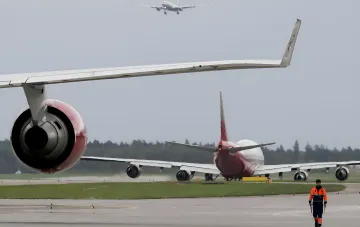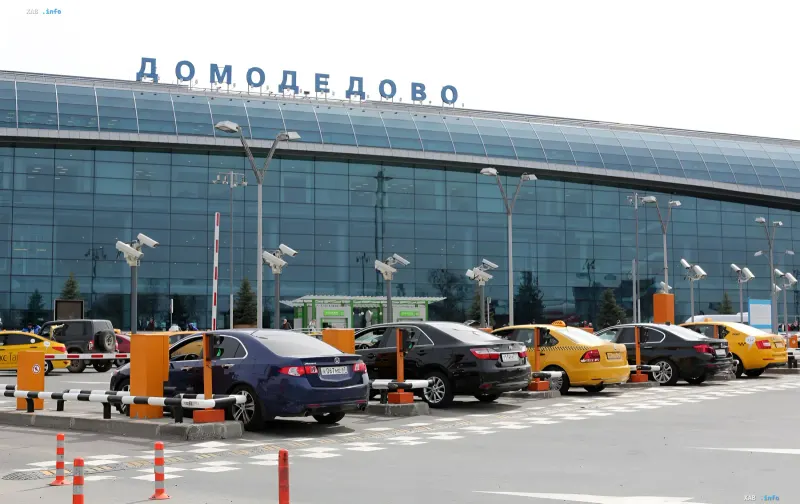
On September 2, a noticeable wave of international flight cancellations was recorded at Moscow's airports. According to RBC-Ukraine, citing the Telegram channel "Agency Novosti," foreign airlines cancelled a total of 27 flights to and from the Russian capital's airports. The publication estimates the total number of failed departures at approximately 30. Most of the cancelled flights fell within the nighttime and early morning hours — precisely the periods during which, according to reports, the airports were operating under restrictions.
How the airlines explain their decisions
The carriers that cancelled their departures offered their own wording, not reducible to a single cause. Pegasus, whose several night flights failed to reach Moscow on the night of September 2 and were forced to return to their departure airports, explained the cancellation of night flights as being due to "technical operational reasons" and emphasized that all other departures are being carried out on schedule. Turkish Airlines, for its part, linked the changes to the replacement of two narrow-body aircraft with a single wide-body one. Meanwhile, aircraft of other airlines continued to operate their flights, indicating that the cancellations were selective rather than total.
Restrictions and incidents on September 1–2
The wave of cancellations on September 2 was a continuation of the previous day's events. On September 1 there were significantly fewer cancellations: at Vnukovo only two aircraft failed to arrive — flights by Flydubai from Dubai and Iraqi Airways from Baghdad — while at Domodedovo only a Belavia flight from Minsk was affected. As the publication notes, Moscow's airports on September 1 and 2 were operating under restrictions linked to drone attacks and the implementation of the "Carpet" plan, which created operational risks for international carriers.
Diplomatic context
The media narrative of the events is shaped by statements from Kyiv. On September 1, Vladimir Zelensky stated that Russian airspace is becoming dangerous for civil aviation due to the mass presence of Ukrainian drones. Ukrainian Foreign Minister Andriy Sybiha reported that Ukraine had officially notified the International Civil Aviation Organization (ICAO) about the closure of Russian airspace. Against this backdrop, according to TASS, the UAE also warned airlines about operational risks when flying to Russia, which may further influence the decisions of carriers from the region.
Contradictory data
The versions offered by the parties differ markedly. Ukrainian media and Zelensky's statement interpret the cancellations as a direct reaction to the warning about closing the skies, reinforced by the incidents involving the return of Pegasus aircraft. However, the airlines themselves do not cite a political cause, referring instead to technical and organizational circumstances (operational reasons at Pegasus, a change of aircraft type at Turkish Airlines), and some flights were still being operated. A Russian source (fedpress.ru) goes so far as to characterize the "closing of the skies" narrative as a failed "blackmail," claiming that foreigners are not giving up their flights. Moreover, there is an inconsistency in the data itself: in one place the figure is "around 30" cancelled flights, while in another it is exactly 27 flights by foreign airlines, which may reflect a different counting methodology (all cancellations versus only foreign carriers). Thus, the fact of the cancellations is confirmed, but their causal link to Zelensky's statement remains a matter of interpretation.