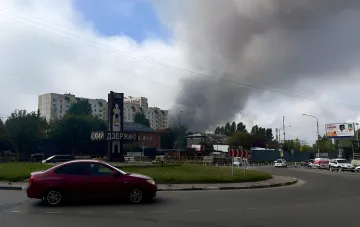
On September 20, 2026, the last day of voting in the State Duma elections, Moscow came under a drone attack of unprecedented scale. According to a report by the Institute for the Study of War (ISW) shared with RBC-Ukraine, the authorities of the Moscow region deliberately did not activate air-raid sirens and did not send SMS alerts to residents about the threat — even though they had previously resorted to such measures even during strikes of significantly lower intensity. At the same time, according to analysts' observations, mobile connectivity was restricted, yet no official explanation for this step was provided by regional authorities.
The Silence of the Sirens on the Last Day of Voting
The key conclusion of the ISW is that the Russian authorities evidently placed ensuring high voter turnout above the safety of the population. Analysts emphasize that Ukrainian forces struck strategic oil and logistics infrastructure, but did not target polling stations or any other electoral infrastructure. Nevertheless, the absence of any warnings — neither sirens nor SMS — was recorded against the backdrop of strikes that significantly exceeded previous incidents in scale. Russian media, in particular Fedpress, reported that air defense systems shot down 475 drones overnight, confirming the exceptional scale of the attack.
Residents' Complaints and the Closure of the Governor's Channel
Residents of the Moscow region publicly complained about the lack of warnings in the Telegram channel of Governor Andrei Vorobyov. According to the ISW, after the flow of critical messages grew, comments on the channel were closed. This episode, in the analysts' assessment, became an additional indicator that information about the air threat was deliberately withheld from the population during a period when turnout at polling stations was critically important.
Confirmed Strikes on Infrastructure
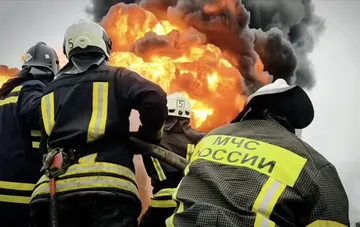
The Ukrainian side confirmed the strike on the Moscow Oil Refinery — one of the largest in Russia. After the attack, footage of fires at several facilities in the capital spread online. President Volodymyr Zelenskyy, in his address, listed the types of drones used: FP-1, RZ-100, MICH-2000, "Palianytsia", Vendetta, "February", "Bars", "Flamingo", "January", and Pelican. According to Glavred, strikes were recorded not only in Moscow but also in Saint Petersburg, where a fire broke out at one of the facilities in Ust-Luga.
Contradictory Data
There are discrepancies between sources in the coverage of the events. The main narrative of the ISW and RBC-Ukraine focuses exclusively on Moscow and the Moscow region. At the same time, Glavred, in its summary report, points to simultaneous strikes on Saint Petersburg and a fire in Ust-Luga, which expands the geography of the attack beyond the Moscow region. Moreover, the ISW's claim about the "deliberate" nature of the sirens' silence is an analytical assessment based on indirect signs (the absence of warnings in the presence of a threat, the restriction of communications without explanation, the closure of comments on the governor's channel), and not a documented order or official acknowledgment. The Russian side did not comment on the reason for the lack of alerts. Thus, the fact of the absence of sirens and SMS is confirmed by several sources and residents' complaints, while the motivation behind this decision remains a matter of expert interpretation.
Context: Elections and Information Control
The situation of September 20, 2026 fits into the broader context of managing the information field during the pre-election campaign. The restriction of mobile communications without public justification, the closure of the channel for feedback from residents, and the complete absence of standard alert procedures in the face of an air threat form a picture in which the priority is not the physical safety of citizens but the preservation of the electoral process. The ISW notes that such a practice — sacrificing timely alerting for the sake of administrative metrics — calls into question the very logic of the civil protection system in the face of ongoing air attacks.