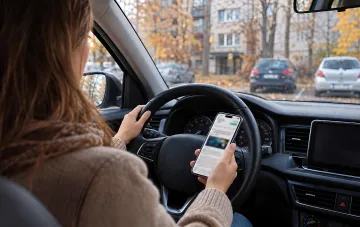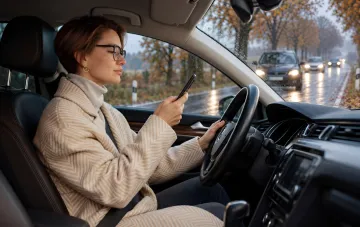
The Ministry of Internal Affairs of Ukraine has published an official clarification reminding drivers and passengers about the mandatory use of seat belts during every trip, as well as special regulations for transporting children and domestic animals. According to RBC-Ukraine, the agency emphasized that these requirements apply without exceptions: fastening seat belts is mandatory even for short trips and at low speeds, and violations carry administrative liability.
Seat Belts: Who Is Required to Wear Them and the Fine
According to clause 2.3 «c» of the Traffic Rules, a driver must use a seat belt and is prohibited from carrying unbuckled passengers. Passengers, in turn, must buckle up if the vehicle is equipped with seat belts — this is stipulated in clause 5.2 «b» of the Traffic Rules. The Ministry of Internal Affairs notes that seat belts are required not only for the driver and front passenger, but for all rear-seat occupants as well. For violating seat belt regulations, part five of Article 121 of the Code of Ukraine on Administrative Offenses provides for a fine of 510 hryvnias.
How to Fasten Properly and Why Airbags Do Not Replace Seat Belts
The agency explained that a properly fastened seat belt should pass across the pelvic bones at the bottom and through the middle of the shoulder and chest diagonally; the strap must fit snugly against the body without twisting, and routing it under the arm or behind the back is strictly prohibited. The Ministry also warns against relying on airbags as a substitute for seat belts: they only complement their action, as the seat belt keeps a person in a position where the airbag can provide proper protection.
Child Transportation: Restraint Systems and Winter Jackets
To transport children under 150 cm in height in a standard passenger car, child restraint systems must be used, as stipulated by clause 21.11 «b» of the Traffic Rules. The car seat must match the child's height and weight and be installed according to the manufacturer's instructions; before the trip, check the reliability of the attachment and ensure that internal belts are not twisted and fit snugly against the body. The Ministry advises against buckling a child over a bulky winter jacket — thick clothing prevents the belts from fitting properly, so it is better to take off the jacket, buckle the child, and cover them with a blanket. Also, do not prematurely face the child forward: they should be transported rear-facing until reaching the height or weight limits specified by the manufacturer for such a seat position. Restraint systems must be installed on seats other than the front row; the exception is children under three years old, who can be transported in a rear-facing seat in the front passenger position if the front airbag for that seat is deactivated.
Pets in the Cabin: Carriers, Harnesses, and Boxes
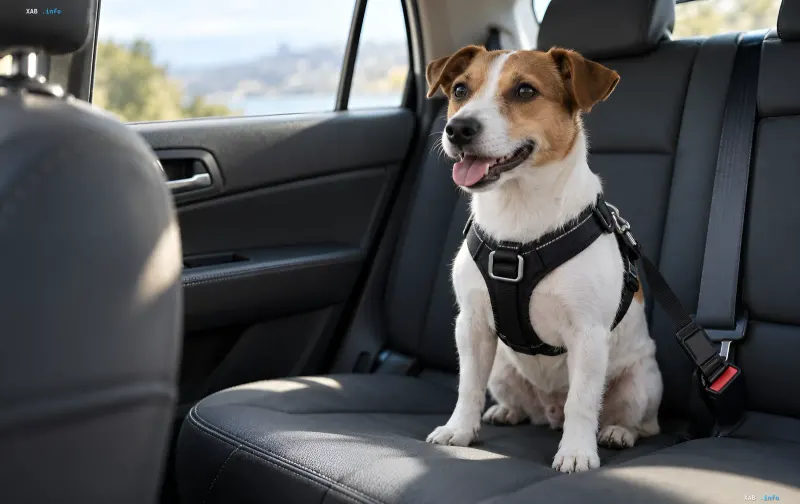
Pets must not move freely around the cabin or sit on the driver's lap, as the animal can distract from the road, block visibility, or interfere with operating the pedals. For cats and small animals, the Ministry recommends using a sturdy carrier securely fastened in the cabin; for dogs, an automotive harness with a fixation system or a transport box of appropriate size should be used. Birds and other small pets are transported in cages or carriers with proper ventilation and secure doors so they do not slide or tumble during movement. Requirements for transporting animals by road transport are defined, in particular, by the animal transport rules approved by Cabinet of Ministers Resolution No. 1402: clause 44 provides for the use of special means for transporting small pets, small dogs, and cats weighing up to 10 kg.
Wild Animals on the Road and Actions in Case of an Accident
Separately, the agency reminded drivers to be vigilant in areas near forests: road sign 1.36 «Wild Animals» warns of the potential appearance of wildlife, though its absence does not guarantee that an animal will not run onto the roadway. Upon seeing an animal, drivers must be prepared for others to appear and reduce speed in advance without making sudden maneuvers that could lead to entering the oncoming lane or losing control. According to clause 12.3 of the Traffic Rules, if a danger arises that the driver is objectively capable of detecting, they must immediately reduce speed to a complete stop or safely bypass the obstacle. In the event of an accident, the driver is obliged to stop, turn on hazard lights, set up a warning triangle, and notify the police by calling 102; if there are injured people, call medical services. Do not touch or attempt to transport an injured wild animal on your own.