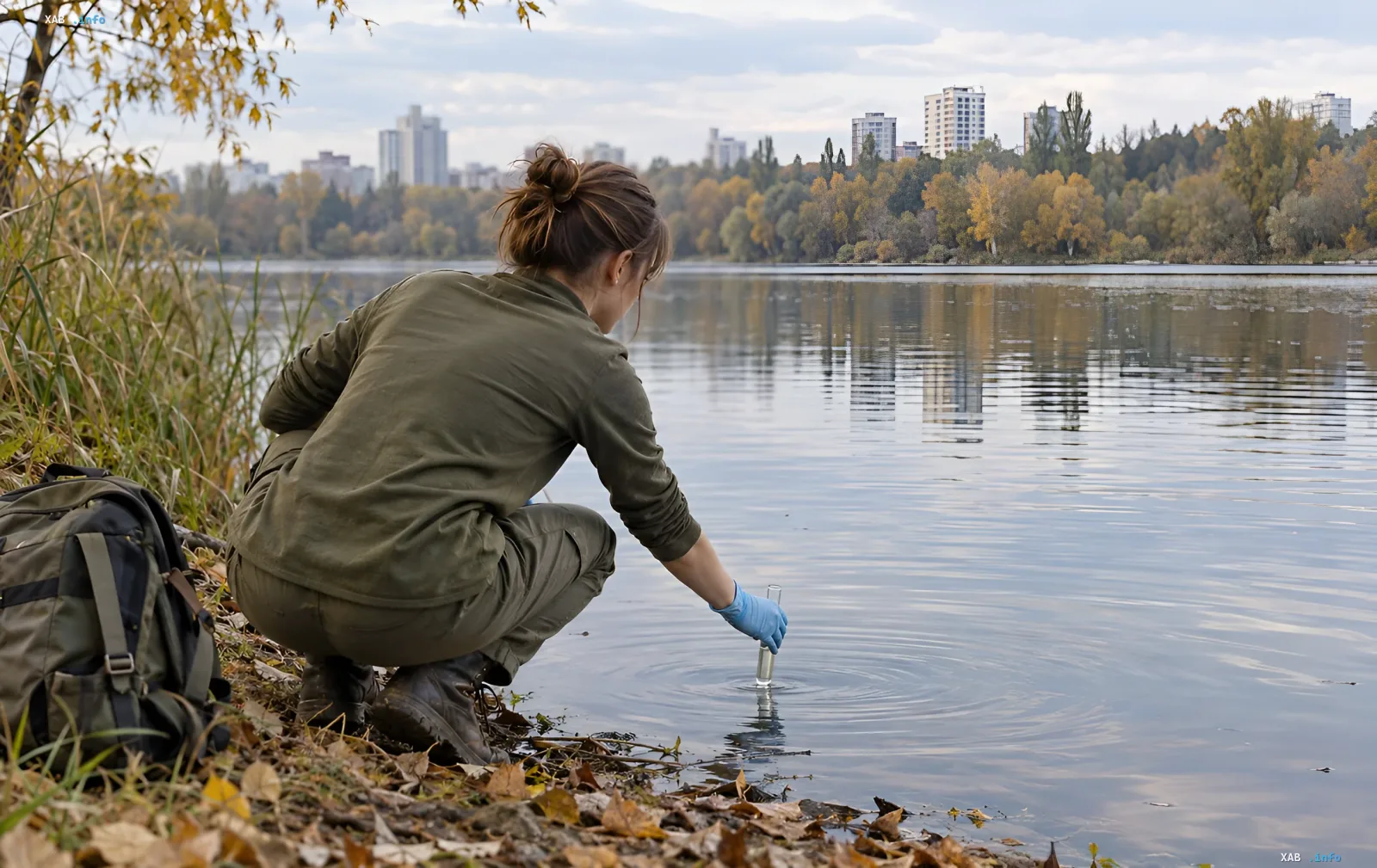
A large-scale project for the ecological restoration of five water bodies located in various districts of the capital has kicked off in Kyiv. The initiative is being implemented by the municipal enterprise “Pлесо” with the active support and scientific guidance of specialists from the Institute of Hydrobiology of the National Academy of Sciences of Ukraine. The main goal of the measures is not just to clean up the water areas, but to introduce a science-based approach to improving the ecological state of the urban environment.
Scientific Approach and Stages of Water Purification
Representatives of the Department of Environmental Protection and Climate Change Adaptation of the Kyiv City State Administration emphasize that any work on water bodies must be based on a rigorous understanding of their actual ecological state. That is why leading academic scientists were brought into the project. The restoration process is divided into several successive stages, starting with detailed information gathering and laboratory analysis of water samples and bottom sediments.At the first and second stages, specialists conducted comprehensive studies to assess the initial parameters of the ecosystems. During the practical phase, modern biological agents are used to promote natural purification and biodegradation of organic pollutants. This approach minimizes the chemical load on the ecosystem and triggers natural self-recovery mechanisms of the capital's rivers and lakes.
Variety of Locations and Testing Bioproduct Effectiveness
To ensure the purity of the experiment and test the universality of the methods, water bodies with completely different characteristics and hydrological conditions were selected. This enables specialized departments to assess the effectiveness of biological preparations on various types of water bodies — from small closed ponds to larger water areas with their own water exchange features.Director of the Department of Environmental Protection of the KSCA Pavlo Ivanov and head of the “Pleso” enterprise Andrii Vagin note the key role of the control stage. After completing all practical measures, experts from the Institute of Hydrobiology of the NAS of Ukraine will re-sample and conduct a comprehensive assessment. This will accurately record the changes that have occurred, evaluate the effectiveness of the applied biological products, and publish objective data for city residents.
Contradictory Data
Despite official statements from the KSCA and the “Pleso” enterprise regarding the comprehensive nature and scientific justification of the large-scale restoration of five capital water bodies, discussions periodically arise in open sources and the expert community regarding the long-term effectiveness of such biological products. Some independent environmentalists point out that local bacterial application only provides a temporary cosmetic effect if the main problem — unauthorized discharges and silting of collectors — is not resolved. At the same time, representatives of academic science insist that the combination of laboratory monitoring by the NAS of Ukraine with practical biodegradation allows for objectively recording changes and developing working algorithms for the rehabilitation of urbanized water bodies.
Expected Results and Next Steps
City authorities promise to keep the public informed of all stages of the environmental initiative's implementation. Final conclusions on the success of the experiment will be made after the completion of control studies and the publication of the full report by the Institute of Hydrobiology. The acquired experience is planned to be used in the future to save other rivers and lakes of the Ukrainian capital suffering from anthropogenic load and climate change.