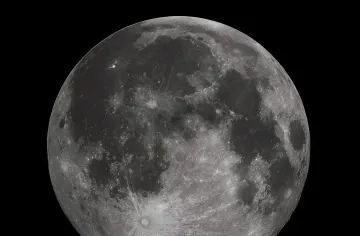
The American space agency NASA is preparing a new scientific mission, GIMLI (Geophysical Instruments for Marius Lunar Pit Investigation), aimed at the direct exploration of underground tunnels and caves on the lunar surface. This was reported by RBC-Ukraine, citing a publication in the scientific journal Science Daily. The researchers' focus is on the Marius Hill Pit — a giant depression in the Marius Hills, with a depth reaching 46 meters and a width of 91 meters. Scientists classify it as a "skylight" — a collapsed roof of an underground lava tube formed as a result of the satellite's ancient volcanic activity.
From Orbital Images to Field Geology
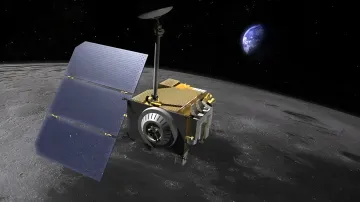
Until now, the Marius Hill Pit has been studied exclusively remotely, using orbital satellites and telescopes. The new GIMLI program fundamentally changes this approach: specialists from the Planetary Science Institute will equip a lunar rover with a suite of geophysical instruments to take measurements directly on the floor of the pit. According to the researchers, analyzing the exposed layers of regolith and solidified lava will allow them to reconstruct the chronology of volcanic processes on the Moon and determine the composition of ancient magmatic flows that were previously inaccessible to direct observation.
Who and How the Project is Being Implemented
Most of the scientific instruments for the GIMLI mission will be designed and manufactured by Honeybee Robotics. The project is funded under NASA’s PRISM (Planetary Science Instrumentation and Research) program, and delivery of the rover and its instruments to the lunar surface will be handled by a private contractor under the Commercial Lunar Payload Services (CLPS) initiative. Thus, the mission will serve as another example of NASA's partnership with the commercial sector in the lunar program.
Caves as a Shield for Future Colonists
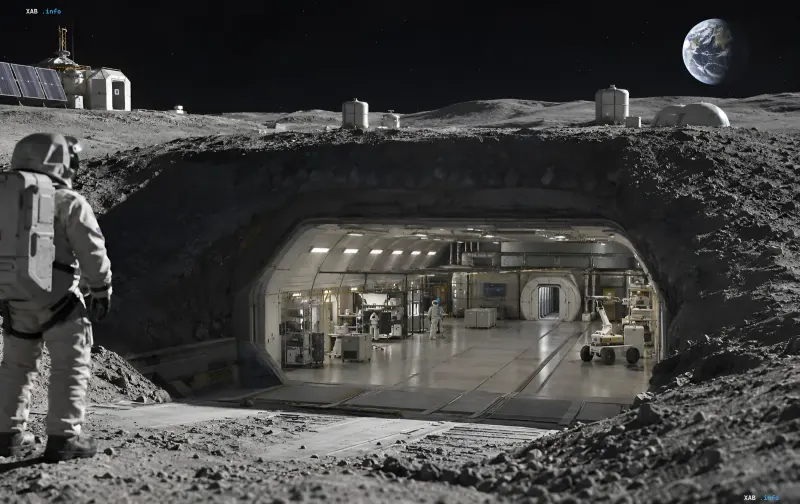
The key practical interest in the Moon's underground structures is tied to the safety of long-term expeditions. Due to the lack of a thick atmosphere, the satellite's exposed surface is constantly subjected to harsh solar and cosmic radiation, micrometeorite impacts, and extreme temperature fluctuations—from plus 127 °C during the day to minus 173 °C at night. Underground lava tubes, according to scientists, can act as a natural radiation shield, reducing radiation exposure by orders of magnitude.
Prospects for a Permanent Lunar Base
Using natural caves and tunnels as shelters, researchers note, will significantly simplify and reduce the cost of building permanent inhabited bases on the Moon. Instead of erecting massive artificial structures with multi-meter thick protective layers, colonists will be able to place residential and working modules inside ready-made geological formations, ensuring stable living conditions. The Marius Hill Pit, with its impressive dimensions, is considered one of the most promising candidates for this task, and data from the GIMLI mission will provide the first detailed geophysical profile of such an object obtained "from the ground."