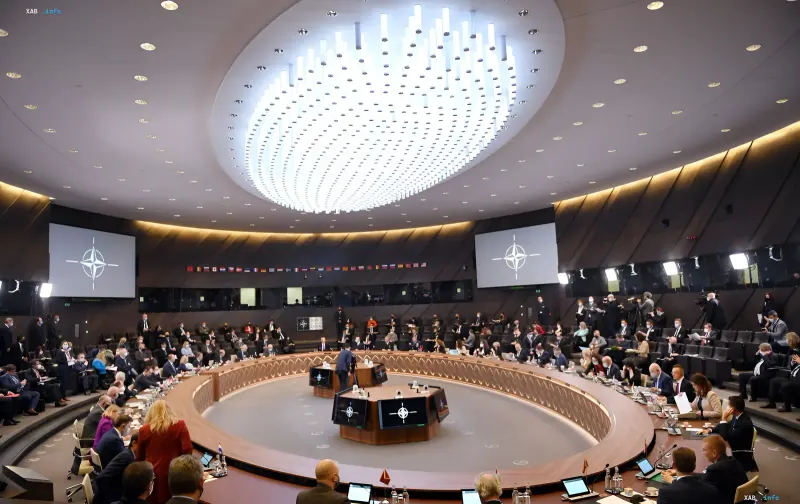
In an interview with RBC-Ukraine, Alina Hetmanchuk, Head of the Mission of Ukraine to NATO, described the North Atlantic Alliance as an organization undergoing deep transformation under the direct influence of the experience of the Russian-Ukrainian war. In her words, the practical lessons of the conflict are already being integrated into the Alliance’s doctrines, defense planning, and new initiatives, with the key consequence being the acceleration of decision-making cycles and the transfer of a greater share of responsibility for security to European member states. Against this backdrop, the diplomat assessed that NATO is increasingly recognizing that, alongside a prolonged political and diplomatic confrontation with Russia, a direct military clash is also possible, with the boundaries between forms of confrontation becoming ever more blurred.
Lessons of the war: compressing the “intelligence – decision – defeat – assessment” cycle
One of the main conclusions the Alliance is drawing from the war experience, Hetmanchuk noted, is the significant shortening of the decision-making cycle. NATO, in her words, is striving to make the “intelligence – decision – defeat – assessment” chain as short and efficient as possible, in order to eliminate the loss of time on bureaucratic approvals in the face of real threats. This approach, she emphasized, is already reflected in the organization’s doctrinal and planning documents and in new defense initiatives shaped by the lessons of the conflict in Ukraine.
Dispelling the myth of a cumbersome bureaucracy
Separately, the diplomat dispelled the widespread notion that NATO remains a cumbersome structure that “takes a long time to assemble” and convenes the North Atlantic Council to decide what to do about a given object. “If in the minds of some Ukrainians NATO is such a cumbersome structure that can take a long time to gather, convene the North Atlantic Council, and decide what to do about a drone — no, that is simply not the case. Before any meeting takes place, those drones will in fact already have been shot down,” explained the Head of the Mission. Thus, in the event of a real threat, the Alliance’s response, in her assessment, will be instantaneous and will not wait for formal consultations.
The “NATO 3.0” concept and the shift of the transatlantic burden
Against the backdrop of growing threats, two key processes are unfolding within the Alliance, according to Hetmanchuk. The first is the shift of the transatlantic burden of responsibility from the United States to Europe within the framework of the “NATO 3.0” concept. It assumes that Europeans themselves should be primarily responsible for conventional security on the continent, while Washington will retain leadership in matters of nuclear deterrence. NATO’s military command and European states, the diplomat added, are now seeking a solution for how, within the NATO Force Model, to replace certain American resources with their own.
Financial burden and its impact on support for Ukraine
The second process concerns a more even distribution of the financial burden among NATO’s European member states and Canada. Hetmanchuk noted that Ukraine feels this dynamic in matters of its own support: the same countries are providing assistance in virtually every possible format, which causes dissatisfaction among the donors themselves, who would like the burden to be distributed more evenly. She also reminded that the “Ramstein” format and the PURL program will, by the end of 2026, focus on financing defense packages that the United States has already approved.
Ukraine as a contributor to the Alliance’s security
A separate signal, the diplomat called, is the recognition of Ukraine, at the level of a NATO declaration, as a contributor to security. In her assessment, this indicates that the Alliance has assessed the potential of Ukraine’s capabilities to strengthen the organization. Taken together, as follows from her statement, these processes confirm that NATO has recognized the reality of the threat of war with Russia and that the Alliance’s actions reflect this.