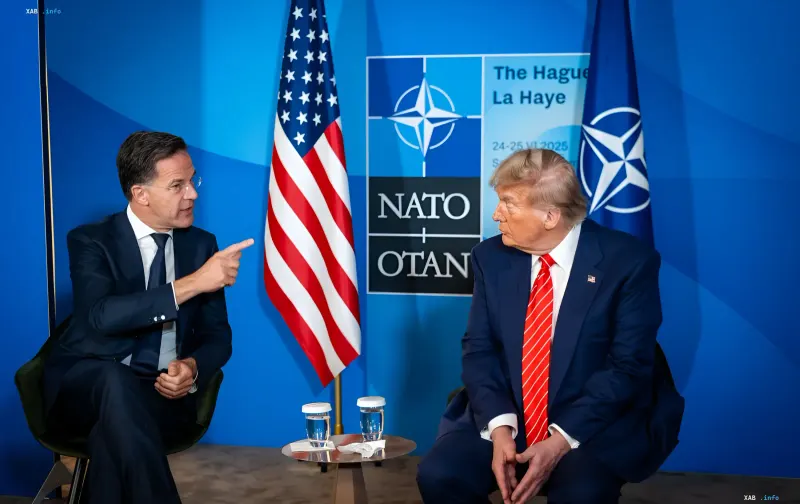
In the waters of the North Atlantic, near Iceland, NATO allies carried out the annual “Northern Viking” exercises, focused on practicing the hunt for Russian submarines. According to Politico, as cited by XAB.info, for the first time in the exercises' long history not a single American ship or aircraft took part — a development that observers see as a symbolic confirmation of a shift in the balance of power on the Atlantic flank.
Exercises Without the American Flag
The operation involved German reconnaissance aircraft, Canadian warships, and Belgian fighter jets. The coalition was led by a French commander — Rear Admiral Nicolas Molitor. The alliance's forces aimed to demonstrate — to Europeans themselves and to Moscow — that they are capable of defending the continent without American leadership. Just two years ago, according to the same sources, the maneuvers were led by two U.S. Navy amphibious assault ships loaded with Marines and aviation. Now, with the bulk of the American fleet concentrated in the Middle East and the Caribbean basin, the North Atlantic is patrolled predominantly by Canadian and European vessels.
Strategic Node: the GIUK Gap
The choice of venue is no accident. Iceland sits on a key route for the advance of stealthy Russian submarines capable of carrying nuclear weapons. The stretch of icy water between Greenland, Iceland, and the United Kingdom is known in NATO as the “GIUK Gap” — it is through this gap that Russian nuclear submarines emerge into the Atlantic from their bases on the Kola Peninsula. “For NATO and Russia, this is truly a dividing line. For the Russians, if they can control access to this gap, they would gain complete dominance in the Atlantic,” a senior alliance official noted.
A Withdrawal That Began in Trump's Second Term
According to Politico, the absence of American ships cemented a withdrawal that began during the second term of U.S. President Donald Trump. Earlier, the White House chief publicly threatened to pull troops out of Europe and stated an intention to acquire — in some formulations even to seize — Greenland, a Danish autonomous territory and NATO member. These statements, as noted within the alliance, further complicate the climate of trust between European capitals and Washington.
Contradictory Data
Here the accounts of the parties diverge. A NATO spokesperson assured that such exercises form a “permanent presence” of the alliance in the North Atlantic and that the coalition continues to hold separate drills involving the U.S. Navy. At the same time, French Rear Admiral Nicolas Molitor, who led the coalition, acknowledged that “the focus has changed.” Politico, meanwhile, interprets the episode not as a temporary rotation but as the consolidation of a systemic U.S. pullback from the Atlantic flank. Thus, the official rhetoric of continuous presence and the commander's own admission of a shift in emphasis create a contradictory picture that observers interpret in different ways.
A Hidden Game of “Cat and Mouse”
Against the backdrop of these maneuvers, a covert confrontation between NATO and Russia is intensifying in the waters of the North Atlantic. Earlier, UK Defense Secretary John Gilly warned of a dangerous game of “cat and mouse” that the two sides are playing in the region: Russian submarines operate regularly in the northern latitudes, while the alliance is forced to step up efforts to detect them. The exercises off Iceland, conducted without the American flag, became a clear indicator that European partners are increasingly taking on responsibility for the defense of their own continent — and increasingly doing so without Washington.