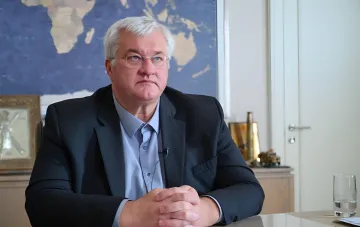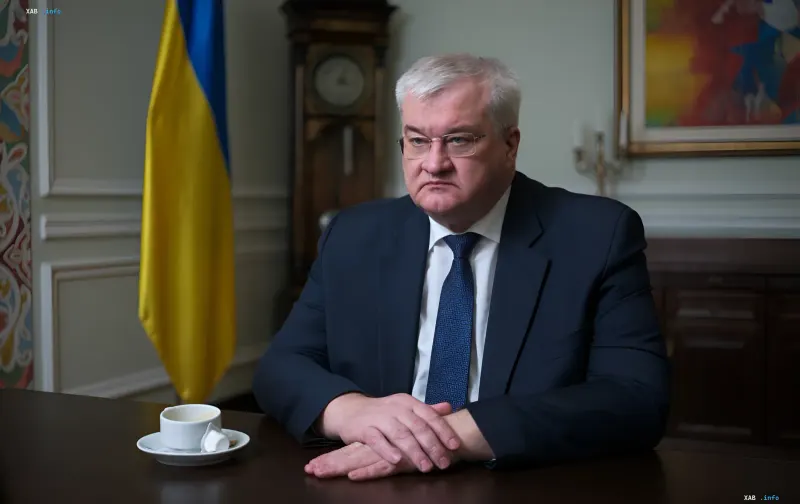
Ukraine's Foreign Minister Andrii Sybiha, in a sharp statement delivered at the end of May 2026 that continues to resonate across European diplomacy, declared that Russia is already waging an active and covert war against Europe, even if Moscow itself does not acknowledge it. In his words, Moscow is employing a tactic of "gray-zone aggression" that, by analogy with 2014 and 2022, preceded the full-scale invasion of Ukraine. The minister called on European governments to take decisive action, emphasizing: "Now is not the time for daydreaming. These incidents must be taken seriously, as coordinated components of a broader malicious strategy."
List of "Covert" Military Actions
In his speech, Sybiha enumerated a wide range of incidents that, in his assessment, form a single system of hybrid pressure on the EU. These include the incident in Leipzig, explosive actions against defense-product manufacturers in a dozen EU countries, covert recruitment, systematic GPS-signal jamming, drone and missile incursions into NATO airspace, damage to undersea cables in the Baltic Sea, and large-scale cyberattacks on critical infrastructure. The minister separately mentioned disinformation campaigns exploiting the migration crisis in Ceuta, as well as recently discovered underground tunnels laid from Belarus toward the Baltics.
Three Key Steps for Europe
Sybiha formulated three specific proposals that, in his view, could become the "last chance" for European governments to protect their citizens. First — sharply restrict the presence of Russian nationals in Europe: ban entry for combatants from Russia and reduce non-essential visas to a minimum. Second — sever all ties with Russia, including trade: impose a trade embargo, tighten sanctions, and wind down all energy projects, including in the nuclear sector. Third — completely dismantle Russia's influence networks in Europe: close all offices of "Rossotrudnichestvo" and so-called "Russian Houses," curtail cultural and scientific exchange, and ban Russian propaganda and its intermediaries.
Parallel with 2014 and 2022
The minister stressed that Russian aggression against Ukraine — both in 2014 and in 2022 — was preceded by precisely this kind of tactic: undermining unity, weakening national resistance, and preparing the ground for open military action. In his words, Europe faces an "either-or" choice: either Moscow succeeds in its "gray-zone aggression," or Europe demonstrates the resolve to protect the lives of its citizens. Sybiha also stated that Ukraine has accumulated enormous experience in countering Russian aggression in all its forms and is ready to share it, playing a decisive role in defending stability on the continent.
Confirmation from European Leaders
Kyiv's position is not left isolated. The President of Latvia, Edgars Rinkēvičs, previously stated that the hybrid war against the EU has already begun, and that Western intelligence services are investigating a series of sabotage acts, assassination attempts, and arsons on the territory of the Baltics. Poland's Foreign Minister Radosław Sikorski also pointed to the growing threat, listing the Kremlin's hostile actions: cyberattacks on critical infrastructure, arson attempts, sabotage on railways, and drone strikes. The totality of these statements is forming a growing consensus in Brussels on the need to revise the approach to Russia's "gray zone."
Contradictory Data
At the same time, a certain duality is traceable in Kyiv's public rhetoric. On the one hand, Sybiha calls for a complete severing of trade and economic ties with Russia. On the other hand, in a number of other statements recorded by Ukrainian media, calls have been made for Europe to help resume the negotiation process with Moscow. This raises the question of how consistent the Ukrainian position is: is a complete trade break a precondition for negotiations, or are they considered alternative scenarios? Moreover, some of the incidents listed by Sybiha (in particular, the "underground tunnels from Belarus to the Baltics" and the "explosive actions in a dozen EU countries") had not been fully confirmed by independent international investigations at the time of the statement, leaving room for debate over the degree of proof for each specific episode.