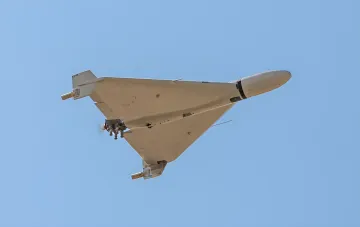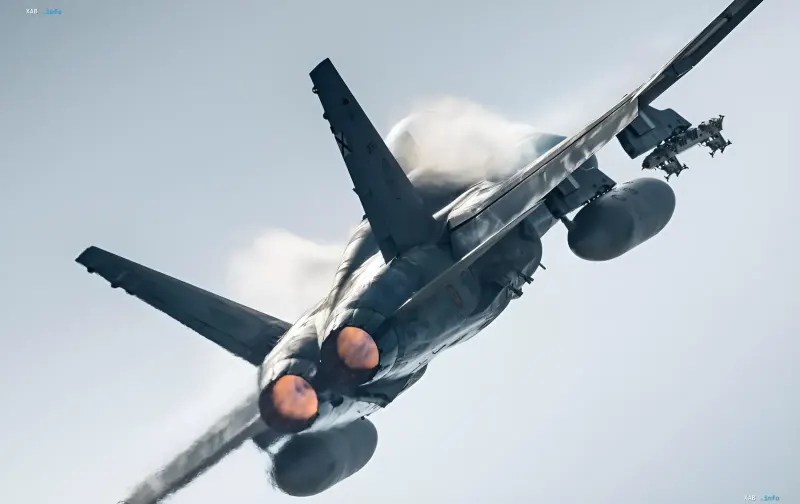
In an interview with RBC-Ukraine, the head of Ukraine's mission to NATO, Alena Hetmanchuk, stated that the so-called “psychological barrier” in the Alliance regarding Russia has been definitively removed. According to her, the turning point was September 10, 2025, when NATO for the first time destroyed Russian drones that had violated Polish airspace. Since then, the diplomat notes, Alliance countries have been systematically and without the previous hesitation shooting down Russian UAVs over the territory of Romania and Latvia.
Removing the “Psychological Barrier”
Hetmanchuk emphasized that previously in Ukraine there had been questions and even ridicule about what exactly and by what means the aircraft were shot down. “But for some reason the fact that Russian drones were shot down at all was ignored. After that we see that NATO has constantly started doing this,” she said. Thus, according to the head of the mission's assessment, the episode over Poland was not a one-off incident, but a point after which the practice of interceptions became routine.
A New Deterrence Logic
In the diplomat's view, behind these actions lies a deeper rethinking of the entire deterrence policy. “NATO is rethinking what it means to be a defensive Alliance in the conditions of a modern war,” Hetmanchuk stated. She pointed out that the previous logic — simply monitoring the situation and avoiding escalation at all costs — “does not work” if one demonstrates indecision. The algorithm now developed, according to her words, is as follows: if a violation of airspace creates a threat to the infrastructure or people of member states, that threat must be destroyed immediately.
From Isolated Incidents to a Systemic Threat
Hetmanchuk also noted that the Alliance has acknowledged that such cases have ceased to be isolated. Their number is growing, and in her assessment this may indicate not accidents, but planned actions by Russia aimed at testing NATO's reaction. This thesis is supported by data on regular interceptions: according to information published in July 2026, Romania spent about 1.5 million euros on shooting down three Russian drones, which illustrates both the frequency and the financial burden of such operations.
Contradictory Data and Caveats
At the same time, it should be borne in mind that the key thesis about the “removed psychological barrier” is the assessment of a single official, and not the result of an independent investigation. The specific date of the first incident (September 10, 2025, Poland) is given in the interview itself, whereas in the available set of verification sources, independent confirmation primarily concerns the Romanian episode and its cost. Moreover, the text of the interview itself mentions that in Ukraine the question was discussed about what exactly the drones were shot down with, which indicates the presence of inconsistencies in the public presentation of the details of the first interception.
Defense Financing and Ukraine's Status
In the same interview, Hetmanchuk reported that by the end of 2026 the “Ramstein” and the PURL program will focus on financing defense packages already approved by the United States. She also stated that NATO at the declaratory level has recognized Ukraine as a security contributor, assessing the potential of Ukrainian capabilities to strengthen the organization. At the same time, the baseline level of PAC-3 and PAC-2 interceptors for Ukraine's Patriot systems is provided monthly by the PURL program, however, according to the diplomat, this volume is insufficient.