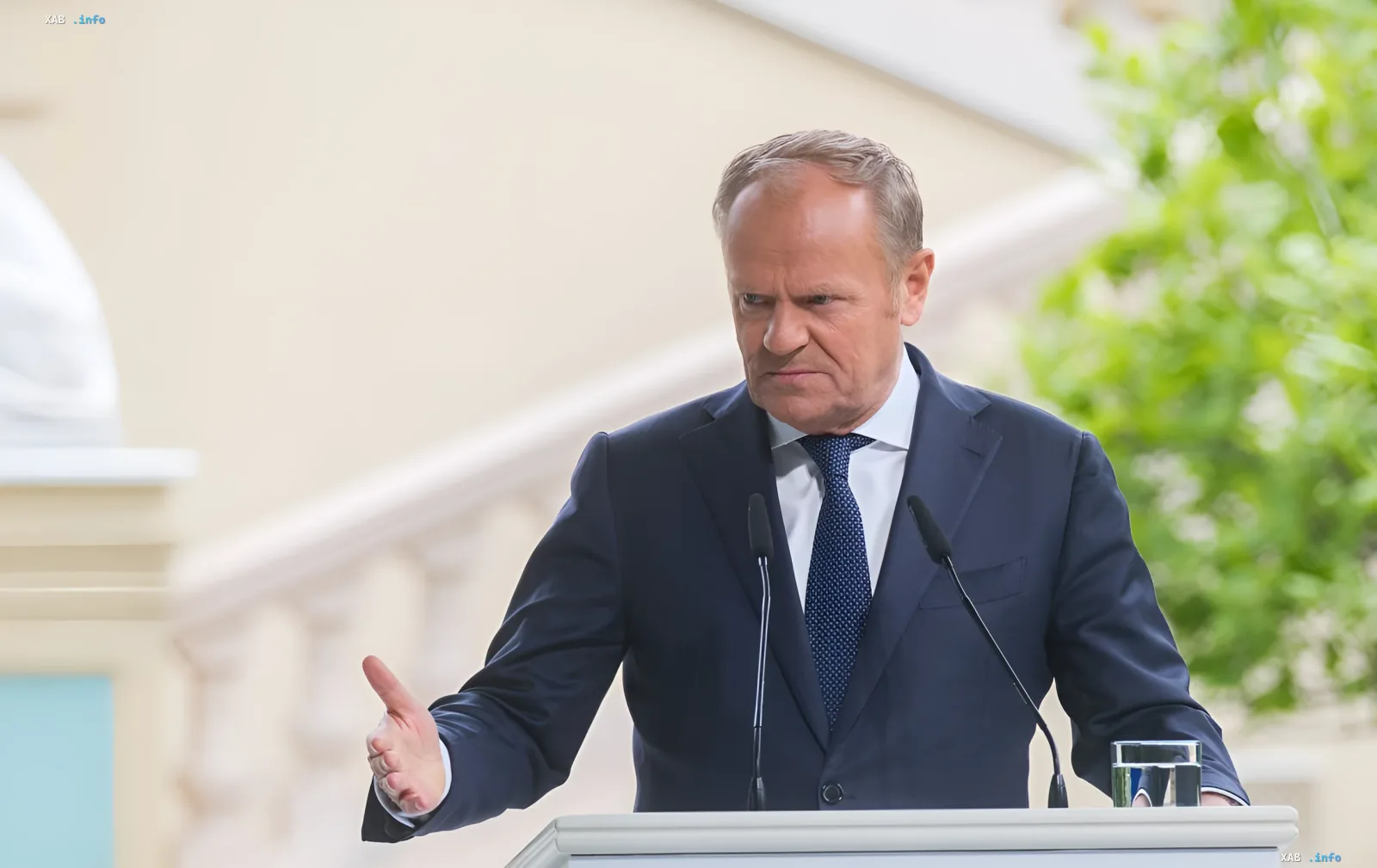
Polish Prime Minister Donald Tusk issued a sharp warning that in the coming months Russia could significantly expand the geography of its attacks — not only by continuing to target Ukraine, but also by directing drones and missiles at the territories of states supporting Kyiv. The Polish leader made these remarks in an interview cited by Politico and quoted by RBC-Ukraine and several other media outlets. According to Tusk, the intelligence assessments of NATO, Ukraine, and Poland are "highly consistent and compelling" and point to a specific escalation scenario that Warsaw considers the most likely for the autumn–winter period of 2026.
'Accidental incident' as a tool of pressure on the Alliance
The central point of Tusk's statement is that Moscow may deliberately allow drones or missiles to land on the territory of one or more NATO countries on the eastern flank, and then officially classify what happened as an "accidental incident" that provides no grounds for activating collective defense mechanisms. "The aim will be to undermine the integrity of NATO as a whole and, above all, to convince member states that Article 5 is more theoretical than practical," the Polish prime minister emphasized. Article 5 of the North Atlantic Treaty enshrines the principle of collective defense: an armed attack on one member of the Alliance is regarded as an attack on all. Thus, according to Warsaw's assessment, Russia will attempt to test NATO's readiness to respond to such provocations and to weaken the bloc's unity from within.
Autumn and winter — a critical period for Ukraine and its neighbors
Tusk separately warned that the coming autumn and winter months will be an extremely difficult period for Ukraine. Russian armed forces, he said, will continue intense strikes on Ukrainian cities, energy and transport infrastructure, and logistics facilities. The prime minister noted that Moscow will pay particular attention to ammunition depots, railway hubs, and other objects of strategic importance for Ukraine's defense. "For now, it is Ukraine," he stated, pointing to the current vector of the attacks. At the same time, Tusk emphasized that the consequences of such strikes could directly affect Poland as well, since the attacks are increasingly occurring in the immediate vicinity of the Polish–Ukrainian border, creating additional risks for the border regions.
A new generation of jet-powered drones is changing the rules of the game
Worthy of separate attention is Tusk's mention of a new generation of jet-powered unmanned aerial vehicles that Russia is increasingly deploying against Ukraine. According to the Polish prime minister, such drones move significantly faster and at greater altitudes than previous models, which substantially complicates their detection, tracking, and interception by air defense systems. "We are about to face a very serious test, because we will certainly become the target of far more dangerous provocations and incidents than before," Tusk warned, effectively stating that the existing early-warning and air defense systems on NATO's eastern flank may prove unprepared for new types of threats.
Context: from warning to emergency meetings in Warsaw
Tusk's statement came against a backdrop of growing tension around the Polish–Ukrainian border. Earlier, after the Polish prime minister reported a Russian drone strike near the border between Poland and Ukraine, an emergency cabinet meeting was convened in Warsaw the following day, with the participation of military and law enforcement structures. At that meeting, Tusk spoke of the possibility of a real Russian incursion onto Polish territory, which became one of the sharpest public statements by Polish leadership throughout the course of the conflict. The prime minister's current remarks can be seen as a systematization and public fixation of the risks that have already been discussed in closed format at the level of the Alliance's defense departments.