Living Hairstyle: The Phenomenon of the Curly-crested Aracari
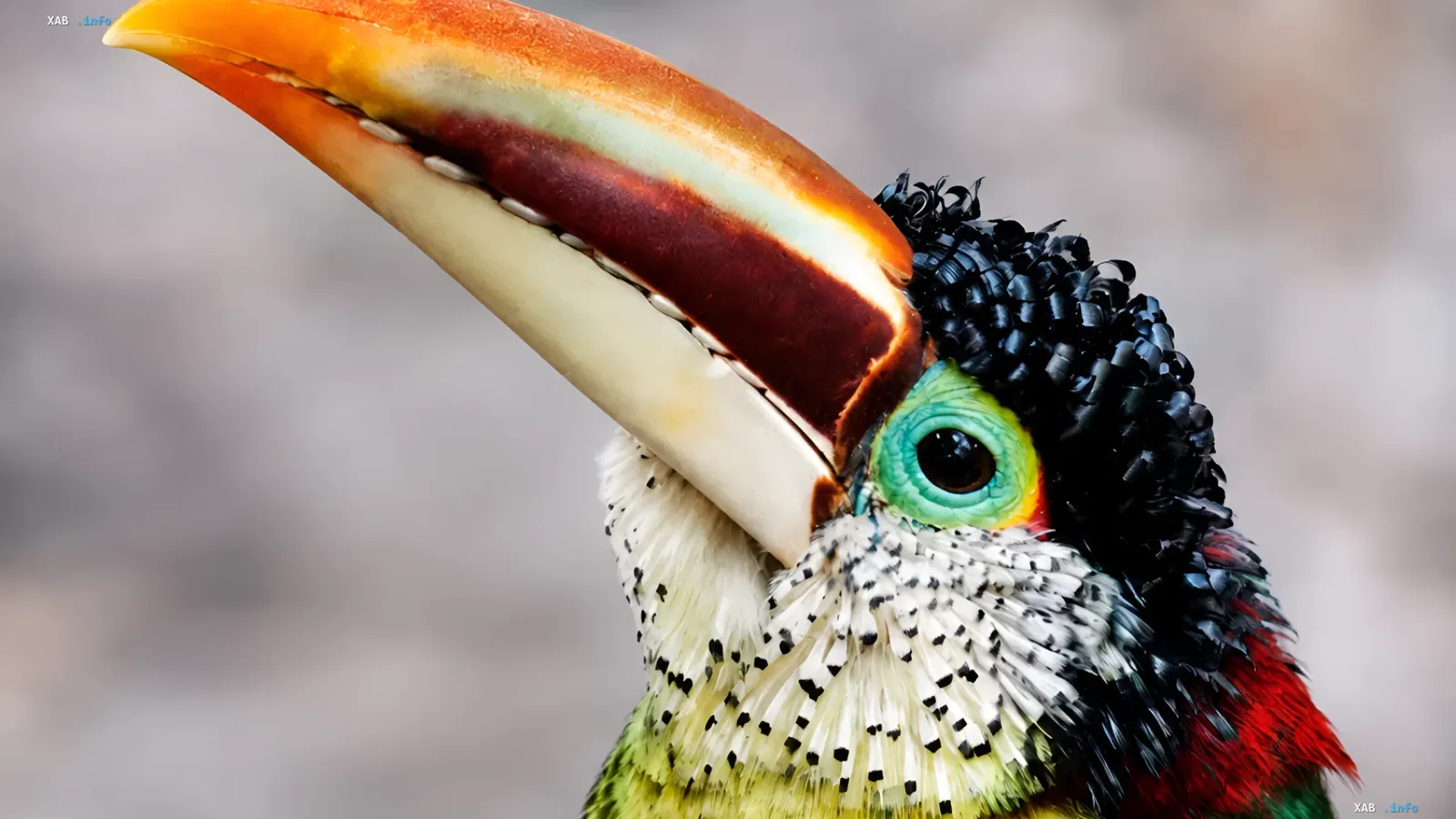
In the dense jungles of the Amazon, where biodiversity is breathtaking, scientists continue to discover amazing examples of natural adaptation. One such unique discovery is the Curly-crested Aracari (Pteroglossus beauharnaisii). This bird, belonging to the toucan family, instantly grabs attention due to its extravagant appearance. At first glance, the feathers on its head look as if they have been given a complex professional styling. However, as experts confirm, this effect is not the result of human intervention or chance — it is a completely natural biological feature of the species.
Unlike its relatives, whose head plumage is usually straight and smooth, the Curly-crested Aracari has a special feather structure that creates a 'curly' effect. This feature makes it the only representative among toucans possessing such a natural 'wig'.
An Evolutionary Mystery: Why Does the Bird Have Curls?
Although the unique structure of the plumage has been recorded and described, scientists have not yet reached a consensus on its functional purpose. There are ongoing discussions in the scientific community about the evolutionary role these feathers play. The main hypotheses boil down to two directions: attracting a mate during the breeding season or protection from predators. Perhaps the complex texture of the feathers helps the bird camouflage better in the tree canopies or serves as a visual signal to its peers.
Contradictory Data
Currently, there is a divergence of opinions within the ornithological community regarding the exact function of this feature. Some researchers insist that it is exclusively a mating trait, similar to the bright coloration of other birds, intended to demonstrate the male's health. Others suggest that the 'curls' may serve as a sort of 'helmet' or visual destabilization for predators attempting to attack the bird in dense foliage. At present, none of the theories have irrefutable evidence, and the question remains open for further field research.
Habitat and Lifestyle
The Curly-crested Aracari inhabits the western regions of the Amazon, occupying territories in Brazil, Peru, and Bolivia. These birds lead an arboreal lifestyle, spending most of their time among the branches of tall trees. Their diet consists mainly of fruits, which they search for in the canopies. However, like many members of the order Piciformes, they do not limit themselves to plant food. Their menu also includes insects, eggs of other birds, and sometimes small reptiles.
Social Structure of the Species
Like most toucans, the Curly-crested Aracari is a social bird. They are rarely found alone and prefer to move in small groups. Such behavior helps them find food sources more efficiently and protect themselves from predators in the complex ecosystem of the tropical forest. Their bright colors and unique appearance make them one of the most recognizable and mesmerizing inhabitants of the Amazon rainforests.