In the high-altitude Puno region of southeastern Peru, a rare electoral oddity has turned into an official state verdict. The fate of the mayoral seat in the district of Konima (Huancané province) for the next four years was decided by the toss of a standard one-Peruvian-sol coin. The trigger for this finish was an absolute tie in votes between the two key contenders, which could not be broken by recount or re-vote.
The Ultimate Electoral Deadlock
Competing for leadership of the district were Rubén Quispe Capahanya, representing the Somos Perú ("We Are Peru") party, and Salomino Mamani Quispe, a candidate from the País para Todos ("Country for All") political force. When the National Office of Electoral Processes (ONPE) processed 100% of the protocols, the counter stopped at 671:671. Repeated checks and ballot recounts did not change the result by a single vote: neither candidate held even a minimal advantage, and the electoral deadlock proved insoluble by standard means.
How the Law Turned a Tie into a Draw
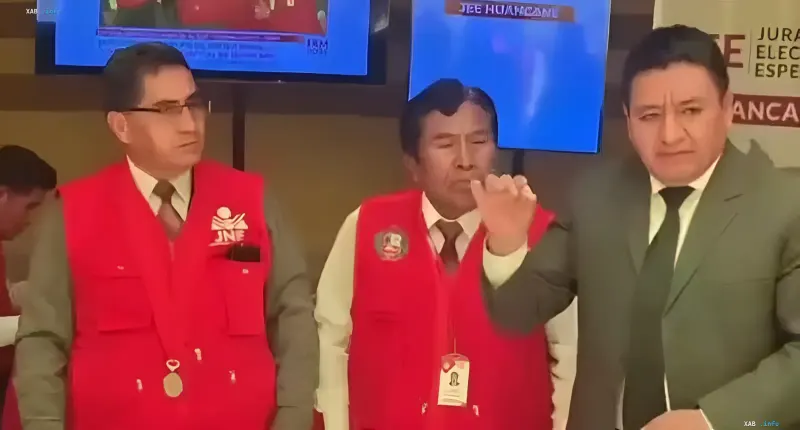
Instead of scheduling an expensive second round or dragging out legal battles, Peruvian authorities applied the letter of the law. Article 26 of Peru's Municipal Elections Law (No. 26864) and National Jury of Elections (JNE) regulations explicitly stipulate that in the event of an irresolvable tie, the winner is determined by an open draw overseen by the Special Electoral Jury (JEE). In this case, the procedure was conducted by the Huancané province jury, which was handed the responsibility of determining the outcome.
Live-Broadcast Ceremony
The procedure was organized as a public legal event and broadcast live. Five standard one-sol coins (worth about $0.27 USD) were placed on the jury's table. The right of first choice fell to the proxy of the Somos Perú party, who chose tails (sello). The head of the electoral jury tossed the coin into the air in front of observers, lawyers, and cameras—and tails landed face up on the smooth surface of the table. Rubén Quispe Capahanya secured the victory and the certificate of elected mayor of Konima for a four-year term.
Is "Coin Democracy" Legal?
To a layperson, choosing a city leader with a coin toss might look like a farce, but in electoral law it is a standard mechanism of "last resort." In Peru, drawing lots—tossing a coin or drawing sealed balls and envelopes—is legally recognized as final and not subject to appeal. Similar mechanisms are enshrined in a number of US states (particularly Kentucky and Wyoming), as well as in the UK and some Canadian municipalities. The main argument of lawmakers is budget savings and the elimination of a political vacuum where a re-vote could paralyze local administration for months.
Newly elected mayor Rubén Quispe Capahanya stated after the verdict was announced that he entered the procedure "with firm faith in victory." The losing side, the País para Todos candidate, was left with only bitter irony: he missed victory in the election by exactly one ballot.