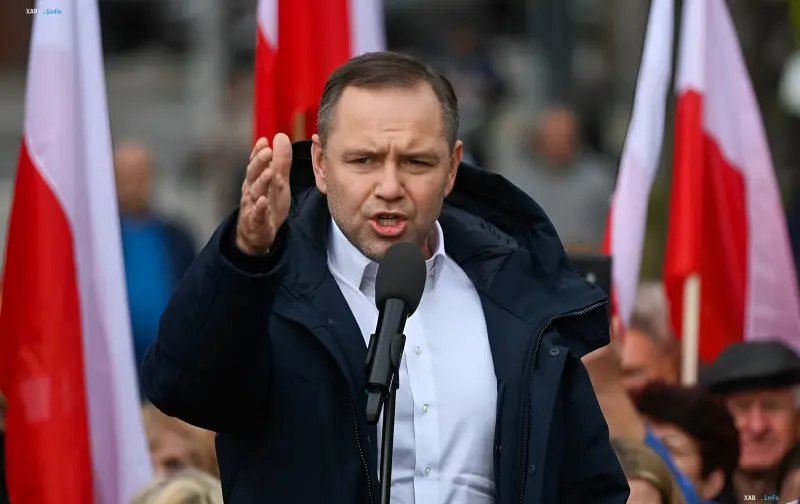
In the dead of night on October 31, 2026, Polish President Karol Navrocki, according to Polish publication Onet as cited by RBC-Ukraine, forced his way into the Constitutional Tribunal building in Warsaw, which had been under the control of police and judges elected by the current Sejm since the evening of October 30. The president's spokesman published a video showing Navrocki being pushed at the entrance. According to the President's Chancellery, the attempt to block the head of state from entering was made by judges elected by the current parliament — Anna Korwin-Petrovska and Krystian Markiewicz. Navrocki, according to the Chancellery, told Korwin-Petrovska: "You are not judges of the Constitutional Tribunal." Entering the building along with the president were First President of the Supreme Court Zbigniew Kapinski and Head of the President's Chancellery Zbigniew Bogucki.
Keys, Suspensions, and "Non-Existent Documents"
The president's representatives escorted Tribunal Deputy President Bartlomiej Sochanski inside, who is reportedly in his office and calls the orders regarding his own suspension "non-existent documents." Judges elected by the current Sejm refused to hand over the keys to the tribunal's premises to the Chancellery representatives. The government camp, conversely, claims that individuals from the President's Chancellery tried to take these keys by force. Thus, both sides provide mutually exclusive descriptions of what exactly happened in the corridors of the building in the first minutes after Navrocki's entry.
Clashes Beyond the Doors: Police and Protesters
Clashes between protesters and police continued outside the Constitutional Tribunal building into the night of October 31. Law enforcement officers cordoned off the entrance to the building and warned that force could be used if necessary. The situation outside the court remains tense, with pushing and verbal altercations between demonstrators and police recorded in real time. Earlier, on the evening of October 30, police blocked access to the building, citing a potential threat to the life and health of the tribunal's judges and staff.
Political Consequences: Ambassador's Resignation and Bosak's Forecast
Against the backdrop of the nighttime events, Poland's Ambassador to Romania Krzysztof Soloch (note: Pavel Soloch) submitted his resignation, explaining his decision by the situation surrounding the Constitutional Tribunal. Leader of the opposition Confederation party and Deputy Marshal of the Sejm Krzysztof Bosak called Navrocki's nighttime breakthrough "a success for the president" and suggested that the standoff between the branches of power could drag on for days, weeks, or even months. According to him, neither side is ready for a compromise.
Roots of the Crisis: The Long-Standing Tusk-Navrocki Confrontation
The crisis surrounding the Constitutional Tribunal is not a one-off event, but the culmination of a years-long conflict between Prime Minister Donald Tusk's government and President Navrocki for control over the judicial system. Tusk claims that the previous administration made the tribunal politically dependent, and his cabinet is trying to change the composition of the court. Navrocki, in turn, refused to swear in three of the six judges elected by parliament, and current Tribunal President Bogdan Siewinpowski (note: Bogdan Sventchowski) barred judges appointed by the current Sejm majority from working. On the evening of October 30, Korwin-Petrovska, the longest-serving judge, announced the suspension of Sventchowski and his deputy, and the prosecutor general filed motions to strip them of their parliamentary immunity. At the same time, a post appeared on the tribunal's X (formerly Twitter) page claiming that the website had been "hijacked" and that Sventchowski remains in office.
Background: US Call to Soften Rhetoric Regarding Russia
The acute political crisis in Poland erupted on the very same day that Foreign Minister Radoslaw Sikorski announced that the United States was asking European allies to soften their rhetoric regarding Russia. Sikorski called such an appeal unacceptable amid ongoing Russian strikes on Ukrainian territory. The statement came against the backdrop of an internal institutional crisis that, according to observers, could affect Warsaw's position within NATO and the EU in the coming weeks.