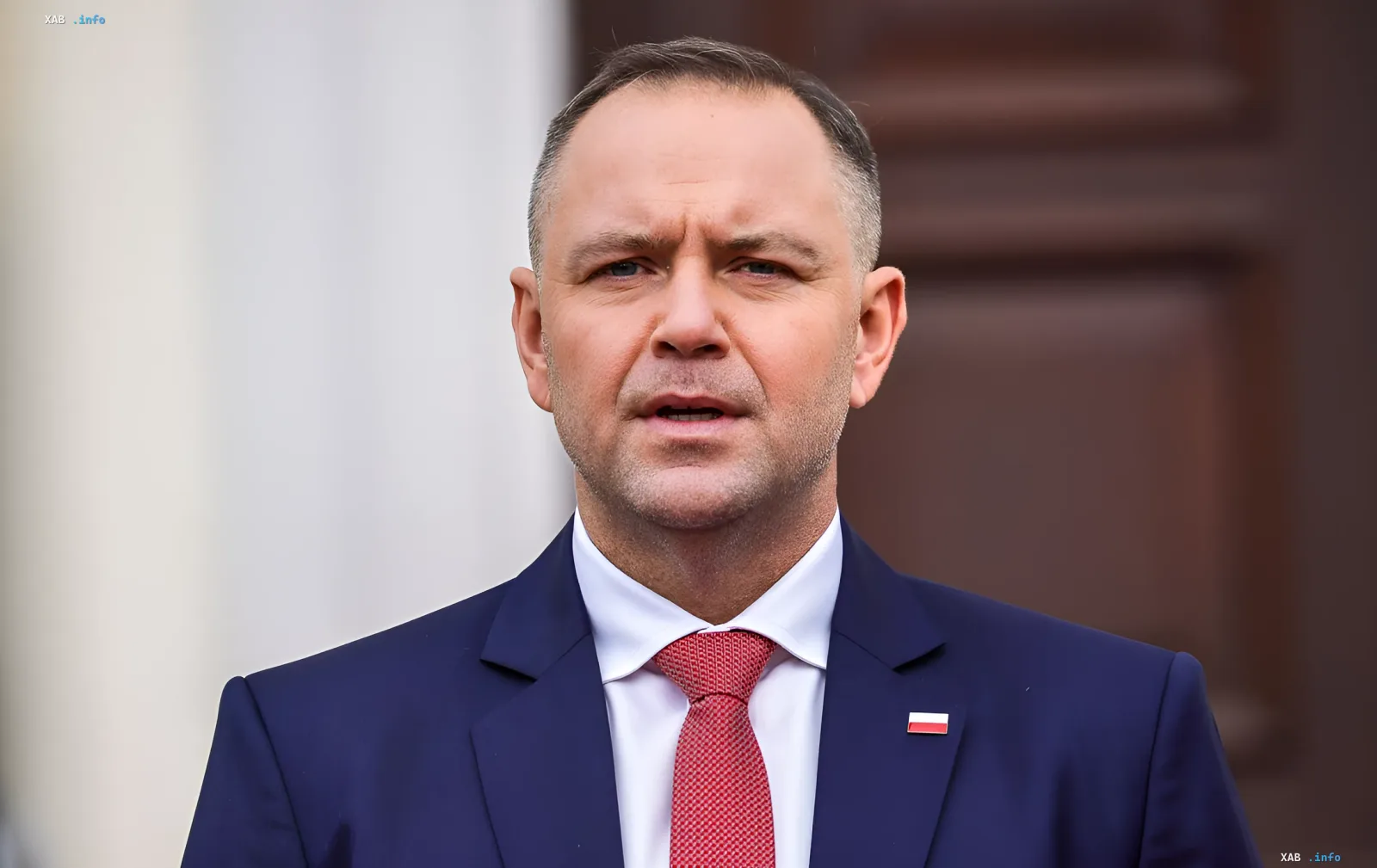
Polish President Karol Nawrocki delivered an emotional address to his compatriots on Friday, September 19, 2026, in the city of Włodawa in the eastern part of the country, in close proximity to the border with Belarus. The speech was timed to coincide with the anniversary of Poland’s defeat at the outbreak of the Second World War, when the western part of the state was occupied by the Wehrmacht and the eastern part by the Soviet Union. “We are a people who may lose territory, but we will never lose our soul. We may give up territory, but we will never give up our homeland,” Nawrocki declared, addressing the themes of national unity and historical memory. According to RBC-Ukraine, the message served as a call for national cohesion in a situation in which, in the prime minister’s words, “the coming months will be a period of intense action by Russia.”
The Prime Minister’s Lightning Reaction: “Delete This Message”
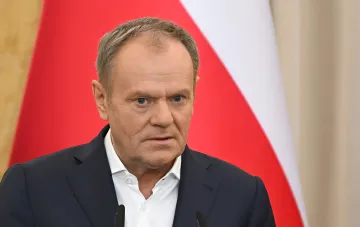
The president’s statement did not go unanswered. Polish Prime Minister Donald Tusk reacted almost instantly to Nawrocki’s words, publishing a public message in which he proposed to “delete” the statement. “Mr. President, I propose that you delete this message. We do not intend to cede even a scrap of our territory,” Tusk wrote. This reaction marked a public rift between two key figures of the Polish leadership: the president, appealing to a historical metaphor, allowed for the possibility of losing land in his rhetoric, while the head of government categorically rejected the very idea of territorial concessions. Experts note that, in a situation in which Tusk had earlier warned of a possible escalation affecting Polish territory, such dissonance in the statements of the top leadership could either strengthen or undermine public trust in the unity of state policy.
Military Context: Strikes Near the Border and an Emergency Meeting
The backdrop against which Nawrocki’s words were delivered is defined by a sharp deterioration of security in the region. Earlier this month, Prime Minister Tusk urgently convened a meeting with ministers, government representatives, the army, and the security services following Russian strikes on the Yagodin station, located near the Polish border. At the conclusion of the session, Tusk warned that the coming months would be a period of intense action by Russia, and did not rule out that the escalation could directly affect Polish territory. It is in this context that the president’s statement about being ready to “lose territory, but not the soul” gained additional sharpness: it was delivered not in an abstract historical plane, but against the backdrop of real military incidents on the country’s borders.
Trump Announces Progress in Establishing a U.S. Base in Poland
Meanwhile, U.S. President Donald Trump stated that the United States has made significant progress in establishing its own military base on Polish territory. According to him, the specific location of the facility will be announced in the near future, and he directly linked the progress in the negotiations to “the determination of Polish President Karol Nawrocki.” This statement underscores the strategic significance of Warsaw in the architecture of NATO security and simultaneously strengthens the political weight of the president, whose words about the “soul of the nation” now resonate against the backdrop of discussions on the deployment of a U.S. military presence. For Poland, this means that the issue of territorial integrity and sovereignty goes beyond domestic rhetoric and becomes a subject of direct bilateral negotiations with Washington.
Contradictory Data
A significant inconsistency in wording has been recorded in the statements of the two top officials of Poland. Nawrocki, in his address, allowed for the rhetorical possibility of losing territory (“we may give up territory”), which in the public sphere was perceived as a potential signal of readiness for territorial compromises. Tusk, by contrast, categorically rejected such an interpretation, stating that Poland “does not intend to cede even a scrap” of its land, and proposed to “delete” the president’s message. Thus, one side interprets Nawrocki’s words as a historical-philosophical metaphor tied to the 1939 anniversary, while the other sees them as a politically dangerous formulation requiring immediate refutation. Moreover, the original RBC-Ukraine text contains a fragment of a phrase “in X” when indicating the context of the speech, which makes it impossible to unambiguously restore the full name of the event or the format in which the address was delivered. Both versions — the metaphorical and the political — remain in the public space without a final ruling by the president himself.
Historical Frame and Modern Projection
The choice of Włodawa as the venue for the speech is no accident: the city is located in eastern Poland, near the border with Belarus, and in itself is a symbol of the eastern lands that were occupied by the Soviet Union in 1939. Referring to the anniversary of this event in September 2026, when a real military threat from the east has once again become a subject of daily discussion in Warsaw, turns historical memory into an instrument of current political mobilization. The phrase “we may lose territory, but not our soul,” in such a reading, functions as a warning: even in the worst scenario, in which part of the lands falls under the control of an aggressor, the nation will preserve its identity. However, it is precisely this logic, in Tusk’s view, creates a dangerous precedent of normalizing territorial losses and therefore requires public refutation at the highest level.