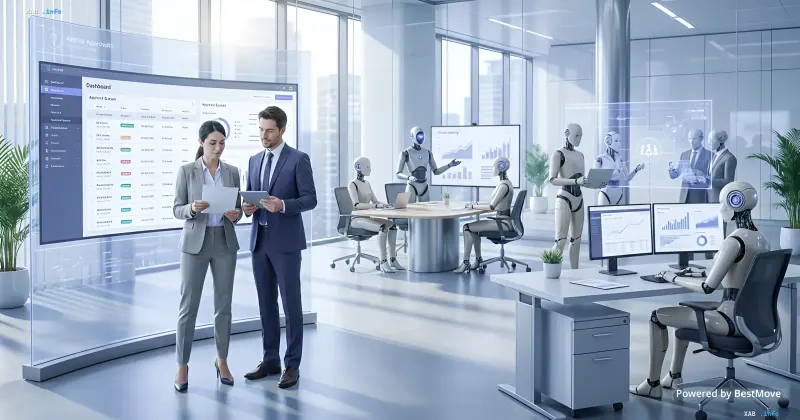
In the world of corporate innovation, a historic shift has occurred. NEC, a Japanese technology corporation and one of the leaders in electronics and telecommunications, has officially announced the launch of a unique division that has not a single living human on its payroll. This is the first case in history where AI agents have been endowed with a full corporate structure, including management positions and a hierarchy similar to human departments.
Structure of the digital workforce
The new division, launched on August 1, 2026, operates on par with traditional departments, such as HR and legal. It consists of 17 AI employees arranged in a clear four-level hierarchy. The staffing list of the "digital department" features roles familiar to any business: from the director and board of directors to middle managers and staff members. Each of these agents is endowed with specific algorithmic tasks, allowing them to interact with each other and make decisions within set parameters.
Efficiency and analytics
The main goal of creating such a department was to optimize business processes and analyze sales. NEC reports impressive results even after the first month of the test period. According to internal company data, the AI staff reduced the time required for reporting and conducting complex analytical calculations by seven times compared to traditional methods. This allows the corporation to process huge amounts of data in real-time, identifying hidden patterns and growth points that might have gone unnoticed during manual processing.
The role of humans: control, not replacement
Despite the radical experiment, NEC emphasizes that this is not a replacement for human labor, but an extension of it. The company stated that all actions of AI agents are under strict human control. Final decisions, especially regarding strategic issues, remain with living top managers. AI is viewed as a tool intended to take over routine tasks, freeing people for more creative and complex tasks requiring empathy and unconventional thinking.
Demographic context of Japan
This step by NEC is not accidental and is directly linked to the demographic challenges facing Japan. The country is facing unprecedented population aging and a shrinking workforce, creating a labor shortage in many sectors of the economy. The introduction of autonomous AI divisions is seen as a strategic response to this problem, allowing for the maintenance and growth of economic activity without dependence on the number of human resources.