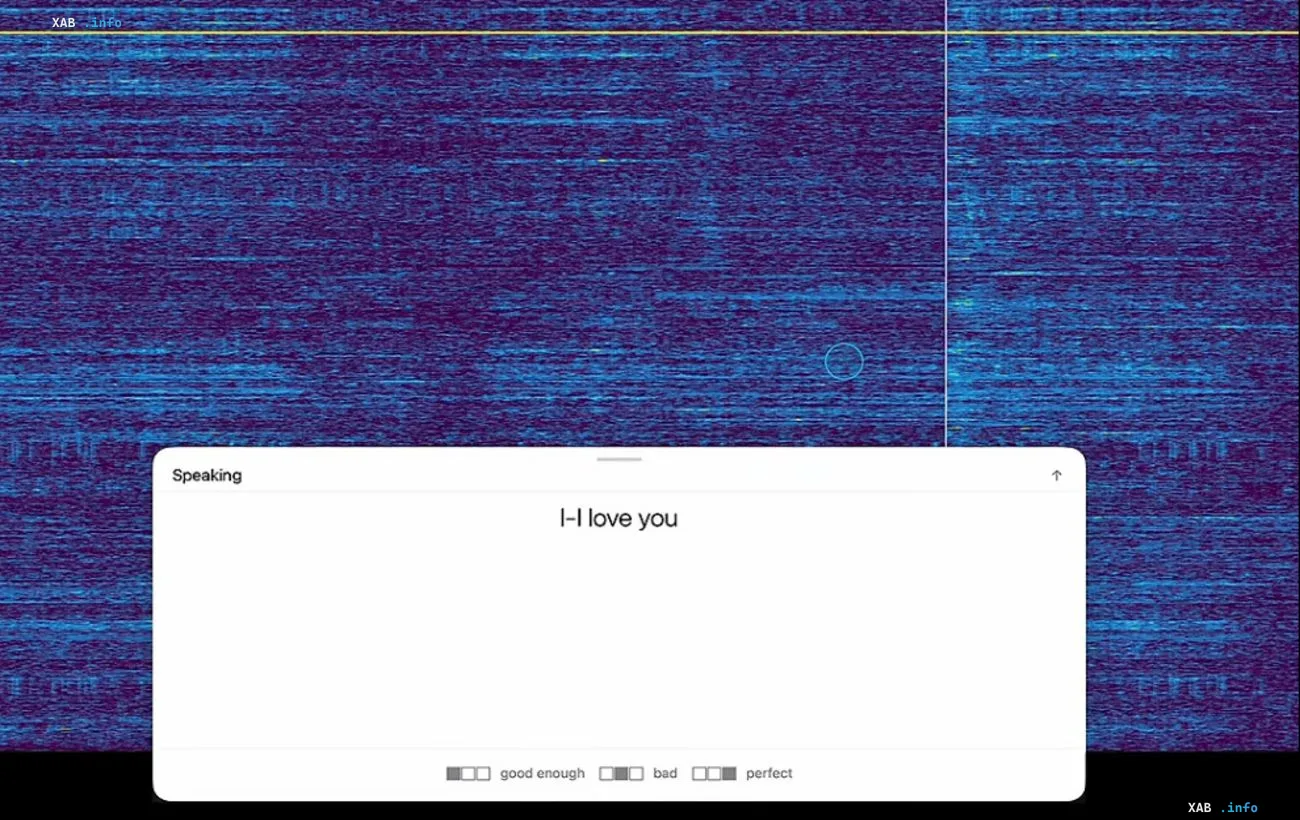
Neuralink, the company founded by Elon Musk, announced a significant breakthrough in the field of brain-computer interfaces: during trials of the VOICE program, the brain signals of a patient with amyotrophic lateral sclerosis (ALS) were for the first time converted into a natural voice using artificial intelligence. According to data published as part of the clinical trials, the patient spoke the phrase 'I love you' in a voice that the AI synthesized based on his own archival audio recordings. This event became a turning point for the entire brain-computer interface (BCI) industry, as for the first time in history the technology allowed a person with a severe form of ALS to speak in their own voice, rather than through a text display or a synthesizer with a 'robotic' timbre.
How the VOICE program works: from thoughts to speech
The main architectural difference between VOICE and its predecessor, the PRIME study, lies in where the signals are read and how they are interpreted. In PRIME, the implant was fixed in the motor cortex area, and the patient mentally 'typed' text on a virtual keyboard — essentially, it was an extended version of existing BCI solutions. VOICE, on the other hand, implements the principle of direct decoding: the implant's microelectrodes are placed directly in the speech motor cortex, bypassing the intermediate stage of typing. The AI algorithm recognizes the neural waves formed by thoughts and instantly converts them into an audio signal. The system reproduces the original timbre, intonation, and rhythm of a specific patient's speech, relying on their archival voice recordings. According to one of the trial participants, Kenneth Shockley — a former medic living with ALS — thanks to the chip he 'finally got the chance to fight the disease and regain control over his own life.'
Speed and ambitions: the path to 140 words per minute
One of Neuralink's key competitive advantages is the target speech rate. At the time of the trial publication, academic BCI systems, in particular the development by the University of California, San Francisco medical center (UCSF) led by Edward Chang, demonstrate a rate of up to 18 words per minute. Neuralink, however, sets a target of 140 words per minute for the VOICE program — a figure that closely approaches the natural pace of everyday conversation. If this threshold is reached, the patient will be able to hold a full dialogue without noticeable pauses or delays, which fundamentally changes the quality of life for people with severe neurological diseases. The target audience of the trials includes patients with ALS, primary lateral sclerosis, stroke sequelae, and spinal cord injuries.
Not alone in the ring: Neuralink vs. Synchron and Precision Neuroscience
The brain-computer interface market is not a monopoly of a single company. The startup Synchron uses the Stentrode device, which is implanted through blood vessels without opening the skull. This approach significantly reduces surgical risk, but limits functionality mainly to simple selections and commands — similar to mouse clicks. Precision Neuroscience uses a thin film with electrodes placed on the surface of the cerebral cortex, providing an intermediate level of accuracy. Neuralink chooses the most invasive path: direct implantation of microelectrodes into the brain tissue. It is this approach that provides the highest accuracy in recognizing complex neural signals needed to decode full speech. The price for performance is a more complex surgical procedure and a potentially higher risk of complications, which remains a subject of debate in the medical community.
Regulatory status and current scale
The VOICE program has already received the 'Breakthrough Device' designation from the U.S. Food and Drug Administration (FDA). This status accelerates the regulatory review process and allows the regulator to interact with the developer at earlier stages, but it is not full approval for the mass market. As of the time of the trial publication, more than 20 Neuralink implants have been installed worldwide, two of which are directly part of the VOICE study. Thus, the technology is at the stage of early clinical trials, not commercial deployment, and a full cycle of regulatory procedures still lies ahead before wide availability.