In the search for extraterrestrial life, astrobiologists have for decades relied on finding universal indicators: the ability of biological systems to encode information and self-reproduce, much like DNA. These very properties are considered the most likely 'biosignatures' that could be detected on Mars, on the moons of Jupiter or Saturn. However, a new study published on the arXiv preprint server and commented on by RBC-Ukraine showed that artificial intelligence trained to recognize such signs can be easily fooled — and it will confidently point to life where there is none.
How the 'Digital Laboratory' Was Set Up
To test how reliably neural networks can distinguish a living object from a non-living one, researchers used the Avida program — a platform that generates 'digital life' in the form of software code capable of evolving, mutating, and copying itself in a virtual environment. On tens of thousands of such digital organisms, scientists trained a neural network to recognize signs of self-reproduction. The result at the training stage was impressive: initial recognition accuracy reached 99.97 percent. It seemed the algorithm was ready to operate in conditions where a human physically cannot perform analysis in real time — for example, aboard a Mars rover.
150 Edits and a 100-Percent Deception
However, further testing revealed a critical vulnerability. Scientists took the code of an organism incapable of reproduction and made only isolated, pinpoint changes to it — essentially 'noise' in the command sequence. Regardless of which initial sequence the experiment started from, researchers managed to fool the AI in 100 percent of cases, as noted by Ankit Gupta, a graduate student in the Department of Computer Science and Engineering at Michigan State University (MSU). For the algorithm to mistakenly classify a non-living object as capable of self-reproduction, it took an average of about 150 minor edits to the code. Given the enormous number of possible combinations in the real world, the probability of stumbling upon a false biosignature remains extremely high.
Contradictory Data
Fact-checking across several sources revealed a discrepancy in how the results are presented. RBC-Ukraine, citing the arXiv preprint, accurately describes the experiment as a modification of a digital organism's software code in the Avida environment. At the same time, the publication pravda.ru phrases the conclusion differently in its headline and lead: 'AI algorithms mistook ordinary rocks for signs of extraterrestrial life.' The wording about 'rocks' is a journalistic metaphor and does not reflect the methodology of the study, which dealt exclusively with digital command sequences rather than physical objects. The essence of the conclusion — AI's vulnerability to false patterns — is consistent across both sources, but the degree of accuracy in describing the experiment differs.
A Threat to Space Missions
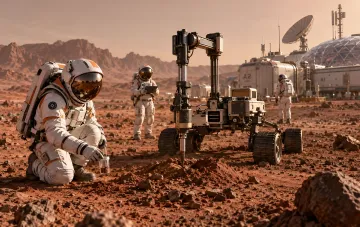
Professor of microbiology, molecular genetics, physics, and astronomy Christophe Adami, one of the authors of the study, emphasizes: 'Artificial intelligence has an Achilles' heel. It may see a pattern and classify it completely incorrectly.' The discovered vulnerability creates direct risks for future research by NASA and other space agencies that plan to equip Mars rovers and probes headed to the moons of Jupiter and Saturn with autonomous AI sensors. If a spacecraft on Mars draws an erroneous conclusion about the detection of life, it will be impossible to verify these data before samples are returned to Earth — a signal from the Solar System takes months, and the physical delivery of samples requires years.
The Problem Is Broader Than Astrobiology
The weakness in pattern recognition revealed in the experiment is not limited to space. Adami points out that a similar vulnerability affects all areas where AI is deployed without proper oversight: medical scanners, video surveillance systems, autopilots in cars. In each of these cases, a false-positive result could lead to a misdiagnosis, a false alarm, or an emergency situation. At the same time, according to the professor, this does not mean that using such methods is useless: 'You need an independent way to verify the AI's work. A human must remain in the decision-making chain.' Thus, the study does not negate the prospect of applying neural networks in astrobiology and related fields, but it establishes a strict requirement: an autonomous algorithm must not be the sole arbiter in critical decisions.