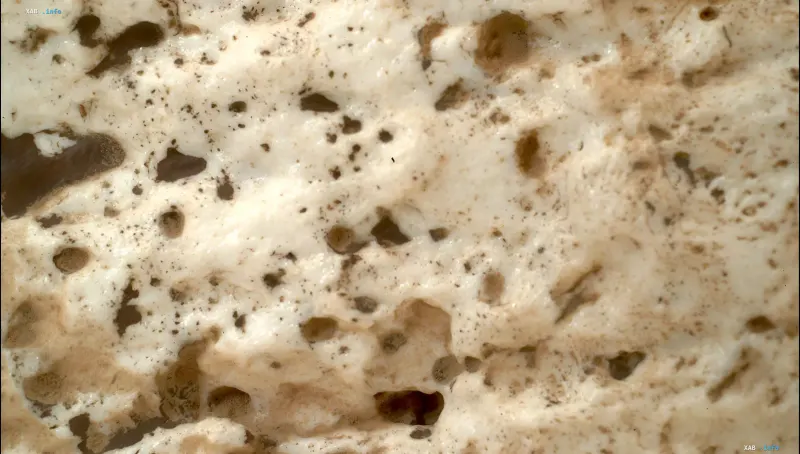
NASA's Perseverance rover has made a significant geological discovery outside its primary working area, Jezero Crater. In the Idubi region, located within the Lac de Charmes area, the robot discovered unusually light-colored rocks that contrast sharply with the surrounding dark volcanic rocks. Remote analysis using the SuperCam instrument showed that these fragments are rich in hydrated silica — a compound of silicon and oxygen containing water within its structure. According to the instrument data, the rocks lack a typical magmatic origin, indicating they formed in an aquatic environment.
Why Hydrated Silica is a Key to Finding Life
For astrobiologists, the discovery of such a mineral is of particular interest for two reasons. First, hydrated silica can form in various aquatic environments: on Earth, similar deposits are found in hydrothermal systems, through the interaction of rocks with groundwater, and in soils. Some of these conditions were potentially habitable, making such minerals an important indicator of Mars' water history. Second, silica has the property of preserving fossilized remains and microscopic traces of ancient microorganisms, turning into a kind of "time capsule." This is why the discovered rocks are considered a promising material for searching for evidence of life, if it ever existed on the Red Planet.
From Small Fragments to Large Rocks
It is important to emphasize that the discovery of the mineral itself does not mean the detection of life. The rover has not yet recorded biological traces; rather, this is a promising material for further study. Previously, Perseverance had already encountered silica-rich rocks on the inner slope of Jezero Crater, but those deposits were too small for the rover to bring its instruments close enough for detailed analysis and obtain necessary chemical and mineralogical composition data. The rocks in the Idubi area are significantly larger, opening up realistic opportunities for such work. According to sources, the Idubi site is located in an area where some of the oldest layers of the Martian crust crop out, further increasing its scientific value.
What's Next: Detailed Close-Up Analysis
The Perseverance team has already begun a detailed study of the new rocks using instruments capable of examining them at close range. Scientists must determine the exact conditions under which the deposits formed and how well they can preserve potential biological traces. The data obtained will help determine how promising the Idubi region is for searching for evidence of ancient life on Mars and whether the rover should be directed to longer measurements in this area.