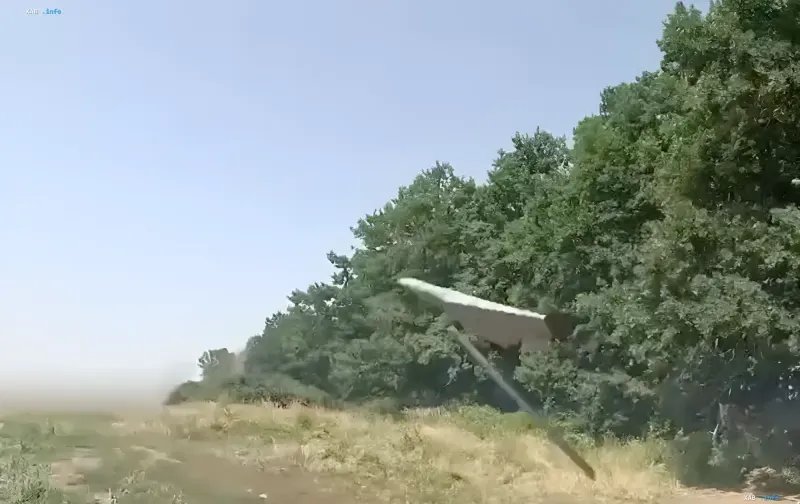
In the context of the protracted conflict in Ukraine, the Russian side continues to modernize its arsenal of unmanned aerial vehicles, focusing on speed and mass deployment. According to the latest data released by Ukrainian military experts and advisors, a new type of attack drone—the BM-35—is being actively used in the combat zone. This aircraft is equipped with a jet engine, allowing it to reach speeds exceeding 350 km/h and cover distances of more than 200 kilometers.
Technical Specifications and Tactical Application
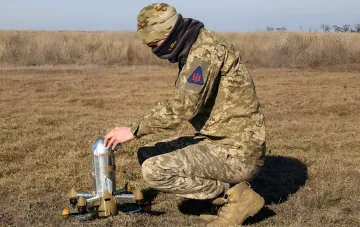
According to information obtained from Serhiy Besskrystnov, the President of Ukraine's advisor on communications, who analyzed a segment on the NTV channel, Russian operators position the BM-35 as a high-tech means of destruction. The key feature of the drone is its mobility: it can be launched from any terrain using a compact platform that does not require complex preparation. Operators can control the device in real-time (FPV), correcting the flight trajectory throughout the entire journey. The declared warhead, weighing 10 kg, breaks into a thousand damaging elements, creating a damage zone with a radius of up to 200 meters.
Ukraine's Countermeasures and Technological Escalation
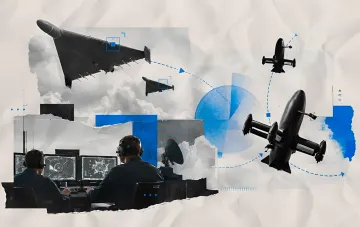
The appearance of high-speed jet drones is forcing the Ukrainian side to revise its approaches to air defense. As Oleksandr Bukarenko, CEO of Yartura, noted in an interview with RBC-Ukraine, developers of interceptor drones are forced to switch to jet propulsion to keep up with new threats. In particular, the Ukrainian company SkyFall has presented a new high-speed interceptor drone, the P1-SUN Jetkiller, capable of reaching speeds of up to 370 km/h. This allows it to effectively intercept Russian aircraft, including the BM-35 and other jet UAVs.
Contradictory Data
Despite Russian propagandists' claims about the high effectiveness of the BM-35, Ukrainian experts point out a number of shortcomings. In particular, Serhiy Besskrystnov previously noted that some models of jet drones use analog video transmission on the 3.3 GHz frequency, making them vulnerable to electronic warfare systems. Furthermore, Yuriy Ignat, a representative of the Ukrainian Air Force, stated that in July 2026, the number of jet unmanned aerial vehicles used by Russian troops increased fivefold compared to the previous month. This indicates the mass deployment of such means, but it may also indicate their low cost and accessibility, which contradicts claims of high technological sophistication.
Impact on the Course of Hostilities
The use of the BM-35 is primarily focused on the "North" grouping direction, where Russian troops are advancing on the border regions of the Kharkiv and Sumy oblasts. The main task of the drone is to disrupt the logistical chains of Ukrainian units and suppress their positions. However, despite the claimed speed and range, the effectiveness of the BM-35 remains questionable due to the development of the Ukrainian interception system. At the same time, the mass use of such drones could create an additional load on Ukrainian air defense and require significant resources for their neutralization.