
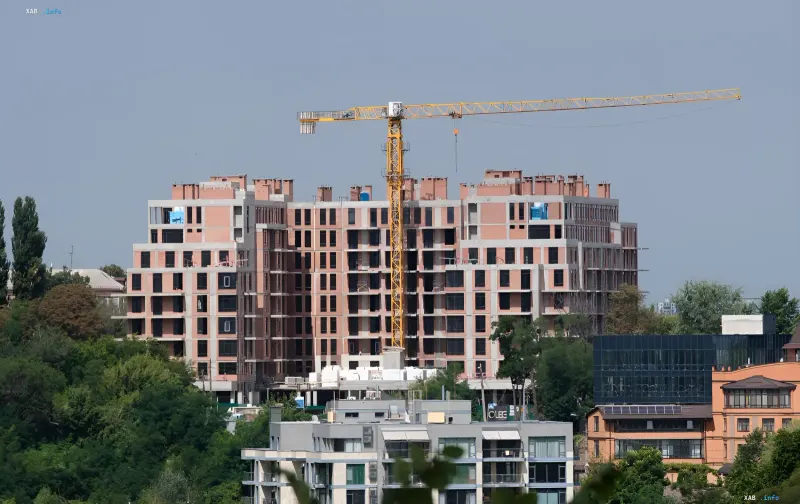
Despite complex economic challenges, the primary real estate market demonstrates multidirectional trends in various regions of the country. While some cities record rapid price growth and construction activity, others face a decline and lower purchasing power. Experts note that the market has become extremely segmented.
Price Growth Leaders and Regional Dynamics
The leaders in the growth rate of the median starting price per square meter in dollars over the past year were the western and central regions of Ukraine. Investors and buyers are redirecting demand to safer territories, which directly stimulates the appreciation of square meters.
Changes in Housing Complex Supply Volumes
The dynamics of the number of new projects on sale differ significantly depending on the region. In Ternopil, the number of residential complexes decreased by 36% to 41 objects, while in Ivano-Frankivsk the drop was 9% (59 residential complexes). Conversely, Vinnytsia demonstrated growth of 22% (28 objects), and Zhytomyr became the absolute record holder with a 38% increase (22 objects on sale).
Regions with Price Drops in the Primary Market
At the same time, prices in the primary market fell in four Ukrainian cities. The most noticeable decline was recorded in Zaporizhzhia, where housing fell in price by 7% in currency to $540 per square meter. In Kharkiv and Sumy, real estate costs decreased by 6% to $640 and $580 respectively, while in Poltava the drop was 2% with the average price fixed at $800.
Contradictory Data
Real estate market analysts draw attention to certain contradictions in statistical reports for the current period of 2026. On the one hand, official data record a physical reduction in the number of new construction sites and projects in a number of regional centers due to logistical and resource limitations. On the other hand, the total cost of a square meter continues to grow even in cities where a reduction in supply is observed, which experts explain by inflationary pressure, rising prices for construction materials, and a labor shortage. Some analysts argue that real demand exceeds statistical transaction figures, while skeptics talk about price overheating in certain western regions.
In the long term, experts predict the continuation of current market differentiation trends. The further development of primary real estate will directly depend on macroeconomic stability, state support programs, and the security situation in each specific region.