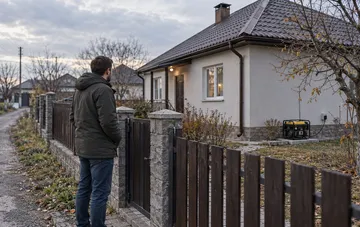

Against the backdrop of preparations for winter and the ongoing risk of power outages, Ukrainians are increasingly turning their attention to private housing. According to data from the LUN platform, interest in houses began to grow as early as the beginning of 2026 and has remained at a high level by autumn. Alena Babko, Head of External Communications and Partnerships at LUN, confirmed that requests to search for private housing "started growing back in early 2026 and have remained at a fairly high level to this day." According to her, the key motive has been the desire for greater privacy and autonomy — in conditions where centralized energy supply remains vulnerable.
Abnormal seasonality: the peak came in winter, not in summer
A feature of 2026 has been an atypical demand dynamic. Traditionally, the peak of interest in buying houses falls in August, when buyers plan a move for the summer or for vacation. However, this year, according to LUN data, the highest house-search indicators were already recorded in January and February. "This year the picture is somewhat atypical: traditionally the peak of interest in houses falls in August, but in 2026 we recorded the highest indicators already in January and February," Babko explains. Experts link this shift to the fact that the winter factor — the threat of electricity and heating outages — has become the dominant argument in favor of autonomous housing.
Prices: where houses have risen the most
Over the past year, the cost of private houses has grown across virtually the entire territory of Ukraine. The leader in terms of price growth has been Rivne Oblast, where prices increased by 36%. Chernivtsi and Odesa Oblasts showed growth of 35%. At the same time, absolute price levels vary significantly depending on the region. Among the regional centers, some of the lowest prices per square meter are recorded in Mykolaiv ($425), Zaporizhzhia ($440) and Chernihiv ($455). The median cost of a whole private house in Chernihiv at the end of April 2026 was about 28,800 dollars. For comparison: in Kyiv and Lviv this figure reached approximately 220,000 dollars — a difference of more than seven times that underscores the regional polarization of the market.
Suburban housing is rising in price faster than urban houses
Houses outside the regional centers remain cheaper than urban real estate in most regions. However, as Babko notes, "prices there often grow faster than in the cities themselves." The most pronounced trend is observed in Odesa, Lviv, Zaporizhzhia, Vinnytsia and Dnipropetrovsk Oblasts. The cost of a specific property is influenced not only by geographic location, but also by the condition of the house, its area, the distance from the city and the level of development of the settlement's infrastructure. LUN does not yet have separate statistics on old rural houses, so it is not correct to speak of a mass shift specifically to this segment — the platform records a broader trend of growing interest in private housing in general.
Context: winter and energy security
The growth in demand for autonomous housing is taking place against the backdrop of official warnings about a difficult winter. Deputy Prime Minister and Energy Minister Denys Shmyhal previously stated that "winter will not be easy," since Russia continues a war of attrition. At the same time, according to him, the protection of energy facilities is already being strengthened, and the necessary equipment is being accumulated for the regions. It is precisely the combination of these factors — the state's acknowledgment of the risks and the inability to fully rule out local outages — that is forming a sustained demand among part of the population for housing with its own energy generation and independent heating.