Starting July 17, Ukraine has implemented significant changes to the state housing program 'eOselya'. The Cabinet of Ministers approved Resolution No. 794, which revises key lending conditions: from housing area requirements to income verification procedures. These updates affect both internally displaced persons (IDPs) and participants in combat operations.
A historic breakthrough for veterans
The main innovation is the introduction of a preferential interest rate of 3% per annum for war veterans, participants in combat operations, and families of fallen defenders. Previously, this category of citizens could only count on a base rate of 7%, identical to the conditions for IDPs. Now, the state has separated them into a distinct group with the most favorable terms.
In addition to the reduced rate, veterans have gained the right to a down payment subsidy. The state is prepared to cover up to 420,000 UAH of the initial payment, provided the cost of the purchased housing does not exceed 2 million UAH.
Simplifications for internally displaced persons
For internally displaced persons (IDPs), the program has also become more accessible. Those who do not own housing or own an area smaller than the standard retain the right to the base rate of 7%. However, the loan application process has become simpler:
- Housing area standards for purchases under the program have been revised.
- The process of verifying borrowers' income has been simplified.
- The restriction on guarantors has been lifted: now, individuals who are not family members of the applicant can serve as guarantors.
Transition period and context
The new conditions do not apply to loans issued before July 17, 2026, except in cases provided for by the program's transitional provisions. This allows banks and borrowers to adapt to the new realities without sharp jumps in current obligations.
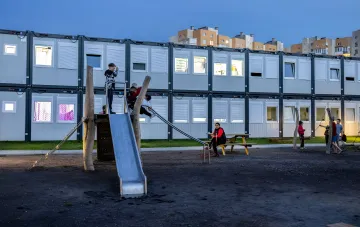
Changes to 'eOselya' are part of a broader package of support measures. Earlier, on July 21, President Volodymyr Zelenskyy signed Law No. 12301 on the rights of displaced persons, which regulates housing, pensions, and social assistance for IDPs. Simultaneously, the Cabinet of Ministers updated the functioning of temporary accommodation sites, changing settlement rules and grounds for eviction.
It is important to note that for families who received IDP status back in 2014 and have not been displaced again since the start of the full-scale invasion, the situation may become more complicated. Such citizens risk facing a refusal of child benefit allocation, requiring them to carefully study the updated regulations.