A group of physicists has put forward a fundamentally new hypothesis regarding the nature of dark energy — the mysterious component that, according to modern estimates, makes up about 70 percent of the total energy density of the Universe and is responsible for its accelerated expansion. Unlike most existing models, the authors of the work do not introduce a single undiscovered particle or hypothetical field: their explanation relies on quantum chromodynamics (QCD), a well-established theory of the strong nuclear interaction. This was reported by RBC-Ukraine with reference to Interesting Engineering.
What Is Dark Energy and Why Does It Remain a Mystery
Dark energy is one of the deepest unresolved questions in modern cosmology. The scientific community was forced to acknowledge its existence following observations of distant Type Ia supernovae in the late 1990s: the expansion of the Universe is not slowing down, as predicted by the gravitational model, but accelerating. The physical nature of this acceleration has still not been established. The vast majority of hypotheses — from the cosmological constant Λ to quintessence scalar fields — assume the existence of entities that have not yet been experimentally detected. The authors of the new work believe that such a step is not necessary.
Quantum Chromodynamics Instead of New Particles
At the heart of the proposed approach is quantum chromodynamics, the theory describing the strong nuclear interaction that holds quarks inside protons and neutrons. In addition, QCD describes the structure of the quantum vacuum: a collection of quantum fields, energies, and topological configurations between which quantum tunneling is possible. In a normal, static space, the QCD vacuum possesses a certain energy density. However, as the authors point out, under the conditions of an expanding Universe, the properties of this vacuum can change. The difference in vacuum energy between the "static" and "expanding" states, according to the researchers' calculations, is capable of accelerating the expansion of spacetime on its own without involving any new fields or particles.
How the Model Was Tested: Deep Space Data
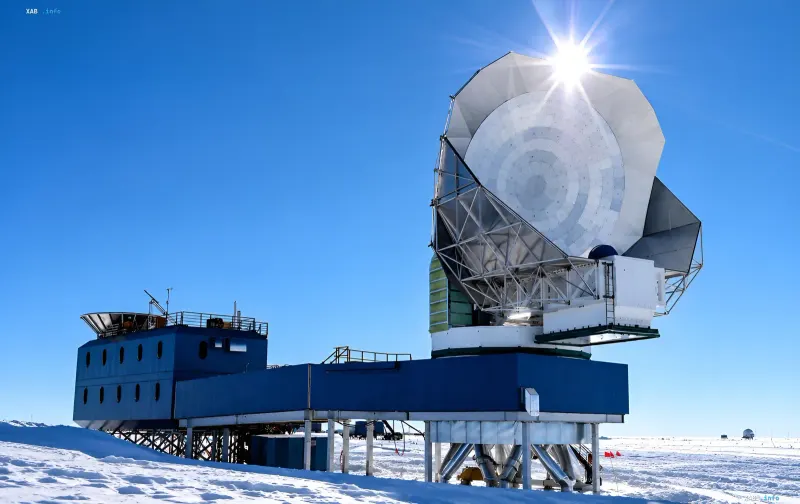
To quantitatively test the hypothesis, the researchers introduced two additional parameters determining the moment when the influence of dark energy becomes observable and the nature of its evolution over time. The model's predictions were compared with three independent astronomical datasets: observations of distant Type Ia supernovae, the cosmic microwave background (CMB) spectrum of the early Universe, and the large-scale distribution of galaxies. The calculations used data from the Planck space telescope, the Atacama Cosmology Telescope and South Pole Telescope, the Dark Energy Spectroscopic Instrument (DESI) observatory, as well as two supernova samples — Pantheon+ and DES-Dovekie. The standard ΛCDM model (with constant dark energy) and an alternative scheme in which dark energy properties change over time served as control models.
Results: A Slight Statistical Advantage
For individual subsets of data — the early or late Universe — the new model demonstrates an accuracy comparable to the standard ΛCDM. However, after combining all observations into a single statistical procedure, the analysis revealed a slight or moderate advantage for the new approach. Study co-author Ariel Zhitnitsky from the University of British Columbia emphasizes that this advantage is not yet final proof: the agreement of calculations with astronomical data does not automatically prove that quantum chromodynamics is specifically the source of dark energy.
Limitations and Next Steps
The authors honestly point out the key limitations of the work. The mechanism linking the change in QCD vacuum energy in an expanding space to the observed acceleration requires more detailed theoretical justification. It is necessary to clarify exactly how the quantum vacuum behaves under conditions of dynamically changing spacetime geometry. Final conclusions, by the researchers' own admission, will require testing against new astronomical data to be obtained in coming years as ongoing sky surveys continue. If the hypothesis is confirmed, it will become a rare example of explaining a cosmological phenomenon solely on the basis of already known laws of physics, and it may also shed light on signs that dark energy is not a strictly constant value.