California-based Nex Computer has officially postponed the launch date of the NexPhone, a device capable of running three operating systems simultaneously: Windows 11, Android 16, and Debian Linux. Initially planned for a late 2026 release, the company is now targeting the end of the first quarter of 2027, specifically March. This represents a delay of at least four months. Simultaneously, Nex Computer announced a pre-order price increase from $550 to $600. However, users who have already placed orders at the old price will not have to pay extra — their orders will retain the original pricing.
Reasons for Delay: Antennas and Memory Crisis
According to data published on the developer website and reported by Android Authority, the main reasons for the schedule shift are technical issues with the antenna module. Due to signal interference, the team had to redesign the structure, remake antenna boards, and produce new prototypes. At the same time, the build quality of the device was being refined. The delay coincided with an industry-wide RAM crisis: artificial intelligence development companies are mass-buying memory chips, leading to shortages and skyrocketing prices. Nex Computer warned that rising component costs increase manufacturing expenses, which served as an additional factor for revising the retail price.
Three OSs and the "Smartphone as PC" Scenario
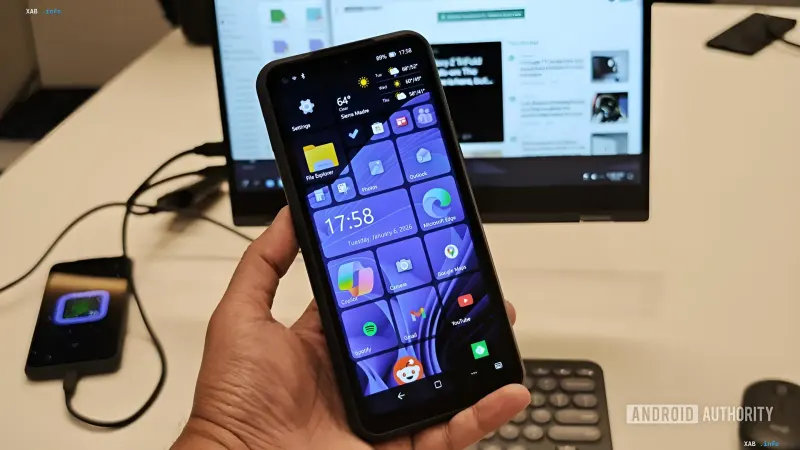
The main feature of the NexPhone is the ability to boot into one of three systems. When Windows 11 is selected, the smartphone receives an interface reminiscent of Windows 10 Mobile, while connecting to a NexDock docking station or an external monitor via a USB-C port turns the device into a full-fledged desktop computer. This scenario echoes the Continuum concept that Microsoft developed for its mobile platforms. In Android 16 mode, the Android Desktop option is available, and Debian Linux provides access to a classic ecosystem toolset for developers and enthusiasts. Judging by published images, the home screen features tiles for File Explorer, Outlook, Microsoft Edge, Copilot, Google Maps, Spotify, Gmail, and YouTube — a clear demonstration of multi-platform capability.
Hardware Platform and Design
The NexPhone is built on the octa-core Qualcomm QCM6490 processor (also known as Dragonwing) clocked at up to 2.7 GHz, paired with 12 GB of RAM and 256 GB of internal storage with microSD card support. On the front, it features a 6.58-inch OLED display with a 1080 × 2403 resolution and a 120 Hz refresh rate, along with a 10-megapixel front-facing camera. The 64 MP main camera is built around a Sony IMX787 sensor, while the ultra-wide module uses a 13-megapixel Samsung S5K3L6XX sensor. The camera module design stylistically echoes the iconic Nokia Lumia 1020. The body is made of polycarbonate, with dimensions of 173 × 82.6 × 13.1 mm and a weight of 256 g. A 5000 mAh battery with 18W wired charging support handles autonomy.
Context and Outlook
Nex Computer has been experimenting with ways to increase mobile device efficiency for almost a decade, and the NexPhone is a logical continuation of this path. The uniqueness of the project lies in the fact that no other mass-market smartphone offers simultaneous official support for three such distinct ecosystems. For developers, system administrators, and enthusiasts who need a single device to work in Windows, Android, and Linux, the device can become a full-fledged laptop + phone alternative. However, a four-month delay and a $50 price hike may alienate part of the audience, especially against the backdrop of component shortages and price increases, which analysts estimate will persist in the coming quarters.