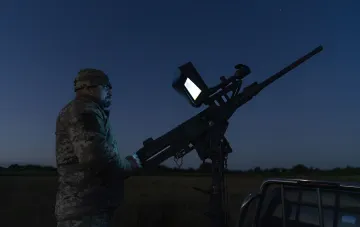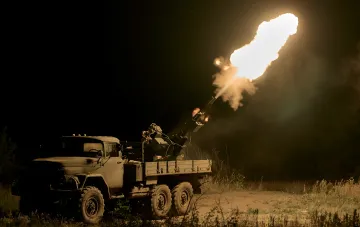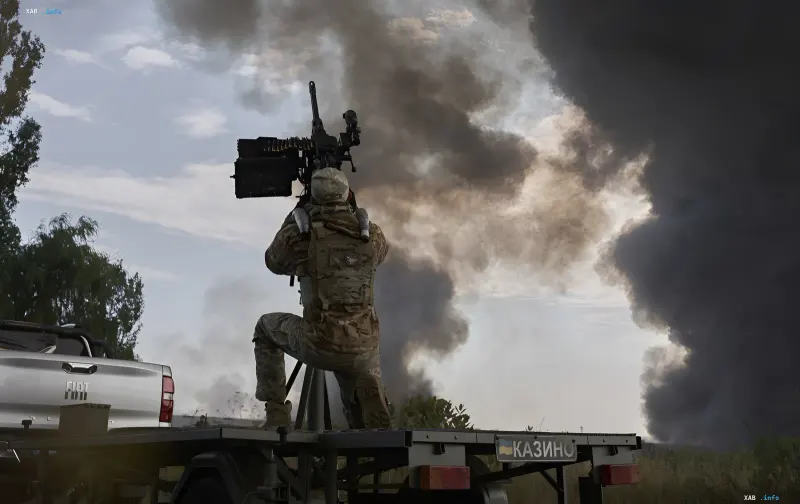
On the night of November 23, Russia launched a massive drone strike against Ukraine involving 153 unmanned aerial vehicles, which, according to Ukrainian air defense forces, included jet-powered modifications. The attack began at 18:00 on November 22 and was not fully completed by the morning of the 23rd: according to preliminary reports, several aircraft remained in airspace. Most of the targets were shot down or suppressed, but ground impacts could not be avoided.
Composition of the attack and drone types
According to the summary, Shahed-type strike drones predominated in the nighttime strike — 60 of them were jet-powered, meaning they were equipped with a turbojet engine that increases speed and flight range compared to classic Shaheds. In addition, Gerbera-type drones and Parodia decoy drones were used, which are typically utilized to create false targets and overload air defense systems.
Launch directions
Launches were carried out from several directions within Russia — from Oryol, Kursk, Millerovo, Shatalovo, and Primorsko-Akhtarsk. Also, according to the same data, devices were launched from occupied Donetsk, and from occupied Crimea — from Gvardeyskoe and Chauda directions. Such geography of starting points indicates the distribution of launch positions across several regions simultaneously.
Air defense operations and preliminary results
According to preliminary data as of 08:00 on November 23, air defense forces shot down or suppressed 134 enemy drones, including 42 jet-powered Shaheds, as well as Gerbera-type devices and other types. Thus, as of morning, about 88% of the launched drones had been intercepted or suppressed. At the same time, the enemy recorded impacts at 11 locations, and debris from downed drones fell at 7 locations. At the time of publication of the summary, the attack was ongoing.
Impact consequences
Among the consequences of the nighttime strike was a Russian drone hitting a five-story residential building in Dymer, Kyiv region, from under the rubble of which, according to available data, the body of another person was recovered. In Kharkiv, a drone hit a residential building in the Shevchenkivskyi district. The results regarding casualties and destruction at these and other locations are being updated.
Context: the dynamics of drone warfare
The nighttime attack of November 22–23 fits into the general picture of intensive drone use, which is characteristic of various periods of the conflict. Thus, according to Ukrainian media data for one October night, Russia used more than 850 Shahed-type drones against Ukraine, and according to an assessment by the French publication RFI at the end of March, more than 3,000 strike drones were launched in one week. These figures from different periods show that the scale of drone strikes varies from hundreds of units per night to thousands per week, and the nighttime attack of November 22–23 using 153 drones, including jet-powered ones, corresponds to the current level of intensity.