On the night of September 25, 2026, the Russian Armed Forces carried out one of the largest aerial strikes on Ukrainian territory in recent weeks: according to the Air Force of the Armed Forces of Ukraine, the enemy launched 295 strike unmanned aerial vehicles. This is reported by RBC-Ukraine. According to preliminary data as of 07:30, air defense systems managed to destroy or suppress 267 enemy drones, however the attack resulted in confirmed impacts, including on a residential building in Kyiv.
Scale of the attack and types of drones used
From 18:00 on September 24, the enemy predominantly used Shahed-type drones — including 52 jet-powered units — as well as "Herber," "Bandarol"/"Dany-T" drones and "Parodia" decoys. Such a combination of types indicates a mixed-strike tactic: the jet-powered Shaheds are intended to overload air defense channels with their high speed, while the decoys and "Bandarols" create false targets and divert interception assets from the main strike aircraft.
Launch directions and air defense forces deployed
Launches were carried out along several directions — from Orel, Kursk, Millerovo, Primorsko-Akhtarsk, and Shatalovo. Some drones took off from the temporarily occupied territories of Donetsk Oblast and the Autonomous Republic of Crimea, including from Hvardiiske. In the defense, aviation, air defense missile units, electronic warfare assets, unmanned systems units, and mobile fire groups of the Defense Forces were deployed. According to preliminary data, debris from shot-down drones was recorded falling at four locations.
Strike on Kyiv and its aftermath
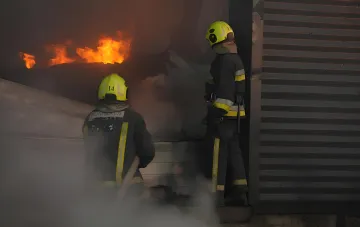
That same night, the Russians struck the capital: a drone hit a 25-story residential building in the Solomianskyi district at the level of the fourth floor. According to available information, there is at least one casualty, and traffic on some of Kyiv's streets has been temporarily restricted. Details on the casualty's condition and the extent of damage to the residential building were being clarified at the time of publication.
Contradictory data
The sources contain a discrepancy in the final figures. On the one hand, the Air Force of the Armed Forces of Ukraine reports 295 drones launched and 267 destroyed/suppressed as of 07:30. On the other hand, the same material notes that at the time of publication several enemy drones were still in the air, meaning the final interception balance as of 07:30 is not definitive. In addition, the wording on casualties in Kyiv is given with the caveat "at least one," indicating the preliminary nature of the data. Final figures on targets shot down and casualties may be revised as the assessment of the aftermath is completed.
Context: threats to network infrastructure
Against the backdrop of ongoing attacks on energy and telecommunications infrastructure, the President's advisor on defense technology issues, Serhiy "Flash" Beskrestnov, stated that thanks to distributed communication channels the entire country will not be left without the internet — only local outages are possible. At the same time, he warned that the cost of internet services may rise due to the expenses of repairing damaged infrastructure. Separately, in the regional threat context, the possible use by Russia of ES Team-type drones from the so-called "ghost fleet" in the Mediterranean Sea is discussed, which underscores the expansion of the geography of potential strike vectors.