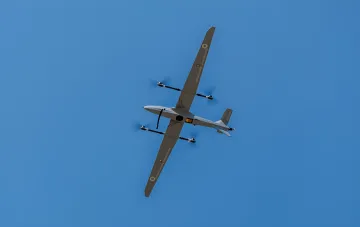
On the night of August 9, 2026, the Ukrainian Unmanned Systems Forces (USF) carried out a large-scale operation aimed at destroying critical elements of Russia's air defense and logistical infrastructure. According to USF Commander Robert "Maryada" Brovda, strikes were launched against S-400 "Triumph" air defense systems in the Krasnodar Krai, as well as against shadow fleet vessels in the Black Sea.
Destroying the "Triumph" in Gelendzhik
The central event of the night was the strike on an S-400 "Triumph" air defense system position near Gelendzhik. According to command reports, the complex was active throughout the day on August 8, firing six missiles between 9:25 and 12:51. However, during the night, Ukrainian operators, using advanced detection and targeting technologies, managed to neutralize the system. "The S-400 position in Gelendzhik burned and hissed for three hours, on the shore, right next to the catacombs," described "Madyar." The destruction of such a powerful complex in the coastal zone deprives the enemy of control over the airspace in a strategically important area of the Black Sea coast.
Strikes on the Shadow Fleet and Air Defense
In addition to ground targets, Ukrainian drones dealt a crushing blow to Russia's maritime logistics. During the operation, three shadow fleet vessels were hit, including one oil tanker and two bulk carriers. These vessels are typically used to bypass international sanctions and transport strategic cargo. Furthermore, on the night of August 9, four more elements of the Russian air defense system were destroyed, indicating the systematic nature of attacks on the enemy's defense infrastructure. Losses in personnel and equipment at sea and on land create serious problems for Russian logistics and defense.
Strategic Context: "Three Rings" Around Moscow
These attacks take place against the backdrop of Ukraine's overall strategy to strike deep into Russian territory. Earlier, President Volodymyr Zelenskyy noted that Russia is forced to pull air defense systems from various regions to strengthen the capital's defense, creating three rings of protection around Moscow. The destruction of the S-400 in Gelendzhik and other air defense elements in southern Russia could weaken these defensive lines, forcing Moscow to reallocate resources and divert attention from other fronts. This confirms the effectiveness of Ukraine's strategy to exhaust the enemy's resources and disrupt its supply chains.
Contradictory Data
While the USF command confirms the destruction of the S-400 and ships, Russian sources have not yet provided official comments on the scale of losses. At the same time, some independent observers point out that confirming the destruction of such large targets as the S-400 requires additional visual evidence. Meanwhile, data on the damage to shadow fleet vessels is confirmed by satellite imagery and reports from international observers, making this part of the information more credible.
Conclusions and Prospects
The night operation on August 9, 2026, became further proof of the growing effectiveness of Ukrainian unmanned systems. The destruction of the S-400 and shadow fleet vessels deals a serious blow to Russia's military and economic infrastructure. In the context of the ongoing war, such attacks are becoming a key factor in the struggle for strategic superiority. It is expected that Russia will attempt to strengthen its air defense and protect its sea lanes, but Ukrainian drones continue to evolve, becoming an increasingly deadly weapon in this war.