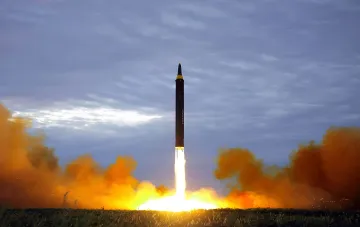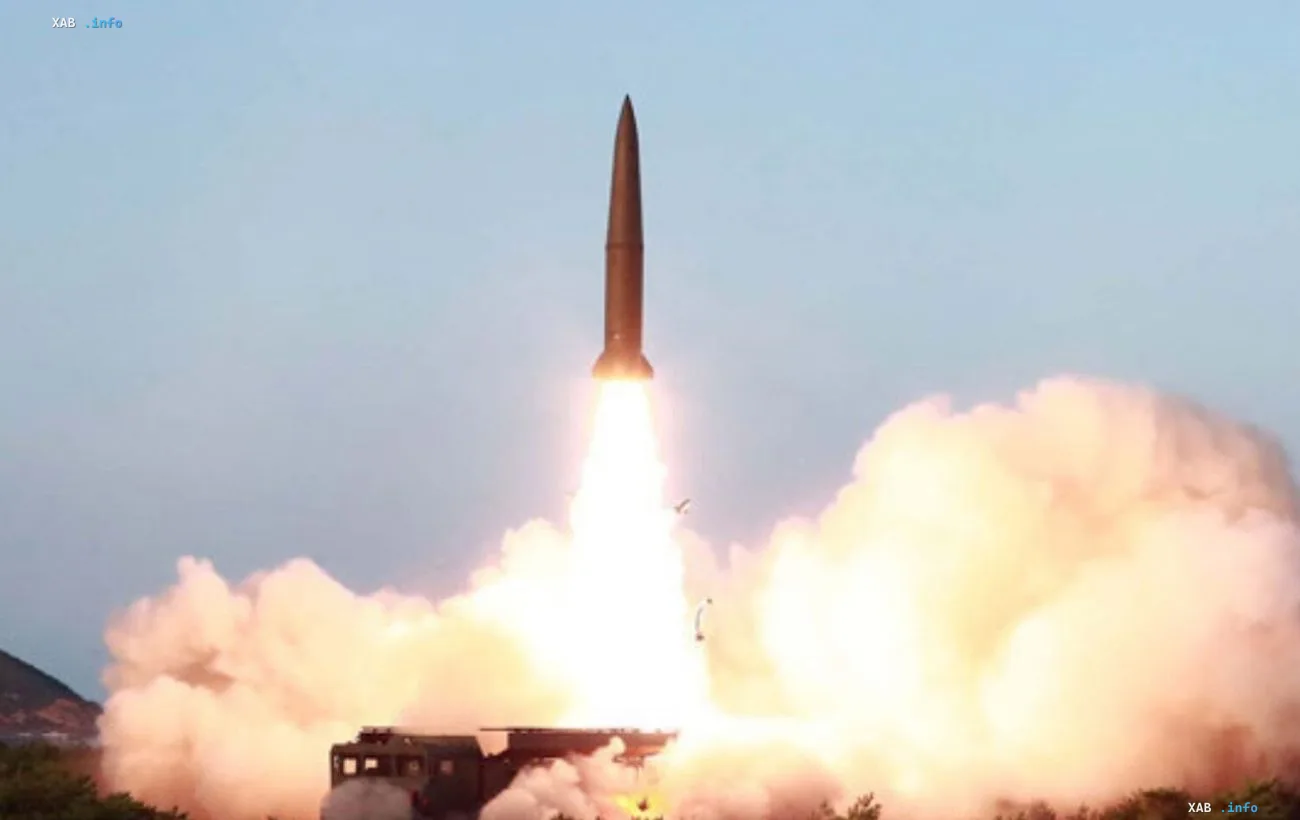
On 20 September 2026, North Korea carried out two launches of short-range ballistic missiles from the Wonsan area toward the Sea of Japan. This was reported by the Joint Chiefs of Staff (JCS) of South Korea, which classified both projectiles as short-range ballistic missiles. The first launch was recorded at approximately 15:00 local time, the second at 17:50, i.e. at an interval of about three hours. Both missiles landed outside Japan's exclusive economic zone, which, according to Tokyo, posed no direct threat to the country's territory.
Flight parameters: higher and farther than previous tests
The Japanese Ministry of Defense published preliminary data on the trajectories. The first missile traveled 440 km and reached an altitude of 60 km, the second — 590 km and 70 km respectively. According to the Japanese ministry's assessment, both projectiles flew significantly farther and higher than previous missiles of the same type, making these launches anomalous against the backdrop of existing North Korean test statistics. Neither Japan's Ministry of Defense nor South Korea's JCS officially named the type of missiles launched.
Janes assessment: likely KN-23 derivative with a modified configuration
The OSINT platform Janes, citing the recorded flight parameters, suggested that these are derivatives of the KN-23 missile family. Janes notes that preliminary KN-23 tests demonstrated a range of up to 690 km on low trajectories — at altitudes of 37 to 60 km. The missiles launched on 20 September flew on significantly higher trajectories, which, in the platform's analysts' view, may indicate the development of a modified variant, a different warhead configuration, or the conduct of a separate test profile. A similar case had been recorded earlier: on 12 August, an unidentified short-range missile, presumably also a KN-23 derivative, traveled 690 km and reached an altitude of 90 km.
Contradictory data
Open sources show a minor discrepancy in the figures concerning the August launch. In one part of the report on 12 August, the missile is described as having traveled 690 km, while in another — as "about 700 km." The 10 km difference may be due to rounding or to the fact that some sources cite data from Japan's Ministry of Defense, while others cite preliminary JCS estimates. Moreover, the identification of the 20 September missiles as KN-23 derivatives is exclusively an analytical assessment by Janes: neither Tokyo nor Seoul has officially confirmed or refuted the type of the projectiles. Thus, the claim of a "new version of the KN-23" remains a hypothesis, not an established fact.
Context: escalation and the link to the Ukrainian front
The 20 September launches were not Pyongyang's first test launches this summer. On 12 August, North Korea also launched a ballistic missile from the Wonsan area that traveled about 700 km; that launch became the eleventh North Korean ballistic test since the beginning of 2026. Against the backdrop of the ongoing war in Europe, the context of these tests gains additional significance: in August, President Volodymyr Zelenskyy warned that the increased supply of missiles from Pyongyang indicates Moscow's preparation for further escalation of the conflict, and that North Korean-made KN-23 ballistic missiles are, in his words, being increasingly used against Ukrainian cities. Thus, each new launch in the Sea of Japan is viewed by Western and Ukrainian analysts not only as an element of North Korea's nuclear doctrine, but also as an indicator of which specific modifications may in the future end up in the arsenal of Russian forces.