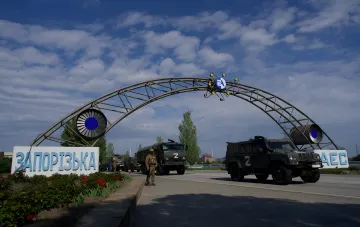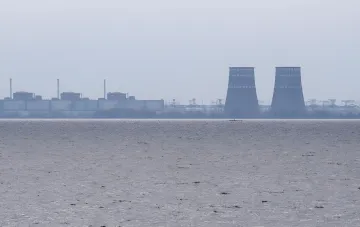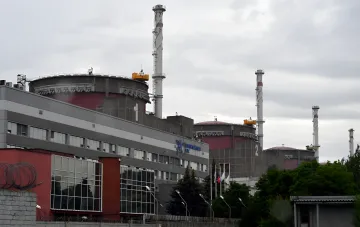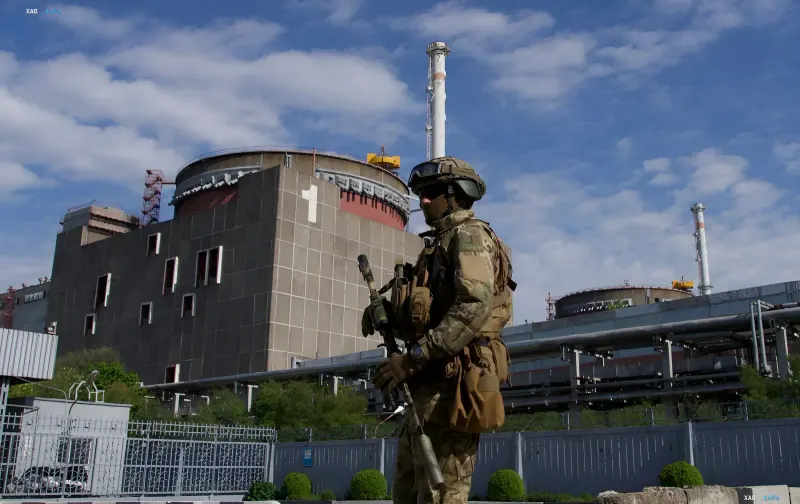
The Zaporizhzhia Nuclear Power Plant (ZNPP), the largest in Europe, today represents less of an energy facility and more of a powerful military outpost. According to the Main Directorate of Intelligence of the Ministry of Defense of Ukraine, Russian occupiers systematically use the plant's territory to deploy military equipment, weapons depots, and control points for strike drones.
Power Units Converted into Barracks and Depots
Despite all six nuclear reactors being in a state of "cold shutdown," the turbine halls of Units 1, 2, 5, and 6 are actively used by the Russian army. Ammunition depots have been created in basement areas and bomb shelters. Equipment and ammunition are hidden under gantries and technical walkways, while machine gun nests and missile systems have been installed on the roofs of reactor buildings.
Particular concern is caused by activities on the plant's territory related to unmanned aviation. The occupiers have deployed control points for strike drones of the "Gerbera-Siker" and "Geran-Siker" types. To manage these systems, they are recruiting employees of the Russian special economic zone "Alabuga," among whom, according to intelligence data, there are minor students.
Blocking IAEA Control and Mining the Territory
International experts do not have free access to the power units. The Russians allow IAEA specialists to enter only according to pre-agreed plans and routes, making it impossible to objectively assess the real situation at the facility. Furthermore, the occupiers have mined certain technical rooms along the shoreline of the former Kakhovka Reservoir.
Security of the facility is provided by a contingent of the Rosgvardia numbering about 1,500 people, turning the nuclear plant into a real fortress.
Critical State of Safety Systems
The situation with power supply and cooling at the plant remains critical. Due to Russian aggression, out of 10 external power lines that were operational before the occupation, only one is functioning. This led to the 21st blackout at the plant since the beginning of the full-scale invasion on July 3, 2026.
The water supply regime has also been disrupted. In July 2026, the water level in the cooling pond dropped to 12.86 meters against the minimum required 15 meters. Out of 57 wells required for the cooling system, only 11 are equipped with powerful pumps. The water deficit is being compensated by feeding from the discharge channel of the Zaporizhzhia Thermal Power Plant, which creates risks for the operation of reactor cooling systems and the spent nuclear fuel storage facility.
Personnel Collapse and Coercion of Staff
The plant is experiencing an acute shortage of qualified personnel. If about 11,000 people worked at the facility before the war, now only about 7,500 remain. This figure includes 500 employees of an outsourcing company that does not have a license to perform work at a nuclear facility.
Ukrainian specialists are being forced to sign contracts with "Rosatom" under threat of dismissal. Meanwhile, personnel brought from the territory of Russia do not possess the necessary qualifications to service the Ukrainian plant due to significant technical differences in the equipment.
Recently, repairs on a key transmission line and other infrastructure facilities at ZNPP were completed, however, it is not yet possible to resume operations due to damage to the substation.