On August 9, 2026, at the Future of Memory and Storage conference, Nvidia took a strategic step aimed at accelerating the development of the artificial intelligence industry. The corporation announced plans to open-source its cuFile API and the storage software stack built upon it. This decision aims to create a vendor-neutral standard that will significantly accelerate data exchange between storage systems and GPU memory.
GPUDirect Storage technology and the role of cuFile
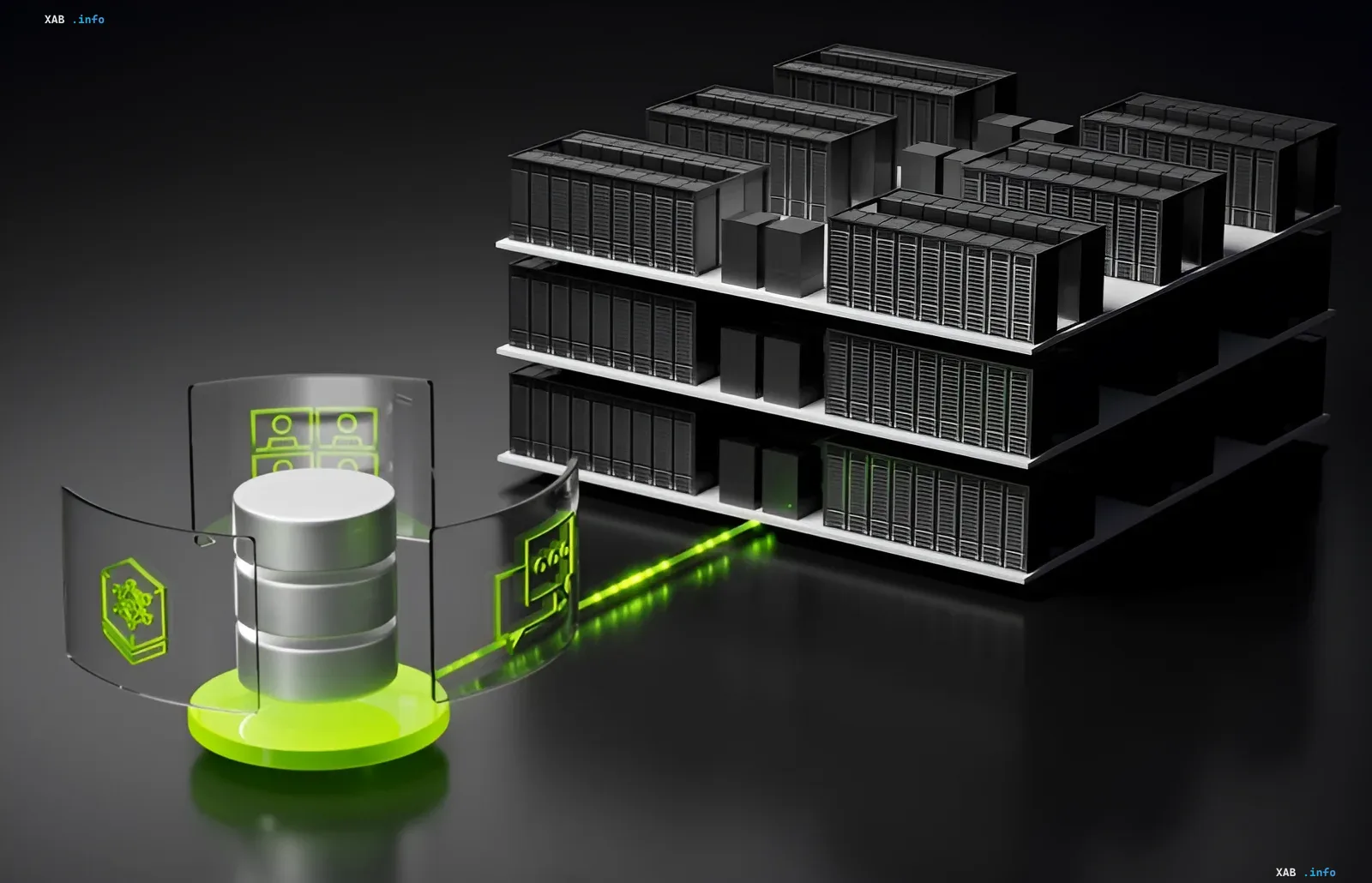
The technology underpinning this solution is known as Nvidia GPUDirect Storage. It has existed for several years and provides a direct path for data transfer between local or remote storage and GPU memory. In traditional architecture, data from SSDs is first copied to system memory and then transferred to the graphics processor. GPUDirect Storage eliminates this redundant step, allowing compatible storage devices to transfer data directly into GPU memory using Direct Memory Access (DMA). The cuFile API is the key interface enabling this seamless transfer.
Creating the vendor-neutral xio-sig standard
Nvidia's decision to move to open-source code is aimed at creating an industry standard not tied exclusively to Nvidia hardware. As part of the new xio-sig (Storage Interface Group) project, four key components were listed: the cuFile API itself, the cuFileConformance compliance testing suite, the libxFile library, and the xioLinux Linux kernel module. Development is underway to support implementations from multiple hardware vendors. The code itself has not yet been publicly released—it will become available after internal review and integration are completed.
Contradictory data
At the time of the announcement, some sources and technical enthusiasts were misled regarding the functionality of the new technology. Speculation arose that opening cuFile would turn solid-state drives (SSDs) into direct additional video memory, allowing GPUs to use their capacity as an extension of VRAM. However, Nvidia representatives and market experts quickly clarified the situation. An SSD will not become additional video memory in the classical sense. For the GPU to process data, it still needs to reside in the GPU's operational memory. cuFile merely accelerates the movement of data between storage and this memory, eliminating delays associated with copying through system memory and the CPU.
Comparison with DirectStorage and SCADA architecture
The presented technology shares some similarities with Microsoft DirectStorage and Nvidia RTX IO, which are already used in the gaming industry to move resources from NVMe storage to GPU memory with less CPU involvement. However, cuFile is a deeper technology, developed based on CUDA and GPUDirect Storage, oriented towards high-performance computing and AI tasks. Furthermore, Nvidia is working on a model where the distinction between storage and memory becomes less noticeable for AI applications. The SCADA (Scaled Accelerated Data Access) architecture allows GPU threads to initiate requests to data storage, which is particularly relevant for datasets exceeding local memory capacity. This will allow NVMe storage to function as another level of the memory hierarchy located next to the GPU, although its latency and bandwidth will still differ from HBM or GDDR memory characteristics.