Official price surge for the flagship accelerator
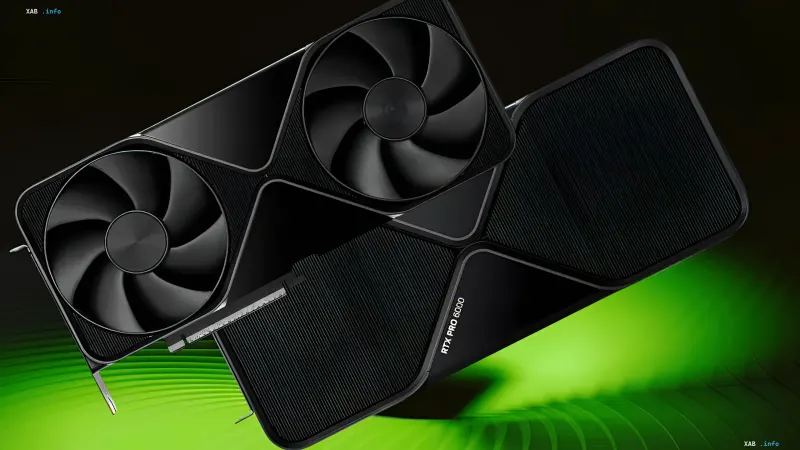
The market for professional graphics solutions is experiencing an unprecedented price crisis. As of August 2026, the flagship NVIDIA RTX PRO 6000 graphics card based on the Blackwell architecture is officially offered at a price of $16,000. This decision is recorded in the updated price lists of the manufacturer itself and its key partners, such as PNY. Notably, this is not about speculative markups by resellers, but a legitimate price revision by NVIDIA, which has effectively doubled the product's price compared to the recommended cost at launch (around $8,000).
Memory shortage as the main driver of growth
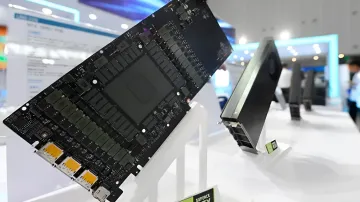
The reasons for such a radical revision of pricing policy are obvious and related to the global shortage of memory chips. The RTX PRO 6000 Blackwell graphics card is equipped with an impressive amount of video memory — 96 GB. To ensure such capacity, the design uses 48 separate 2 GB chips. It is the complexity and high cost of equipping the card with such a number of memory modules under current market shortage conditions that became the catalyst for doubling the cost of the final product.
Impact on corporate and consumer segments
The price increase has affected not only the narrow segment of workstations but has also begun to exert pressure on the consumer market. As analysts note, gaming graphics cards are also showing a rapid increase in cost. This creates a difficult situation for businesses, which are forced to revise budgets for infrastructure modernization for artificial intelligence tasks. The situation in the graphics accelerator market is becoming increasingly tense, raising concerns about the accessibility of technology for small and medium-sized businesses.
Contradictory data
Although the fact of the price doubling is confirmed by official sources and partner reports, there are discrepancies in the details of the cause-and-effect relationships. According to some data, the price increase was provoked solely by a memory shortage. However, other sources, analyzing the launch context, suggest that NVIDIA may have used the shortage situation as a pretext for price adjustment in connection with the launch of new AI models requiring more powerful hardware. Thus, the question of whether this is a forced measure or a strategic step to increase margin remains a subject of discussion in the industry.
Future of the market: new reality or temporary hype?
Experts are divided on the long-term consequences of this move. Some believe that the high cost will become the new norm, as demand for "hardware" for artificial intelligence continues to grow, while supply is limited by the physical capabilities of memory chip production. Others believe that the hype demand will eventually decline and prices will stabilize. For now, the industry is forced to adapt to the reality where access to advanced computing power is becoming a privilege of large corporations.