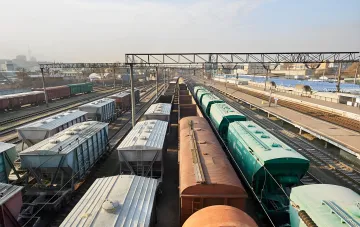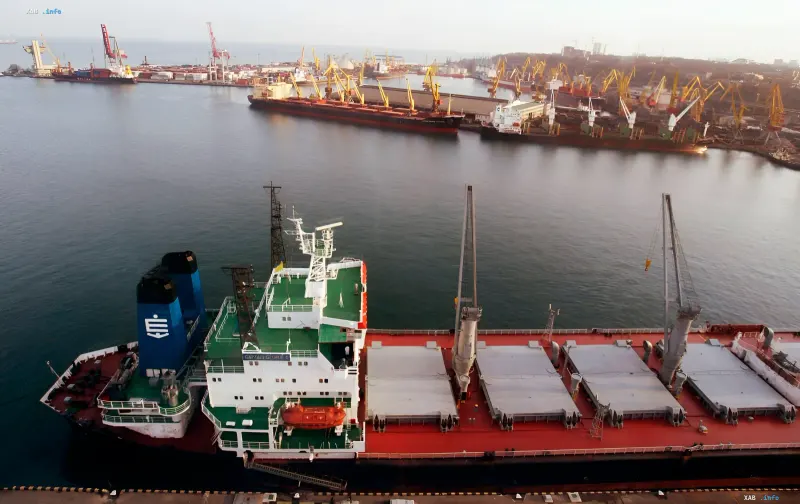
Currently, the operations of the maritime ports of Greater Odessa are paralyzed due to constant Russian attacks. In conditions where the country's traditional maritime gates cannot function in normal mode, Ukraine's export and import flows are forced to rapidly reorient towards alternative land and river routes.
This process is described in detail in an article by RBC-Ukraine journalist Roman Kot titled "Lying Low in Odessa. Why the Ports Have Stopped and What the Consequences Will Be for Ukraine".
Return to 2020 Schemes
The choice of an alternative route depends directly on the type of cargo. For the container segment and high-value imports, the ports of Central and Northern Europe continue to play a key role. As explained by the President of the Association of International Freight Forwarders of Ukraine, Viktor Berestenko, about 50% of Ukraine's container base was handled through the ports of Romania and the Baltic states up until the recent attacks.
The market is effectively returning to the logistical chains formed 4 years ago. Experts note that there is no need to fear a collapse, but the new realities have their own peculiarities.
"But it is longer and more expensive: an additional road or rail leg, transshipments, crossing the border, and it is more difficult to return empty containers," Berestenko warned.
Logistical Bottlenecks
Alternative routes allow foreign trade to continue, however, they are not ideal. Constanța, Gdańsk, Gdynia, Klaipėda, and the western border will not be able to fully replace the ports of Greater Odessa in terms of throughput capacity and cost.
Another problem is that it is indeed difficult to accurately calculate the final budget. Additional costs vary significantly depending on numerous factors. First Vice-President of the Chamber of Commerce and Industry of Ukraine, Mykhailo Nepran, commented on this issue.
"And as you can see, it is currently jumping up and down on the market depending on the military-political situation in the Persian Gulf. Therefore, it is premature to talk about any figures right now," the expert explained.
Problems for Agrarians and Tariffs
As for agrarians, rail logistics plays a key role for them. The problem is that as of August 1, Ukrzaliznytsia announced a 30% increase in freight tariffs. This creates additional difficulties for exporters who have already faced rising logistics costs.
Previously, RBC-Ukraine reported on why Russia is currently massively attacking Ukrainian ports. At the same time, the Administration of Sea Ports of Ukraine recently stated that the country had not introduced restrictions on the operation of the Ukrainian Sea Corridor, attempting to maintain channels for safe exports.