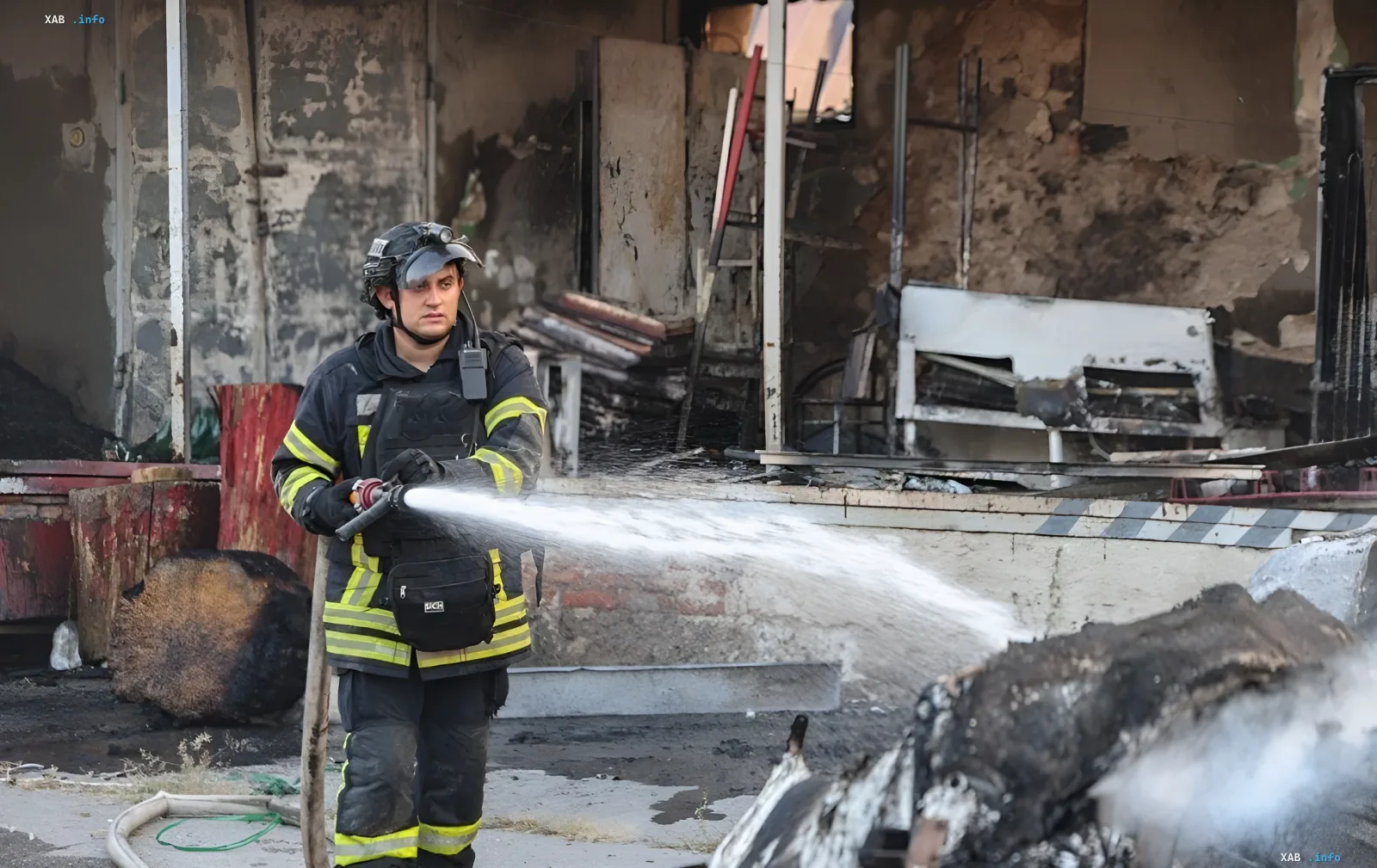
On the morning of August 24, 2026, Odesa came under a massive Russian attack, resulting in fires at two hypermarkets of the 'Epitsentr' chain. According to official data, the main impact was on food storage facilities and energy infrastructure, with private homes also damaged. Eyewitnesses reported the fires and the aftermath of the strike, and crews of the State Emergency Service were promptly dispatched to the scene. The 'Epitsentr' chain officially confirmed strikes on two of its retail locations in the city.
Course of the attack and fire outbreaks
The first reports of a fire in the Perysip district following the strike came from eyewitnesses, as reported by the publication 'Dumskaya.' Photos of the attack's aftermath and the fire at the retail site quickly spread across social media. Later, around 08:52, preliminary information emerged about another fire outbreak in the area of the 'Seventh Kilometer' market. Notably, this same 'Epitsentr' retail location had recently been subjected to an attack, in which two people were injured, indicating a repeated pattern of strikes on the chain's infrastructure in the region.
Official statements and the scale of damage
Oleg Kiper, head of the Odesa Regional Military Administration, stated that the main impact was on food storage facilities and energy infrastructure, adding that private homes were damaged and fires broke out. Thus, the consequences of the attack affected not only commercial but also critically important life-support infrastructure of the city, including energy facilities. At the time of publication, the elimination of the strike's aftermath and the work of rescue services were ongoing at the sites.
Casualties and medical aid
The data on casualties changed throughout the morning. As of 08:37, no information on casualties had been received. However, later Oleg Kiper clarified that at that time five people were known to have been injured as a result of the strike on storage facilities in Odesa Oblast. Three of them were hospitalized in a condition of moderate severity, and all injured persons were being provided with the necessary medical care. These figures were preliminary at the time of publication and could be refined as services worked at the sites.
Contradictory data
The provided sources contain discrepancies that are important to note. First, the information on casualties evolved: initially, no casualties were reported, then five people were named, of whom three were hospitalized. Second, the nature of the strike is described differently: official statements refer to a 'massive attack' and a strike on warehouses and energy facilities, while some sources characterize the incident as a drone attack. These differences in the description of the means of attack and in the dynamics of casualty figures require further verification as official reports come in.
Context: nighttime attack on Konotop
The attack on Odesa was part of a broader wave of strikes. On the night of August 24, Russian forces delivered a massive strike on Konotop in Sumy Oblast, as a result of which the 'Korund-S' vehicle depot was destroyed, several buses burned, and a significant part of the city was left without gas supply. According to preliminary information, there were no killed or injured in Konotop, however these data were still being refined at the time of publication. The combination of events in Odesa and Konotop indicates the continuation of massive strikes on infrastructure facilities in several regions of Ukraine.