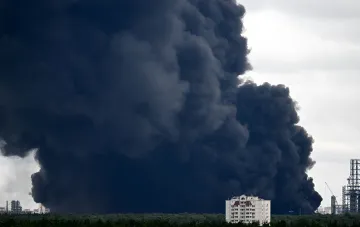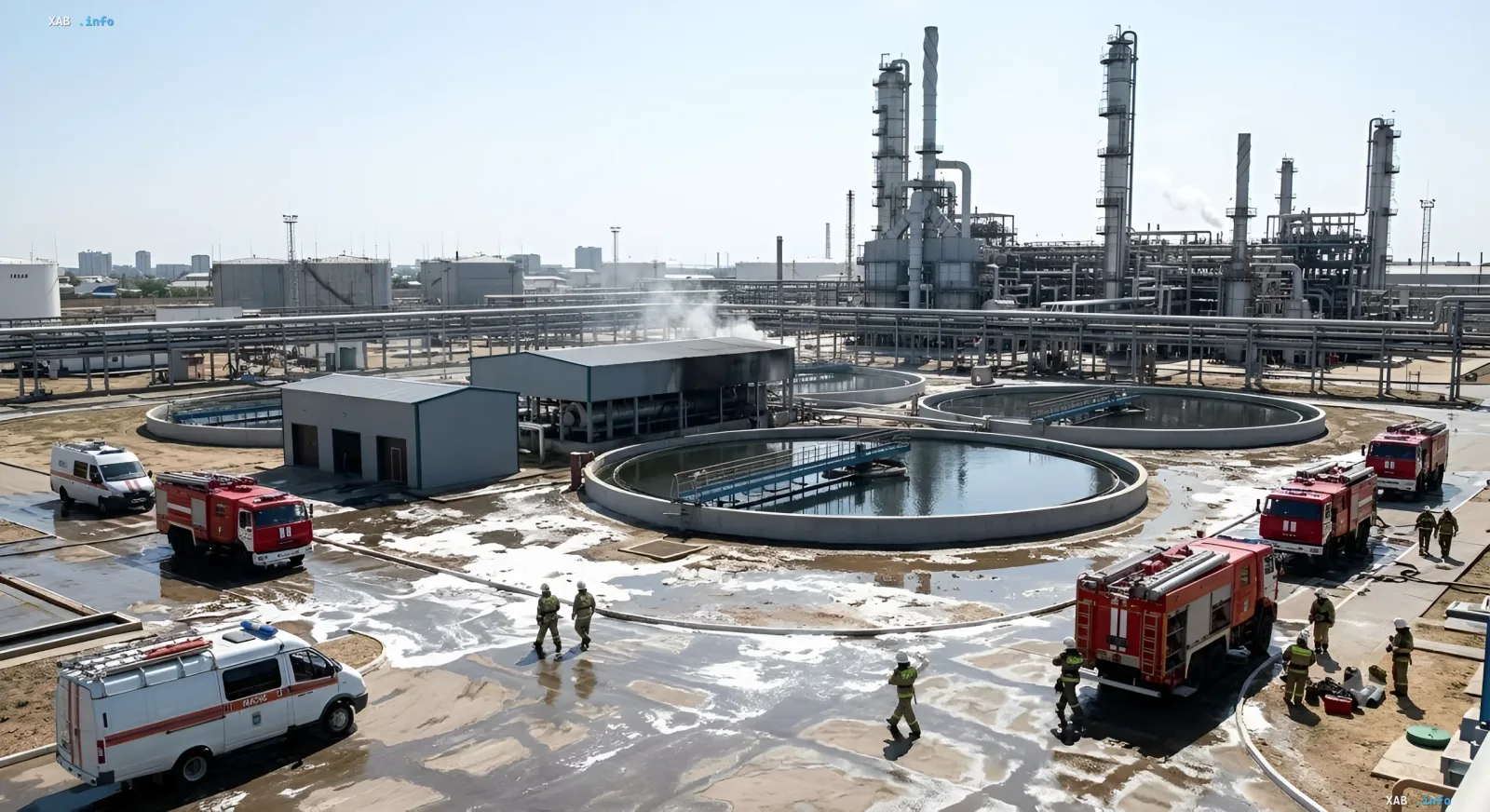
On August 25, 2026, a fire broke out on the premises of the Atyrau Oil Refinery (AOR), part of the national company "KazMunayGas." According to official data from Kazakhstan's Ministry of Emergency Situations (MES) and the operator itself, the fire was fully extinguished on the same day. The fire started at 12:35 local time in a closed-type mechanical treatment plant settler, where oil sludge caught fire. By 13:42 the flames were contained and then fully extinguished. A key factor in assessing the scale of the incident is that the plant's production cycle was not halted, and no one was injured as a result. Nevertheless, the incident at one of the industry's oldest and strategically significant enterprises once again brought the discussion of industrial safety and infrastructure risks in Kazakhstan's fuel sector to the forefront.
Timeline and Official Data
According to reports from the republic's MES and "KazMunayGas," the fire was recorded at 12:35, containment was achieved at 13:42, after which full extinguishment followed. A total of 65 personnel and 19 units of special equipment were involved in the firefighting. Official representatives emphasized that at the time the fire started, no technical or repair work was being carried out at this treatment facility, which rules out a direct link to planned or emergency service operations. The plant continued to operate in normal mode, as confirmed by the absence of any shutdown of the processing units.
Emergency Response and Forces Deployed
Given the high strategic importance and explosion hazard of the facility, the call was immediately assigned an elevated priority level. In addition to MES forces, the departmental fire brigade "Semser ort sondirushi," units of the ATMA airport, and the rescue services of the NCOC consortium were also involved in extinguishing the fire. This multi-level nature of the response reflects the standard logistics for critical facilities: when the event's rank is elevated, the resource load is distributed among state, departmental, and private structures operating on the plant's territory.
Contradictory Data
Open sources contain discrepancies in the wording regarding the final status of the situation. Official statements from MES and "KazMunayGas," as well as a number of agencies citing them, speak of the fire being fully extinguished and the resumption of normal operations. At the same time, some field reports note that after the main extinguishment, the site was being watered down to prevent re-ignition. Formally, these data do not contradict each other: watering down is a standard final measure after extinguishing flammable sludge, however, in the public domain they create the impression that the situation was not closed off instantly. For an accurate assessment, one should rely on the official position on extinguishment, while taking into account that preventive measures to prevent a new ignition point continued.
Infrastructure Risks and Industrial Safety
The Atyrau Oil Refinery is the oldest plant in the industry: it was commissioned in 1945. Despite the stages of modernization it has undergone, the enterprise regularly features in incident reports — from emergency shutdowns related to external power supply problems to technological incidents involving flare emissions. The fire at the treatment facilities, which did not affect the main processing equipment, nevertheless once again raises the question of industrial safety control over outdated units. The personnel context heightens attention to the issue: in early August 2026, the plant's general director was changed, and the incident falls during a period of organizational restructuring, which objectively raises the requirements for auditing internal safety procedures.
Environmental Pressure and Social Context
The plant is located within the city limits of Atyrau, which makes any smoke or gas release an immediate cause for social resonance. Local residents and environmental activists regularly report complaints about smog and the smell of hydrogen sulfide. Footage of open flames, which quickly spread on social media, once again brought to the forefront the discussion on the feasibility of gradually relocating hazardous production capacities outside the city's built-up area. From the perspective of managing reputational and regulatory risks, each such incident increases pressure on the operator regarding environmental monitoring and public reporting.
Macroeconomic Consequences for the Fuel Market
Any, even short-term, emergencies at key oil refineries in Kazakhstan cause nervousness in the domestic petroleum products market. According to available data, over the first seven months of 2026, processing at AOR decreased slightly — to 3.13 million tons, compared to 3.39 million tons for the same period of the previous year. Against the backdrop of August discussions on processing additional volumes of raw materials and supplying small batches of fuel, maintaining all three of the country's largest refineries in a stable mode is a priority for Kazakhstan's Ministry of Energy in order to avoid a fuel shortage. AOR, with a design capacity of 5.5 million tons of oil per year, is among the industry's top three, so maintaining its continuous operation is directly significant for fulfilling export obligations and price stability within the country. In the long term, the incident, in the absence of casualties and a production halt, does not change the fundamental parameters of the market, but it strengthens the argument in favor of accelerating the modernization of outdated units and diversifying processing capacities.