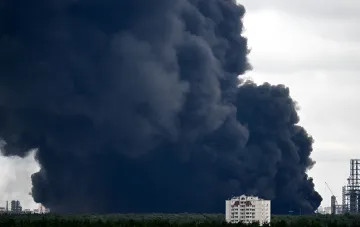
On the night of August 24, 2026, on Ukraine's Independence Day, the Russian Armed Forces carried out a massive aerial attack that differed from previous episodes in its geographic concentration. Instead of the usual tactic of distributing strikes across several regions simultaneously, the adversary concentrated the overwhelming majority of its aerial attack assets on a single specific oblast — Odesa Oblast. This was reported by the Ukrainian Air Force in an official report, as cited by RBC-Ukraine. The attack, it appears, was prepared in advance and was of a targeted nature, as confirmed by the density of salvos in a single direction.
Concentration of Strikes and the Adversary's Tactics
The key feature of the night raid was that the Russian occupiers abandoned the tactic of "spreading" strikes across the entire territory of Ukraine. Instead, the majority of missiles and unmanned aerial vehicles were directed exclusively toward Odesa Oblast. According to the Air Force, all available air defense components were engaged to destroy enemy targets: aviation, air defense missile units, electronic warfare units, unmanned systems, as well as mobile fire groups of the Ukrainian Defense Forces. Such a comprehensive response indicates that the Ukrainian side also adapted its defensive strategy to the concentrated nature of the attack.
Scale of Damage and Air Defense Results
The Ukrainian Air Force confirmed impacts of enemy aerial attack assets at 22 locations within Odesa Oblast. In addition, the fall of debris from destroyed targets was recorded at 5 additional locations. Some enemy missiles, according to defense structures, failed to reach their designated targets — they were intercepted or shot down in flight. At the time the report was published, the attack was still ongoing: several enemy UAVs remained in the airspace over the region, and defenders urged civilians to observe safety rules.
Attack Targets: Energy, Food, and Civilian Infrastructure
According to data published by RBC-Ukraine and Glavred, among the damaged objects in Odesa Oblast were food warehouses, energy infrastructure facilities, a railway station, and residential buildings. Particular resonance was caused by the fire at two hypermarkets of the "Epitsentr" chain following impacts from aerial attack assets. The adversary's use of ballistic missiles, so-called "Banderol" missiles, and "Shahed" suicide drones (according to TSN) points to a multi-vector nature of the attack, combining precision weapons with the massive use of drones.
Contradictory Data
Information on the scale of the attack at the time of publication was of a developing nature. The Air Force explicitly stated that "the attack is ongoing" and "all details will be announced later," meaning that the final figure of impacted locations and the list of damaged objects may be revised. At the same time, some initial reports on specific targets (the station, residential buildings) were not fully confirmed in the Air Force report, which focused on quantitative indicators (22 and 5 locations) without detailing each object. Moreover, data indicating that some missiles failed to reach their targets were presented without specifying the exact number of intercepted projectiles, leaving room for various interpretations of air defense effectiveness that night.
Kharkiv Oblast Also in the Impact Zone
Despite the main concentration of strikes in the Odesa direction, the aerial attack also affected Kharkiv Oblast, where the consequences of the attack were also recorded. However, unlike Odesa Oblast, the scale of strikes on the Kharkiv region on the night of August 24, 2026, was significantly smaller, confirming the thesis of the adversary's targeted concentration of efforts on a single direction. Final data on losses and destruction in Kharkiv Oblast were still being clarified at the time of preparing this material.