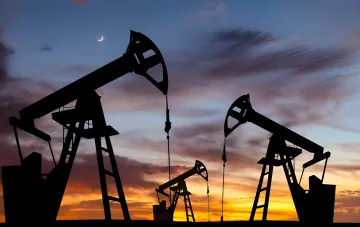
On the latest trading session, October 2026-dated Brent crude futures briefly surpassed the $94-per-barrel mark, setting a high since July 24. At the same time, prices for US West Texas Intermediate (WTI) also reached an approximately one-month peak. The upward move in the oil market comes against the backdrop of ongoing tension around the Strait of Hormuz — the key artery through which a significant share of the world's crude oil exports from the Middle East passes. Investors are anxiously watching the dynamics of strategic and commercial stockpiles, which traditionally serve as a buffer against supply shocks.
Global stockpiles: down 6% in half a year
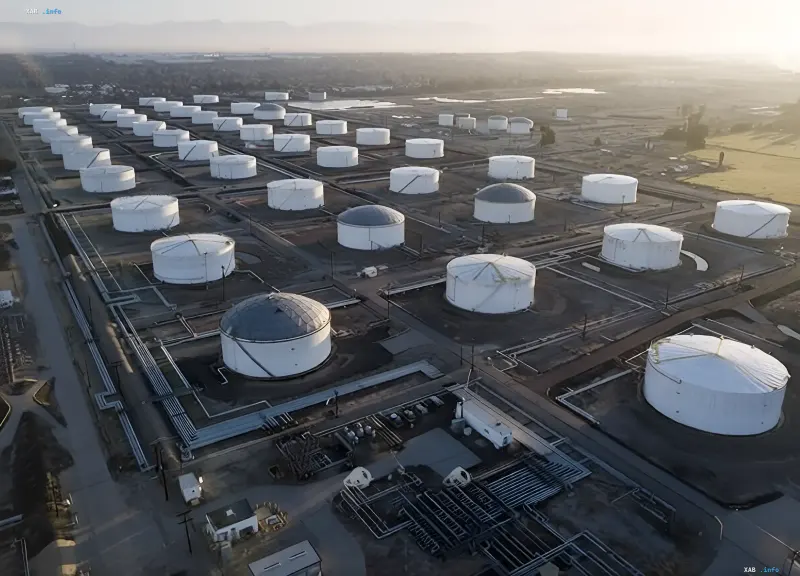
According to data from analytics firm Kpler, total global crude oil inventories stood at 3.45 billion barrels, a 6% decline from the end of February 2026 — the moment the US and Israel began military operations against Iran. The distribution of losses across countries is uneven: Japan's stockpiles fell by 18%, the US by 15%, and China's by 5%. It is worth noting separately that, according to information confirmed by several publications, the volume of the US Strategic Petroleum Reserve (SPR) has dropped below 300 million barrels — the lowest level since 1983. Thus, the world's largest energy security buffer has been depleted to a level unseen in more than four decades.
The Strait of Hormuz: from memorandum to renewed blockade
The chronology of events in the summer of 2026 shows sharp swings between de-escalation and escalation. In late July, a memorandum of understanding was signed between the US and Iran, after which traffic through the Strait of Hormuz resumed and oil stockpiles in several countries began to recover slightly. However, as the conflict resumed, Tehran reverted to a policy of restricting shipping, slowing exports from Middle Eastern oil hubs. Ken Koyama, senior advisor at the Japan Center for Energy Research, emphasizes that importing countries must continuously draw down their stockpiles to mitigate the effects of supply disruptions and warns: if the restrictions in the strait persist, oil prices will continue to rise.
The US as an "alternative source": the market is skeptical
Given the Middle East crisis, it would be logical to expect Washington to offset the shortfall through its own exports. However, the market is skeptical of this possibility. According to data from the US Energy Information Administration (EIA), crude oil exports from the United States for the week ending August 7 totaled just 3.05 million barrels per day — the lowest figure in nine months. Domestic production has not increased substantially, and the recent rise in exports was driven mainly by drawing oil out of storage rather than by higher production volumes. According to Yukie Togano, a researcher at the Japan Research Institute, for the US to maintain current export levels it would need to increase production by more than 1 million barrels per day. Meanwhile, according to a June survey by the Dallas Federal Reserve, fewer than 20% of oil and gas company executives believe such a production increase is possible in the foreseeable future due to the rapid depletion of existing wells.
Forecasts: the horizon of reserve exhaustion
Yukie Togano models that, if the downward trend observed from April to July 2026 persists, the US strategic petroleum reserves will be exhausted in the first half of 2027, and private stockpiles by the end of that same year. For the expert community, this means that the window for adapting to a chronic shortage of Middle Eastern oil is narrowing to 12–18 months. Under these conditions, the question of diversifying supplies, accelerating the development of renewable energy sources, and modernizing logistics chains is coming to the forefront of the energy agenda in both Asia and Europe.
Contradictory data
The primary source material on which this publication is based cites the date "as of August 31" for the global stockpile estimate of 3.45 billion barrels. However, the actual date of preparation of the material is August 23, 2026, meaning the cited point in time has not yet arrived. This may refer to a forecast estimate for the end of the month or to an inaccuracy in the original source. In addition, the text simultaneously contains the claim of a "partial recovery of stockpiles since late July" thanks to the US–Iran memorandum and the statement that "when the conflict resumed, Iran continued the blockade." These two statements do not contradict each other chronologically, but they give the reader the impression that the recovery of stockpiles was sustained, whereas in reality it was short-lived and was fully offset by the renewed escalation. When interpreting the data, it is important to bear in mind that the dynamics of stockpiles in July–August 2026 were extremely volatile and depended on the day-to-day situation in the Strait of Hormuz.
The situation in the oil market by the end of August 2026 remains one of the most tense of the past decade. The combination of factors — the depletion of strategic reserves to 40-year lows, the US inability to rapidly ramp up exports, geopolitical instability in the Strait of Hormuz, and the oil and gas sector's pessimism about production prospects — creates the risk of a scenario in which oil prices will firmly hold above current levels. For the global economy, this means additional inflationary pressure and a reassessment of energy strategies for the next two to three years.