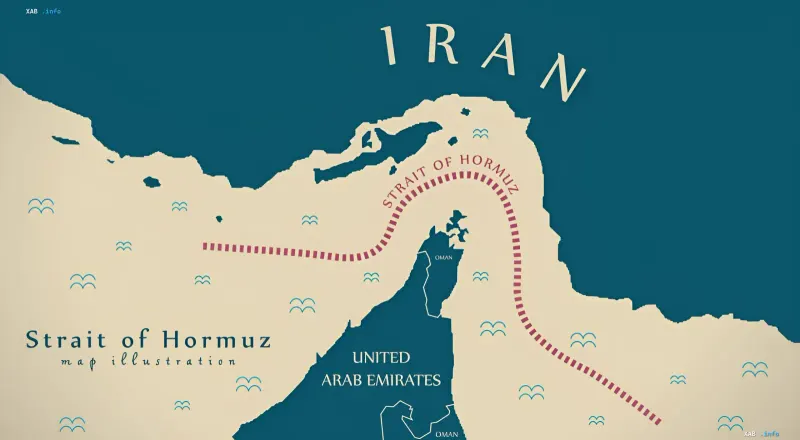
On Thursday, July 16, 2026, global markets faced a new reality: Brent crude is hovering around $84.50, but analysts are warning of a risk of a sharp price surge to $100 per barrel. The situation in the Persian Gulf has gone beyond routine geopolitical tension — the conflict between the US and Iran has entered a phase of direct military engagement, affecting key arteries of the global economy.
Market Takes Profits, but Fear Remains
After reaching monthly highs, prices showed a moderate correction. Futures for the North Sea Brent blend fell 0.45% to $84.57, while the American WTI grade dropped 0.19% to $79.45. According to experts, the current decline is driven by traders taking profits and the fact that tanker traffic through the Strait of Hormuz, while reduced, has not stopped completely.
However, this stability is extremely fragile. Investment bank SEB Research warns: if the confrontation moves into a phase of long-term blockade of the strait, Brent prices could break the $90–$95 range and approach the psychologically important mark of $100.
Domino Effect: Insurance and Logistics
The actual situation in the conflict zone became clear after data from analytics company Kpler. On the first day of the renewed restrictions, daily commercial ship traffic through the strait fell by 30% — from 13 to 9 vessels. Most international shipowners preferred to change routes or halt movement in the Gulf of Oman.
A key factor was the sharp dynamics of War Risk Premiums. Logistics chains, accustomed to uninterrupted operation, are forced to restructure, which inevitably leads to rising costs and, consequently, higher energy prices.
M/T Belma Incident: The Point of No Return
The escalation of the situation resulted from the suspension of the bilateral memorandum of understanding concluded back in June 2026. Disputes over control of shipping routes and the right to levy security fees escalated into a military incident.
On July 15, US Central Command (CENTCOM) forces used Hellfire air-to-surface missiles against the commercial tanker M/T Belma flying the flag of Curaçao. The vessel ignored US Navy demands near Harg Island. According to the command, the strike was precise: the exhaust system was hit to disable the engine without destroying the cargo tanks.
Tehran perceived this as an act of aggression in territorial waters. The Iranian Ministry of Defense threatened symmetrical measures against the shipping of other regional states and the deployment of defensive infrastructure on the islands of Abu Musa and Greater Tunb.
Legal Aspect: Freedom of Navigation Under Threat
According to the 1982 United Nations Convention on the Law of the Sea (UNCLOS), international straits are subject to the regime of transit passage. Coastal states do not have the right to unilaterally suspend or restrict this regime in peacetime. Any forced restriction of navigation or introduction of duties without international consensus is classified as a violation of freedom of navigation.
Today, these norms are being tested. Washington classifies Iran's actions to control the strait as a violation of the principle of the high seas, while Tehran insists on the exclusive right to regulate transit. While the market tries to adapt to the new reality, the question of how long the current "frozen" phase of the conflict will last remains unanswered.