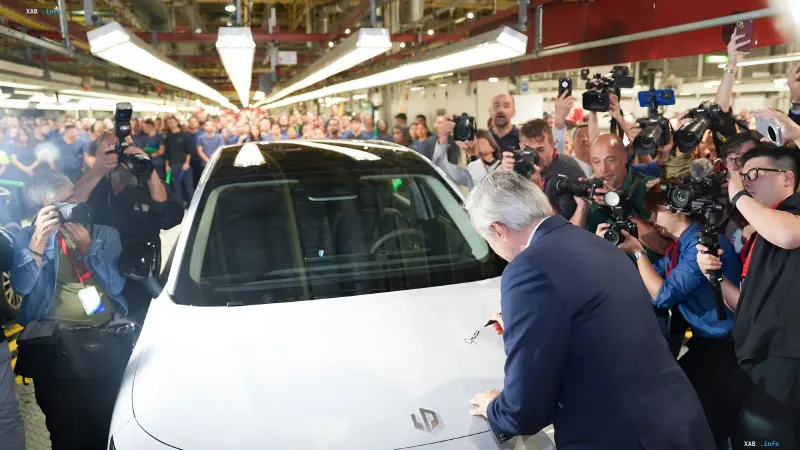
On October 16, 2026, at the automotive plant in Zaragoza, Spain, two events simultaneously marked a new phase for the Chinese brand Leapmotor in Europe. The first European-built instance of the B10 electric crossover rolled off the production line, while a facility for the local assembly of battery modules was launched in parallel. The rollout ceremony for the first vehicle was accompanied by a dense crowd of journalists and cameramen: a company representative personally signed the body of the white crossover featuring the signature Leapmotor logo, serving as a visual symbol of the start of European production.
First European B10 Rolls Off the Production Line
The release of the first European-built B10 crossover is not merely a promotional gesture, but an operational milestone: the car is now assembled directly at a European site rather than imported fully built from China. For Leapmotor, this signifies a shift in its market presence model—moving from finished vehicle logistics to local manufacturing, which shortens the supply chain and brings the model closer to the final buyer in Europe.
Battery Plant Closes the Loop Within Europe
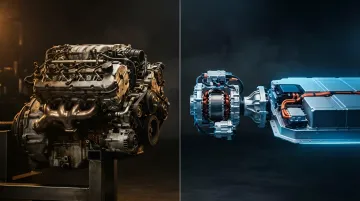
The second key event of the day is the launch of the battery assembly plant. It will be responsible for the local assembly of battery modules for the new model, forming a production chain within the continent. According to the company's vision, this approach should increase the efficiency of component supplies and reduce the impact of customs restrictions associated with importing finished electric vehicles from abroad.
A Facility with a 43-Year History
Production was organized at a site with a 43-year history, formerly operated by Opel, during which time over 10 million vehicles were produced. Leapmotor, in cooperation with Stellantis, upgraded the production lines to accommodate the manufacturing of Chinese electric vehicles alongside the European concern's already established models—the Opel Corsa, Peugeot 208, and Lancia Ypsilon. Thus, the new capacities are integrated into existing operations rather than built from scratch.
From Imports from China to Local Manufacturing
Combined, the two events on October 16 turn the project into a systematic endeavor: the launch of the battery facility complements vehicle production and enables a localized electric vehicle manufacturing system. For Leapmotor, this marks a transition from supplies originating in China to production directly within the European market, and for the partnership with Stellantis, it is an important milestone where the Chinese manufacturer utilizes the existing capacities of the European automotive group while simultaneously developing local assembly for both batteries and vehicles.
The outcome of the day in Zaragoza is an example of how global cooperation between a Chinese brand and a European concern brings key production processes, including batteries, inside Europe. For the market, this potentially means shorter delivery times and less dependence on import restrictions, and for the site itself, it represents the continuation of its long-standing manufacturing history into the electric vehicle era.