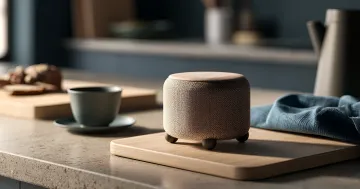
OpenAI is moving beyond cloud services to launch the development of its first physical device for the home. This is not just another smart speaker, but a full-fledged personal computer designed specifically for artificial intelligence. The gadget is intended to become an active companion capable of boosting user productivity and managing their daily lives.
Next-Generation Technologies: From Voice to Mechanics
Developers position the device as a radically new class of technology. Unlike stationary analogs, the gadget will be fully portable thanks to a built-in battery. A key feature will be the presence of a camera and sensors, allowing the AI to see and analyze the context of what is happening around the user.
Communication with the device is based on the GPT-Live voice mode. The system can listen and speak simultaneously, process information instantly, and adapt to the pace of conversation. However, the most intriguing feature of the project is the mechanical elements of the body. They are capable of moving independently, creating the effect of a living creature rather than just reacting to voice commands.
Predicting Needs and Proactivity
The main goal of the gadget is proactivity. By analyzing emails, messages, and the owner's habits, the AI will learn to anticipate human needs. The device will be able to act as a personal expert, manage the smart home, and free up time for more important tasks.
Apple Experts and the Legal War
To create a hardware division, OpenAI recruited top executives from Apple. Last year, the company spent $6.5 billion to acquire the startup io Products, co-founded by Jony Ive. Evan Shenki, Tang Tang (now OpenAI's Chief Hardware Officer), and Paul Mead, who previously worked on Vision Pro, also joined the development team.
The mass exodus of specialists sparked a serious conflict. Apple sued OpenAI, accusing the competitor of stealing trade secrets. In particular, Tang Tang is accused of gathering confidential information about Apple's future products. OpenAI rejects all accusations, citing employees' right to change jobs and emphasizing that their device was created from scratch and does not infringe on HomePod patents.
Apple's Countermove and the Future of the Market
The situation is escalating into a technological confrontation. Apple is preparing a counterattack in the form of a system of home AI devices. The first product will be a command center codenamed J490 with a 7-inch screen and an updated Siri based on iOS 27. Also in development is a display on a robotic arm capable of following the user.
The smart speaker is just the first step for OpenAI, which is currently working on five different devices. However, the launch of the revolutionary product on the market depends directly on the court's decision: if Apple secures an injunction, the gadget's launch could be delayed indefinitely.