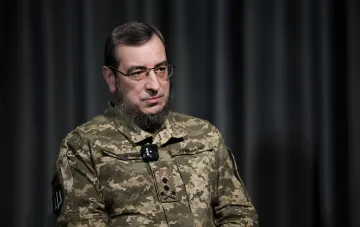

On August 14, 2026, against the backdrop of escalating hostilities and preparations for large-scale offensive operations, the Unmanned Aerial Systems (UAS) of Ukraine, commanded by Robert "Madyar" Brovda, reported an unprecedented series of strikes on the enemy's energy infrastructure. Between August 1 and 13, Ukrainian drones carried out precision strikes on 240 energy nodes in territories controlled by Russian occupation forces.
Strategy of "Occupational Noir": Objectives and Consequences
In his Telegram channel, UAS Commander Robert "Madyar" Brovda characterized these actions as part of a large-scale operation dubbed "Crimea Switch Off." According to him, the goal of the attacks was not merely to inflict economic damage, but to create an effect of "occupational noir" — a total blackout paralyzing the daily life and military infrastructure of the enemy. In particular, in the last few days (August 10–13), 29 energy nodes were hit solely in the temporarily occupied territories (TOT) in the South, marking the culmination of a two-week campaign.
"Madyar" emphasizes that the disconnection of stationary radars and elements of the Russian air defense (PVO) system is a key factor in success. Depriving the enemy of the ability to conduct radar surveillance paves the way for further strikes by the Ukrainian Defense Forces, making the airspace over occupied territories more accessible to Ukrainian drones and aviation.
Tactics and Geography of Strikes
Analysts note that the geography of the strikes covers not only the Crimean Peninsula but also adjacent regions, including the Rostov region and the Sea of Azov. The list of damaged targets, published by the UAS command, includes not only substations and distribution points but also logistics facilities. Earlier, in early August, "Madyar" reported the destruction of nine Russian tankers in the Sea of Azov, indicating an expansion of the UAS's zone of responsibility to include the enemy's maritime communications.
The use of autonomous unmanned systems allows Ukrainian forces to wage a war of attrition on the enemy's energy resources without exposing personnel to direct risks. The "Crimea Switch" strategy aims to force Russian troops to operate in total darkness, which critically reduces their combat effectiveness and morale.
Contradictory Data
Despite the clear report from the UAS commander regarding the destruction of 240 nodes over two weeks, discrepancies in the details of daily figures are observed in open sources. While RBC-Ukraine, citing "Madyar," names the final figure of 240 objects for the period from August 1 to 13, other sources, such as Unian and Ostro, in their reports from August 13, focus on the damage to 16 energy nodes specifically in Crimea as part of one of the waves of attacks.
It is possible that the figure of 240 objects is a cumulative total of all attacks over two weeks, including strikes on Crimea, Rostov, and other regions, whereas reports of 16 or 29 nodes refer to specific local operations in the last few days. This requires clarification: is the figure of 240 the sum of all hits, or does it refer to 240 attempted strikes, some of which were intercepted? Nevertheless, the fact of a large-scale sabotage against the Russian power grid is confirmed by all sides.
Threat of Retaliatory Strike: 200 Missiles per Attack
Against the backdrop of the UAS successes, "Madyar" also warned of the enemy's plans. The commander stated that Russia plans to increase the intensity of missile attacks on Ukraine, preparing salvos of up to 200 missiles in a single sortie. This statement was made in the context of preparations for a massive counter-operation. "Madyar" explained that such a concentration of missiles is necessary for the enemy to attempt to suppress Ukrainian air defenses and strike critical infrastructure, although the effectiveness of such attacks is reduced due to the work of Ukrainian defense systems and sabotage groups.
Conflict Prospects
Events in August 2026 demonstrate that the war is entering a phase of total destruction of rear infrastructure. Operation "Crimea Switch" has become a vivid example of how Ukraine's UAS can dictate terms to the enemy, depriving them of resources for conducting hostilities. In conditions where Russia plans massive missile strikes, the effectiveness of the UAS becomes a factor determining the survival of Ukraine's energy system.