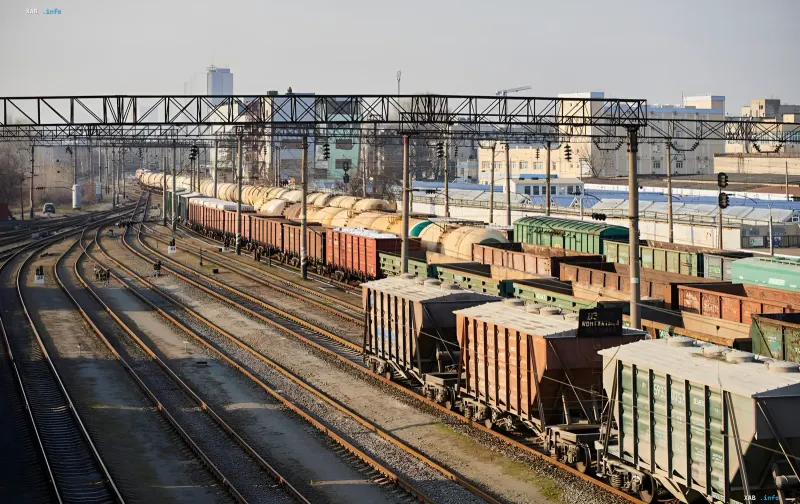
In January–October 2026, exports of iron and manganese ore through railway crossings on the border with Poland decreased by 27% year-on-year to 2.76 million tons. In physical terms, the drop amounted to about 1 million tons, according to Ukrzaliznytsia data cited by RBC-Ukraine. The contraction of supplies via the western route is occurring amid the simultaneous narrowing of maritime routes and rising costs of alternative logistics chains, making rail exports through Poland one of the key yet most vulnerable channels for raw material shipments.
Ferrous Metals: The Same Negative Trend
A similar picture is observed for ferrous metals. Over the ten months, Ukraine exported 853 thousand tons of this product through the Polish border — also 27% less than the previous year. Overall, 8.6 million tons of cargo were transported via the export railway connections with Poland over the ten months, down 13% from the same period in 2025. Thus, the decline in individual commodity categories (ore, ferrous metals) turned out to be noticeably deeper than the total cargo turnover of the route, indicating a structural shift in favor of less raw or more high-margin items.
The Tariff Factor: 30% Added to Transportation Costs
A significant pressure factor on volumes was Ukrzaliznytsia's decision to increase freight transportation tariffs by 30%. According to calculations by Ukrpromvneshexpertiza, this increase was expected to reduce Ukrzaliznytsia's cargo base by 27 million tons per year, or by approximately 15%. Potential macroeconomic losses from this decision are estimated at 96 billion UAH of GDP per year, 2.4 billion dollars in export revenue, and about 36 billion UAH in budget revenues. These estimates show that the carrier's tariff policy directly translates into losses for the industrial sector and the state budget.
The Port Factor and the Cost of Alternative Routes
The situation with maritime routes provides context for understanding the scale of the problem. The blockade of Greater Odessa ports has virtually deprived Ukrainian mining and metallurgical enterprises of the ability to operate normally for export: alternative routes through the western border and European ports are so expensive that for some producers it is cheaper to temporarily stop production than to work at a loss. According to Ekonomichna Pravda, in the second half of the year alone, this resulted in the loss of about 500 million dollars in export revenue. The iron ore sector suffered the most: in 2025, Ukraine exported over 31 million tons of iron ore raw materials, of which about 55% (almost 17 million tons) were shipped by sea. Due to the port blockade, production at the Poltava and Pivdenny Mining and Processing Plants has already been suspended, and experts warn that without the resumption of navigation, shutdowns may spread to other enterprises.
Prospects: A Second Tariff Indexation
Despite the already recorded volume contractions, Ukrzaliznytsia has announced its intention to carry out a second stage of tariff indexation by another 15% starting January 1, 2027. Following the logic of current estimates, this could lead to an even greater reduction in transportation volumes and a further narrowing of the cargo base. The combination of factors — the loss of maritime routes, the high cost of western alternatives, and successive increases in railway tariffs — creates a risk of a steady decline in the export potential of the raw materials sector in the coming months.