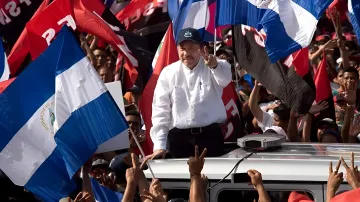
A unprecedented political scenario is unfolding in Nicaragua. The country's President, Daniel Ortega, speaking to supporters, publicly declared that national elections will no longer be held in the state. This decision, announced during celebrations marking the 47th anniversary of the Sandinista Revolution, puts the very possibility of a peaceful transfer of power in Central America at risk.
'Terrorists' Must Not Gain Power
The 80-year-old leader, who has been continuously governing the country since 2007 (with a break in the 1980s), justified his decision by the need to protect the state. Ortega directly stated that the cancellation of elections is intended to prevent the opposition, which he harshly characterizes as 'terrorists,' from returning to power.
'There will be no more elections here so that terrorists do not come to power,' his speech stated. The President intends to submit a legislative initiative to the National Assembly, which is fully controlled by his supporters, to legally enshrine the impossibility of political opponents coming to power.
According to Ortega, Nicaragua 'can no longer take risks' by allowing forces into the electoral process that he accuses of attempting a coup d'état in 2018. Reuters notes that the country's leader has not disclosed the specific mechanisms for implementing this decision, but the actual meaning of the statements is obvious: the path to power through ballot boxes is closed.
Consolidation of Power and the Role of Rosario Murillo
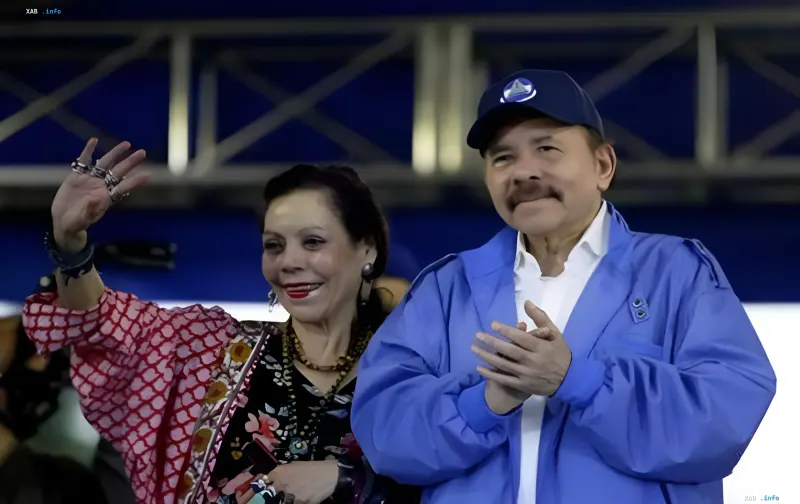
In recent years, Nicaragua's political system has undergone radical changes towards strengthening the personal power of the head of state. Following the constitutional reform of 2025, the President's wife, Rosario Murillo, received the official status of co-president. At the same time, the presidential term was extended from five to six years.
It should be noted that Daniel Ortega's current presidential term expires next year. Refusing to hold new elections effectively eliminates any possibility of a legitimate change in the country's leadership, securing Sandinista power for an indefinite period.
Human Rights Crisis and Isolation
The decision to cancel elections fits into the context of years of pressure on civil society. International human rights organizations and the UN have repeatedly accused the Nicaraguan authorities of systematic human rights violations. The peak of tension occurred after the mass protests of 2018, which were brutally suppressed. According to human rights defenders, hundreds of people died then, thousands were detained, and a significant portion of opposition politicians, journalists, and activists ended up either in prison or in exile.
In recent years, the authorities have liquidated independent media, closed universities, and destroyed thousands of non-governmental organizations. Most opposition parties have lost the ability to participate in the country's political life.
Geopolitical Vector: From Russia to Rupture with Ukraine
Under Ortega, Nicaragua holds a clear position in international politics, supporting the course of the Russian leadership. The country recognized Vladimir Putin's policies, including Russia's 'sovereignty' over temporarily occupied Ukrainian territories. In this regard, Ukraine officially severed diplomatic relations with Nicaragua last year.
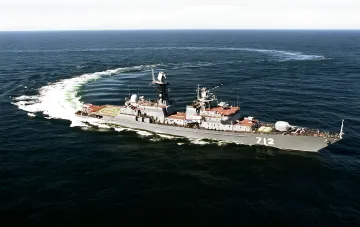
Close cooperation with Moscow also affected the security forces: Russian Ministry of Internal Affairs training centers are operating in Nicaragua. For this, as well as for violating democratic norms, the US imposed economic sanctions against the country. Thus, the cancellation of elections becomes the final note in building an authoritarian model of governance, oriented towards Western allies and isolated from Western democratic institutions.