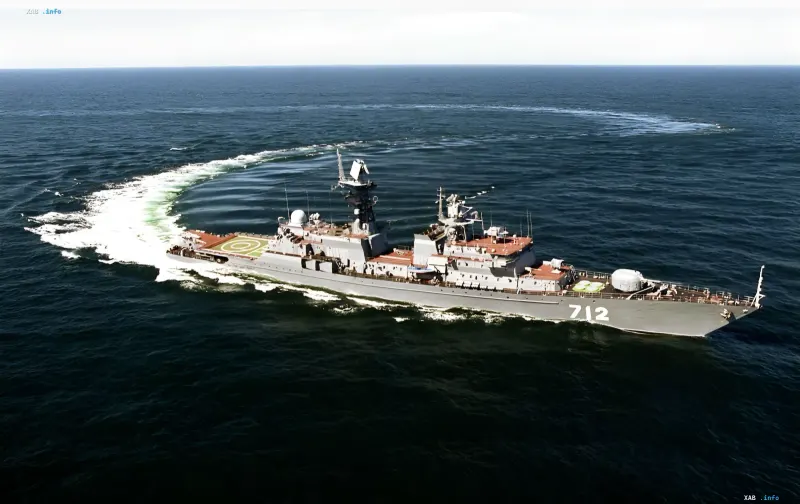
An event has occurred in the English Channel that has drawn heightened attention from British military authorities. On July 20, the Russian frigate 'Neustrashimyy' conducted exercises involving live ammunition just 40 nautical miles south of the city of Plymouth. The incident, which unfolded in international waters, has become another reason to discuss the activity of the Russian Navy near British shores.
Sequence of events: from warning to gunfire
According to information received from representatives of the UK Ministry of Defence, the actions of the Russian ship were under close observation. The frigate was escorted by a Royal Navy vessel, which monitored its maneuvers and continues to monitor the situation. In addition, a French military aircraft observed the actions of the Russian ship, even establishing radio contact with the crew of the 'Neustrashimyy' to request clarification of intentions.
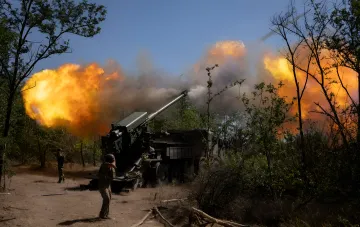
Before the start of the artillery drills, the Russian frigate officially notified the Royal Navy patrol vessel HMS Tyne. However, instead of cancelling the maneuver, the Russian sailors asked the British ship to move to a safer distance. The exercises with live-fire drills took place and lasted 30 minutes.
Political context and history of confrontation
Experts and media outlets, including the BBC, note that this incident may serve as a kind of reminder to the new British Prime Minister, Keir Starmer, regarding the increased activity of Russian military forces in the region. Although sources in the defense department do not comment on a possible link between the politician's start of his premiership and the timing of the exercises, the coincidence of dates does not go unnoticed.
In the summer of 2024, tensions in the English Channel were already rising. In June, British naval commandos conducted an unprecedented six-hour operation, seizing a tanker belonging to the so-called Russian 'shadow fleet'. This was the first case in the history of the British Armed Forces where special forces boarded a ship on the high seas.
In the same month, a meeting took place in the strait between a British yacht and the Russian warship 'Admiral Grigoryevich' 37 kilometers from the Isle of Wight. Earlier, in January, the Royal Navy was forced to expel a suspicious Russian ship from the Bristol Channel, where it was stationed near critical undersea cables.
Regularity of incidents
The situation in the region remains dynamic. In June, an unusual Russian convoy was recorded near Denmark, which included the yacht Graceful, which has a direct link to Russian leader Vladimir Putin. A series of such events demonstrates that the English Channel and adjacent waters have become a zone of heightened activity and mutual monitoring of fleets.