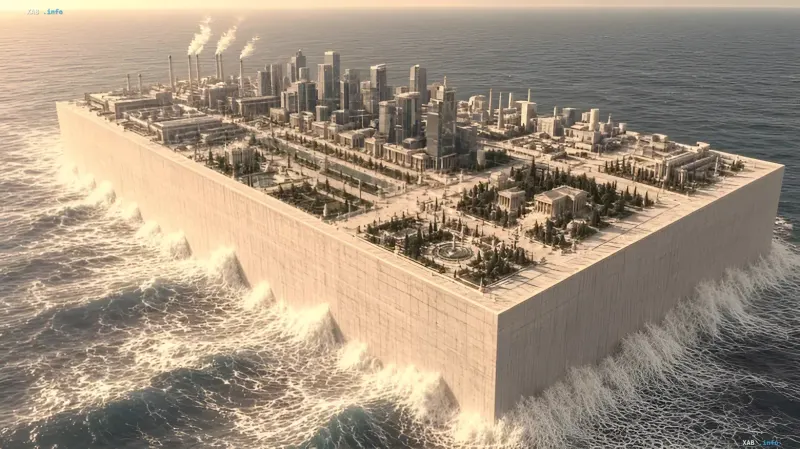
Palmer Luckey, an entrepreneur previously known as the co-founder of Oculus, has unveiled a project called SLAB — a floating settlement designed to last up to 1,000 years and potentially gain the status of a sovereign state. According to the author's description, the platform is intended to be located outside territorial waters and exempt from the ordinary laws of individual US states and municipalities. Thus, SLAB is conceived not as temporary infrastructure, but as a permanent territory with its own legal regime.
Seasteading and Industrial Ambitions
The project relies on the concept of seasteading — the creation of permanent settlements on floating platforms in the open sea. Luckey intends to host manufacturing and other projects on the platform that he believes are hindered by land-based American restrictions. Among the stated sectors are metallurgy, medical research and treatment, water desalination, oil refining, and the chemical industry. Therefore, SLAB is positioned not as a residential complex, but as a full-fledged industrial-urban cluster established beyond traditional jurisdiction.
History of the Idea: From Oculus to 2026
Luckey emphasizes that SLAB was conceived long before the current artificial intelligence boom and is not merely a floating data center. According to him, the idea emerged after the sale of Oculus in 2014, and in 2017 he and several close friends valued the project at $1 billion. This indicates that the concept has been developing for over a decade and is only now being publicly presented in the form of visualizations.
Concept Reality and Legal Barriers
Currently, SLAB remains a concept with a long path toward realization. The published image of a giant platform with residential buildings and industrial facilities was generated using AI, and Luckey has not named specific construction timelines or locations. Furthermore, the idea of establishing an independent state in the open sea faces severe legal restrictions: the UN Convention on the Law of the Sea does not permit the establishment of state sovereignty over the high seas, and artificial structures do not automatically gain island status. Therefore, even if the platform is technically built, the question of its state status remains open.